Solo cooks with limited space
If you usually make soup in just one pan, compare the hob’s overall dimensions with the space you have available on your worktop. CASO Design and Rommelsbacher provide dimensions for individual models.


For one portion of courgette soup, a portable single hob is all you need. The key things to check are the base and diameter of your pan, whether you have space for the whole appliance, and how easy it is to adjust the heat. Induction heats up quickly but requires compatible cookware. A ceramic or cast-iron hob is an option if you want to keep using your current pan, although cast iron takes longer to heat up and retains heat for longer.
If you usually make soup in just one pan, compare the hob’s overall dimensions with the space you have available on your worktop. CASO Design and Rommelsbacher provide dimensions for individual models.
If you want to keep using your current pan, check its base material and diameter if you’re considering induction. CASO Design and Rommelsbacher specify the size range or cooking zone dimensions for their models.
If you want your soup to continue cooking gently after it comes to the boil, check the controls and power settings of the specific model. Information from CASO Design and Rommelsbacher describes each model’s features, not how it actually simmers.
A good choice if: Your flat, magnetic pan base is within the size range specified for the model.
Things to consider: You can’t use an unsuitable pan on an induction hob. You’ll also need to keep an eye on your soup and stir it as it simmers.
A good choice if: You want to keep using a pan that isn’t suitable for induction. The Rommelsbacher CT 1800/E is one example, with a 180 mm heating zone.
Things to consider: The heating zone gets hot and retains heat after you switch it off. Check the suitable pan base size for the specific model.
A good choice if: You want to keep using your existing pans and don’t mind waiting longer for the hob to heat up.
Things to consider: Rommelsbacher says cast iron heats up more slowly than induction, retains heat for longer and takes more effort to clean.
A good choice if: The location and instructions for the specific appliance explicitly permit its use there.
Things to consider: Incomplete combustion can produce carbon monoxide. This does not mean it is generally safe to use indoors.
| What matters | What to check before buying | Who is it important to? |
|---|---|---|
| Heat when simmering | The controls and power settings of the specific model; a timer is no substitute for keeping an eye on your soup and stirring it. | If I want to keep a small portion simmering gently after it comes to the boil, clear and easy-to-follow heat settings matter to me. Around 36% of consumers put heat control first. |
| Keeping your existing pan | For induction, check the base material, flatness and diameter against the model specifications. | If I want to keep using my soup pan, I first check that its base is compatible with the heating technology I’ve chosen. Around 36% of consumers prioritise whether their existing pan is suitable. |
| Worktop space and cooking zones | Compare the appliance’s overall dimensions with the space available; you’ll usually only need one cooking zone at a time for a soup pan. | If I have limited space on my worktop, the whole hob needs to fit there. Around 28% of consumers check the available space first. |
Induction requires a suitable base material and a pan size that works with the specific model. Otherwise, you won’t be able to use your existing pan on the hob.
Check your pan’s base and diameter against the specifications for the exact model. If it isn’t suitable, compare radiant or cast-iron hobs.
If your pan isn’t compatible, you may need to buy another suitable pan for induction.
Maximum power alone doesn’t tell you how a small portion of soup will cook on a low setting. Power settings alone don’t prove that the hob can maintain a steady, low heat either.
Check the controls and lower power settings for the specific model. Keep an eye on your soup as it cooks and stir it.
A hob can stay hot after it has been switched off. The Federal Office for Civil Protection and Disaster Assistance also advises against overloading extension leads.
Follow the operating and cleaning instructions, don’t overload an extension lead, and let the hob cool down before cleaning it.
The SIKP 2200 B1 portable single induction hob is one example of a compact cooking appliance.
The S-Line 2100 is an example of a portable single induction hob with model-specific information on pan size and controls.
The range includes examples of induction hobs, ceramic hobs with radiant heating and cast-iron hotplates.
The KP 1071 and KP 1091 illustrate the different electric heating technologies in the range.
This selection includes portable induction hobs, an infrared hotplate and an electric single hob for cooking with one pan. Compare pan compatibility and the space you have available with the specifications for each model.
 No image available
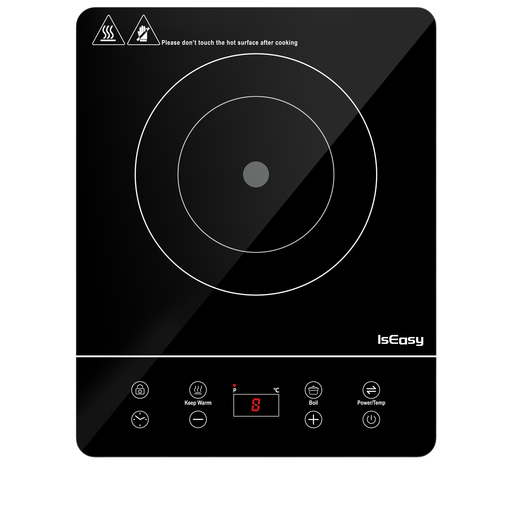
Only consider this if your pan is magnetic and measures 12–26 cm in diameter, as stated in the product information.
The product name specifies one cooking zone, nine power settings, nine temperature settings, 28 cm, an 8-hour timer and 220–240 V.
 No image available
As an induction hob, it’s only suitable if your cookware is induction-compatible.
The product name specifies 3500 W and ten temperature settings.
 No image available
The product description says it is compatible with heat-resistant cookware made from various materials; check the appliance specifications to see if your pan is suitable.
Features listed include 3500 W, a timer, and touch and rotary controls.
 No image available
This hob requires magnetic cookware. If you have a pacemaker, ask your doctor whether it’s suitable for you; the product description also specifies a minimum distance of 30 cm.
The product name specifies 2000 W, ten power settings and six functions.
 No image available
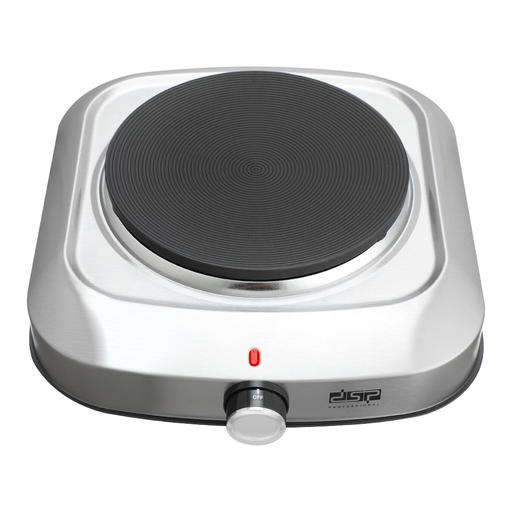
An electric single hotplate for one pan; check the appliance specifications to make sure your cookware is suitable.
The product name specifies 1500 W and adjustable temperature control. The product description says a slight smell and some smoke may occur during first use, and recommends using the appliance in a well-ventilated area.
The pan needs a flat, induction-compatible base with a diameter that suits the specific model. Check the material and base size separately against the appliance specifications, as a suitable diameter alone isn’t enough.
Choose a low power setting and keep an eye on the soup, rather than relying on the wattage, boost setting or timer alone. A model’s power settings don’t independently prove how evenly it will simmer a small portion, so stir the soup as it cooks.
You can only decide this by checking the approval and operating instructions for the specific appliance. The German Environment Agency notes that incomplete combustion can produce carbon monoxide; this does not mean the appliance is generally approved for indoor use.
No. The Federal Institute for Occupational Safety and Health makes clear that the CE mark is not the same as an independent safety certification mark. The European Union describes CE marking as the manufacturer’s declaration that the product meets the relevant requirements.
Ask your doctor to assess whether it’s suitable for you, rather than applying general information to an individual case. The German Federal Office for Radiation Protection notes that electric and magnetic fields can affect electronic implants, and that a doctor should assess the individual risk of interference.