For curry cooks with limited worktop space
If you only have room for one cooking zone, you can prepare the curry and side dish one after the other. Compare the hob’s width and depth, and allow room for the pan too.


If your curry pan is induction-compatible and you cook the curry and side dish one after the other, a compact single-zone induction hob could be a good option. It responds quickly to changes in power, but you’ll need suitable cookware. If your pan isn’t induction-compatible, consider a radiant or cast-iron hob. To cook with two pans at once, you’ll need a second cooking zone and more worktop space. Before buying, check the base of your pan, the usable cooking-zone diameter, the appliance dimensions and the set-up instructions for the specific model.
If you only have room for one cooking zone, you can prepare the curry and side dish one after the other. Compare the hob’s width and depth, and allow room for the pan too.
When frying vegetables and spices before leaving the curry to simmer, easy-to-use power settings and control at lower temperatures matter. A high maximum power rating alone doesn’t tell you how well you can control a gentle simmer.
If you want to keep using your existing pan, first check its material and base diameter. The Federal Office for Radiation Protection points out that the material and size of the pan need to be suitable for induction.
First, check that your existing pan is compatible with the hob’s heating technology. Then consider how you cook and how much space you have to help you choose between a single or double hob and compare the available controls.
| Consideration | What to check | Who needs to know? |
|---|---|---|
| Worktop space and cooking zones | The appliance’s width and depth, allowing room for the pan; one or two zones depending on how you cook. | If I’m cooking in a small space, I want to know whether there’s enough room for the hob and pan. Around 36% of consumers list available space as one of their main concerns. |
| Heat for frying and simmering | Easy-to-use power settings and, where available, model-specific information about how the hob performs on a low setting. | If you fry vegetables before simmering the curry, look for suitable heat controls rather than focusing only on maximum power. Around 29% of consumers prioritise heat control. |
| Compatibility with your existing pan | Check the material and flat contact surface of the pan’s base against the supported cooking-zone diameter. | If I want to keep using my curry pan, I’ll check that it’s compatible with the heating technology. Around 21% of consumers prioritise compatibility with their existing pan. |
| Cooking curry and a side dish at the same time | If you want to cook both at once, check the number of zones, appliance dimensions and connection details. | If you want to prepare curry and a side dish at the same time, you’ll need room for two pans. Around 14% of consumers say cooking two dishes at once is their main concern. |
The appliance’s height doesn’t tell you how much worktop space it needs. Remember to allow room for the pan and space to operate the hob too.
Measure the available width and depth, then compare them with the appliance dimensions. Also follow the set-up instructions in the user manual.
A pan with a base that isn’t induction-compatible won’t work on an induction hob.
Check your pan’s material and base diameter, along with the cooking-zone diameter supported by the specific model. If your pan isn’t compatible, consider a different type of hob.
Two zones are useful for cooking dishes at the same time, but they take up more worktop space.
Consider whether the rice and curry really need to cook at the same time. If cooking one after the other works for you, compare single hobs first. If you’re considering a double hob, check that you have enough room to set it up.
Electric hobs covered by EU low-voltage rules must carry the required CE marking. As EUR-Lex explains, this is the manufacturer’s declaration of conformity, not an independent product assessment.
Check the marking and product information for the specific item you’re considering. Also use the appliance specifications to assess whether it suits the way you cook.
The Silvercrest SIKP 2200 B1 is a documented example of a single-zone induction hob.
The CT 2020/IN and CT 2200/E are examples of induction and radiant-heated glass-ceramic models respectively.
The KP 1091, with a cast-iron heating element, and the DK 1031, with two induction zones, offer different solutions for varying space and cookware needs.
The EKP 3582 is a single hob with a conventional heating element, while the EKI 3569 is an induction model.
The options below include portable induction, radiant and infrared hobs to suit different cookware and heat-control needs.
 No image available
A single cooking zone for curry prepared in stages, with the option to adjust the heat as you go.
Heating ring: 18 cm; 1.500 W; continuously adjustable temperature control.
The heating surface gets very hot during use and immediately afterwards. Let it cool completely before cleaning.
 No image available
A single induction zone for dishes cooked one after the other, provided your pan is induction-compatible.
Glass surface, nine heat settings, touch controls and an 8-hour timer; stated cookware size: 12–26 cm.
 No image available
A single cooking zone for smaller meals where you want to adjust the heat across several settings.
Five power settings and a rotary control; described as a single hob.
Induction requires suitable magnetic cookware.
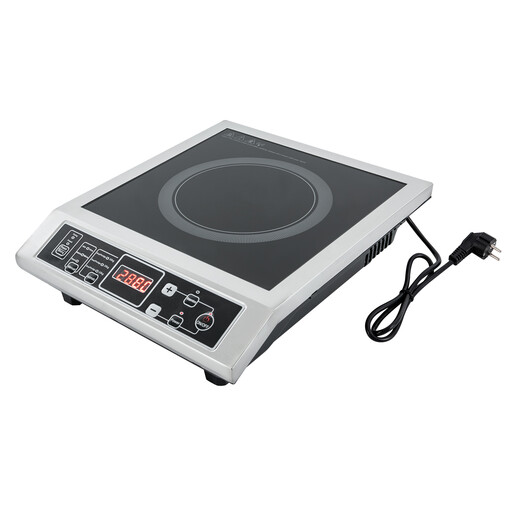 No image available
Separate power and temperature settings may be useful for different stages of cooking. Check whether they suit the way you like to cook.
Eight power settings, eight temperature settings, a timer and an EU plug.
The product information lists iron or stainless-steel cookware as suitable. Before buying, check that your pan is compatible.
 No image available
An infrared hob may be an option if your pan isn’t induction-compatible, provided you use cookware suitable for this type of heating.
Ceramic surface, timer, touch controls and rotary control.
The product information states that heat-resistant cookware is required.
Only if the pan’s base is induction-compatible and its size suits the cooking zone on the specific appliance. Check the material and base diameter before buying; the Federal Office for Radiation Protection highlights the importance of suitable cookware.
Measure the available width and depth, and also follow the clearance and ventilation instructions in the user manual for your chosen model. Allow room for the pan too; a low appliance height doesn’t tell you how much worktop space it needs.
Compare the available power settings and, where possible, model-specific details about how the hob performs on a low setting. A high maximum power rating alone doesn’t show how well you can control the heat when simmering.
Check the appliance’s power and connection details against the socket you plan to use, and follow the user manual. Don’t use powerful kitchen appliances together on an extension lead without checking first.
Electric hobs covered by EU low-voltage rules must carry the required CE marking. It’s the manufacturer’s declaration of conformity, not an independent quality mark. Check the marking and product information for the specific item you’re considering.