Custard makers
For anyone making a small, heat-sensitive egg custard and wanting to adjust the heat easily while stirring constantly. Good Food points out that excessive heat can cause the egg to set.


For a small pan with a ferromagnetic base, a portable induction hob is an obvious choice, provided the pan’s diameter is compatible with the model. If you don’t have a suitable induction pan, a radiant or cast-iron hob may be an option. Whichever type you choose, you’ll still need to stir and keep an eye on the custard: the appliance’s settings alone can’t guarantee a particular temperature.
For anyone making a small, heat-sensitive egg custard and wanting to adjust the heat easily while stirring constantly. Good Food points out that excessive heat can cause the egg to set.
For anyone who wants to keep using their existing pan and needs to check that its base and diameter are compatible with the hob’s heating technology and stated requirements.
For anyone looking for a single cooking zone who also needs to consider the appliance’s full dimensions and a suitable place to set it up.
A good fit if: Your small pan has a ferromagnetic base and falls within the size range specified for the model.
Things to consider: A pan that is unsuitable or too small won’t work as intended. You’ll still need to stir and keep an eye on the custard as it cooks.
A good fit if: You want to use a pan that isn’t suitable for induction and prefer a smooth cooking surface.
Things to consider: Look for a heating zone that suits your pan size, and take care around the hot surface. Ceramic glass describes the surface material, not the heating technology.
A good fit if: You want to cook with your existing pans without needing induction-compatible cookware, and adjust the setting continuously.
Things to consider: The hob may continue to give off heat after you turn it down or switch it off. Move delicate custard off the hob if needed.
If you’re looking for a portable hob to make one serving of custard, the key things to consider are pan compatibility, heat control, available space and the conditions of use.
| What you need | What to check before buying | Who should pay particular attention |
|---|---|---|
| Control the heat as the custard thickens | Check whether it’s easy to adjust the power while stirring. Power settings aren’t the same as a measured food temperature. | When I make egg custard, I want to be able to adjust the heat easily without stopping stirring. Around 33% of consumers put heat control first. |
| Use an existing small pan | For induction, check that your pan has a ferromagnetic base and that its diameter matches the appliance’s stated requirements. | I want to keep using my small pan and make sure in advance that its base and size are suitable for the heating technology. Around 27% of consumers prioritise pan compatibility. |
| Space for one cooking zone | Measure the space you have in mind and compare it with the appliance’s full dimensions, not just the diameter of the cooking zone. | If I’m only heating one pan, I want the hob to fit on my limited worktop space. Around 20% of consumers put available space first. |
| Overall cost and after-sales support | Check whether your existing pan is suitable, and confirm the warranty terms and how statutory rights for faulty goods are handled with the seller. | I want to take possible extra purchases and after-sales support into account. Around 20% of consumers focus on overall cost and support. |
The Rommelsbacher CT 2010/IN uses induction; the CT 2203/TC TM also has a ceramic-glass surface, but uses HiLight radiant heating, according to the manufacturer. So the cooking surface’s name alone doesn’t tell you how it heats.
Check the full model name, then make sure its heating technology is compatible with your pan.
The appliance’s settings don’t tell you how hot the food gets in a particular pan. Excessive heat can cause the egg in custard to set.
Choose easy-to-use settings, follow the recipe and keep an eye on the custard rather than relying on the appliance’s display alone.
A cast-iron or radiant hob may continue to transfer heat to the pan after you turn it down or switch it off.
Move delicate custard off the hob if needed, and follow the appliance instructions when cooling and cleaning it.
The CT 2010/IN is a single induction hob; the CT 2203/TC TM is a single hob with HiLight radiant heating.
The Touch 2000 is a portable single induction hob for anyone with a compatible pan.
The KP 1091 is a single cast-iron hob, making it an option that doesn’t require induction-compatible cookware.
The Einzel Elégance 58105 is another induction option for smaller, compatible cookware.
The EKI 3569 is a single induction hob with pan detection and touch controls.
This selection includes single hobs for one cooking zone, with induction models and a cast-iron hob.
 No image available
A single cooking zone with continuously variable temperature control, so you can adjust the heat as you stir.
The product information gives the heating ring’s diameter as 18 cm. Use cookware with a flat, stable base; the cooking surface gets very hot during use.
 No image available
A portable single induction hob with several heat settings, for anyone with compatible cookware.
The product details list nine heat settings, touch controls and an 8-hour timer. The stated suitable pan size is 12–26 cm; the pan must be induction-compatible.
 No image available
A single portable induction hob for anyone looking for a compact tabletop appliance with a rotary control.
The description lists five heat settings and dimensions of 21.5 × 21.5 × 4.7 cm. Induction-compatible cookware is required.
 No image available
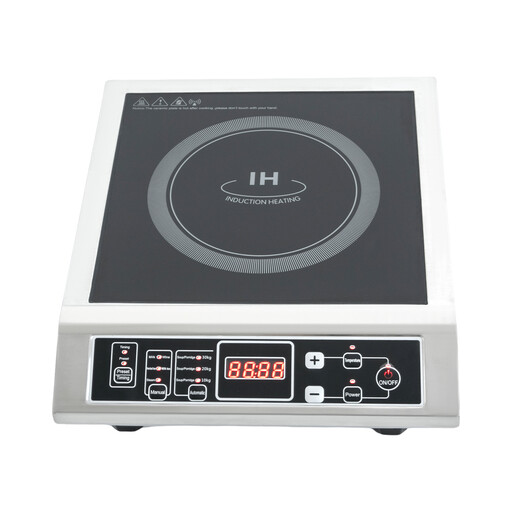
A portable induction hob for anyone who wants a range of appliance settings to choose from.
The description lists ten temperature settings, ten power levels, a timer and a preset function. Induction-compatible cookware is required.
 No image available
A portable induction hob for anyone looking for a single cooking zone with adjustable settings.
The product name lists ten temperature settings. Induction-compatible cookware is required.
No. The pan base must be suitable for induction, and its diameter must match the requirements of the specific model. Rommelsbacher specifies a ferromagnetic base and a 120–230 mm cooking zone for the CT 2010/IN; CASO gives a pan diameter of 12–24 cm for the Touch 2000.
No. Excessive heat can cause the egg in custard to set, and Good Food recommends stirring continuously. Dr. Oetker’s instructions for cooked pudding call for bringing it to the boil, then simmering while stirring vigorously. Follow the method in the recipe you’re using.
No. The appliance settings describe the hob’s functions, not the measured temperature of the food. Follow the recipe, stir and keep an eye on the custard rather than relying on the display alone.
Follow the instructions for your specific appliance, and remember that cast-iron and radiant hobs can remain hot. Only clean the hob when the conditions set out in the instructions have been met, and don’t use an appliance with a damaged cable or casing.
Mains-powered hobs that fall within the scope of the EU Low Voltage Directive must meet the relevant safety and conformity requirements. According to the European Commission, the manufacturer is responsible for meeting the applicable EU requirements and affixing the CE marking. The Bundesnetzagentur’s market surveillance checks, among other things, the marking and whether the product can be identified. The CE mark is not an independent quality mark.