Families who make porridge regularly
If you want to let the porridge simmer on a medium heat after bringing it to the boil, while stirring, check how easy the hob is to operate and turn down.


If the base of your saucepan is induction-compatible and matches the cooking zone, an adjustable single induction hob could be a good option. For a saucepan that isn’t induction-compatible, you could consider a conventional electric hotplate. When making porridge, it’s important to turn the heat down after bringing it to the boil and stir as it simmers – a timer can’t do that for you. A double hob is worth considering mainly if you need to use a second cooking zone at the same time.
If you want to let the porridge simmer on a medium heat after bringing it to the boil, while stirring, check how easy the hob is to operate and turn down.
If you’re making several portions in one saucepan, compare its base and its weight when full with the cooking zone specifications and the appliance’s stated load capacity.
Before choosing a heating method, check whether your saucepan is induction-compatible. If it isn’t, a conventional electric hotplate could be a suitable alternative.
Dr. Oetker’s porridge recipe calls for simmering over a medium heat and stirring after bringing the mixture to the boil. So the right heating method also depends on whether your saucepan is compatible and whether you want to use a second cooking zone at the same time.
A good fit if: Your saucepan has a suitable magnetic base and you need one cooking zone for the porridge.
Bear in mind: The saucepan base and cooking zone need to match; unsuitable cookware won’t work.
A good fit if: You want to carry on using your existing saucepan, which isn’t induction-compatible.
Bear in mind: The cooking surface itself gets hot and may retain heat after cooking.
A good fit if: You genuinely want to heat a second dish or topping at the same time as the porridge.
Bear in mind: Check the space available and the connection requirements; there’s no evidence that a second zone offers an advantage when you’re only using one saucepan.
| What matters | What to check before buying | Who is this especially important for? |
|---|---|---|
| Turning down the heat after bringing it to the boil | How easy it is to turn the heat down; where relevant, check the power settings and timer on the specific model. | If I want to turn the heat down easily after bringing the porridge to the boil and stir it as it simmers, ease of use matters more to me than a high wattage. Around 36% of consumers put controllable simmering first. |
| Fit for the family saucepan | Compare the base diameter and the weight of the full saucepan with the appliance specifications. | When making several portions, I want to know whether the saucepan base and weight meet the manufacturer’s specifications. Around 29% of consumers prioritise a good fit for their family saucepan. |
| Continuing to use an existing saucepan | For induction, check the material and that the base is flat; also compare the saucepan base with the cooking zone. | If my existing saucepan isn’t induction-compatible, I’d like to keep using it if possible. Around 21% of consumers put continuing to use their saucepan first. |
| Positioning and connection | Check the instructions for the specific model, the clearance from flammable objects, the rated power and the load capacity of the connection. | If I need to consider where to put the hob, hot surfaces and the power connection, I check these points before choosing. Around 14% of consumers give the greatest priority to positioning and ease of use. |
The base that actually sits on the hob is what matters for a good fit. For induction, the material must also be suitable.
Measure the base of your saucepan and compare it with the specifications in the instructions for the model you’re considering.
Power ratings and settings are appliance specifications; they don’t show how the heat will affect your porridge or guarantee that it won’t stick.
Plan to stir, and check how easy the appliance is to operate after bringing the porridge to the boil. A timer won’t stop food from burning.
Rommelsbacher warns against using unsuitable extension blocks with powerful double hobs.
Check the connection requirements for the specific model and the maximum load for the connection, especially if other appliances are running at the same time.
The CT 2010/IN is a single induction hob; the CT 2200/E uses conventional ceramic glass heating zones.
The Touch 2000 is a portable single induction hob for use with a compatible saucepan.
The EKP 3582 is a conventional single hotplate that could be an option if you have an existing saucepan that isn’t induction-compatible.
The DK 1031 is a double induction hob for situations where you want to use two cooking zones at the same time.
The SIKP 2200 B1 is a portable induction hob included in an independent hob test.
This selection includes portable single hotplates with conventional heating surfaces or induction, as well as double induction hobs – so you can compare them with your existing saucepan and the number of cooking zones you actually need.
 No image available
An option if you use a flat, stable saucepan base and want to adjust the heat continuously.
Heating ring: 18 cm; power: 1.500 W. The cooking surface gets hot during use and immediately afterwards.
 No image available
Could be suitable if your saucepan base is magnetic and falls within the stated cookware size range.
Specifications include nine heat settings, an 8-hour timer and cookware with a magnetic base measuring 12–26 cm. Product dimensions: 35 × 28 × 4,4 cm; weight: 1,9 kg.
 No image available
An option if you genuinely want to use a second cooking zone at the same time as making porridge.
Specifications include two independently controlled cooking zones rated at 1.500 W and 1.000 W, as well as five temperature settings.
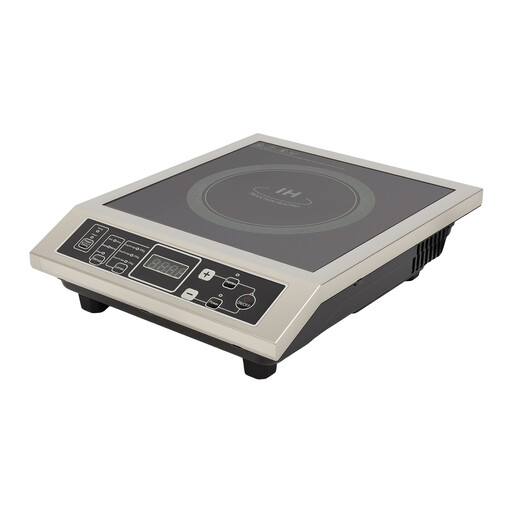 No image available
Could be an option if you’re looking for an adjustable single induction hob with a timer; you’ll need to check separately that the saucepan base is compatible with the hob.
Specifications include ten power settings, a timer function, an EU plug and a load capacity of 50 kg. The stated load capacity doesn’t confirm that a particular saucepan base will fit.
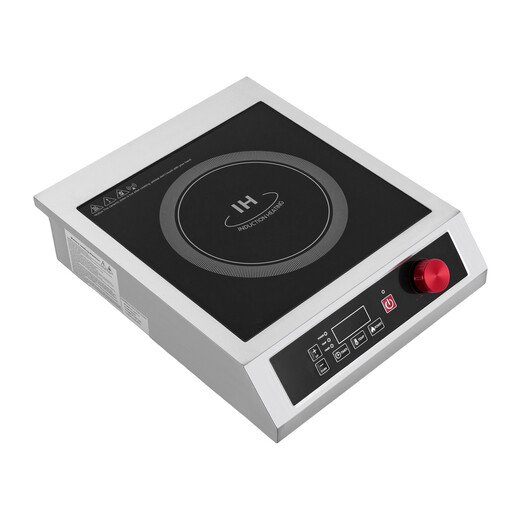 No image available
A single induction option if the base of your cookware is within the stated diameter range.
Specifications include ten power settings, ten temperature settings and a temperature range of 40–300 °C. This stated range doesn’t indicate the measured temperature of the porridge. For flat cookware, a diameter of up to 9,84 inches is specified; an EU plug is also listed.
The recipe described by Dr. Oetker brings the ingredients to the boil, then simmers them over a medium heat while you stir. Choose a hob that’s easy to turn down, and plan to stir as it simmers; a timer doesn’t guarantee that the porridge will cook successfully while unattended.
Follow the instructions for the specific model and make sure you use a suitable, level surface. Be aware that surfaces may remain hot after cooking. The instructions for the Clatronic EKP 3582 specify a 30 cm clearance from easily flammable objects for this model; this isn’t a general requirement for all hobs.
For the mains-powered appliances considered here that fall within the scope of the Low Voltage Directive, CE marking is required before they can be made available on the market, as explained by the European Commission and Your Europe. A GS mark is different and isn’t established as an additional general requirement; CE marking isn’t an independent safety test mark. Check the markings and documentation for the specific appliance.
The Federal Office for Radiation Protection notes that electric and magnetic fields can affect electronic implants, and that sensitivity depends on the implant. If this may affect you, ask a doctor to assess your individual risk of interference; this doesn’t mean that all induction hobs are automatically off limits.
If a product is faulty, you have statutory consumer rights against the seller; these are separate from a voluntary manufacturer’s guarantee, as explained by the consumer advice centre on 28 September 2026. Goods ordered online are generally covered by a 14-day right to cancel from the date you receive them, subject to the terms of the specific purchase. The consumer advice centre published information about this on 13 August 2026.