Simmer coulis gently
If you make fruit coulis in a pan, you’ll want to be able to turn down the heat easily once it has come to the boil. The hob’s settings help you choose a heat level, but they don’t measure the temperature of the food.


Choose the heating type to suit the pan you already own: induction requires a suitable magnetic pan base, while HiLight and cast-iron hobs offer alternatives for other cookware. Power settings and timers make a hob easier to use, but they do not confirm the temperature of the coulis. For portions served later, the German Federal Institute for Risk Assessment recommends keeping food at a temperature of at least 60 °C throughout, or cooling it quickly to below 7 °C for longer storage.
If you make fruit coulis in a pan, you’ll want to be able to turn down the heat easily once it has come to the boil. The hob’s settings help you choose a heat level, but they don’t measure the temperature of the food.
If people are eating at different times, decide whether to reheat a portion, keep it sufficiently hot or chill it quickly for longer storage. The German Federal Institute for Risk Assessment recommends keeping heated food at a temperature of at least 60 °C throughout, or cooling it quickly to below 7 °C for longer storage.
If you want to keep using your coulis pan, check that its base is suitable for induction and that its size is compatible with the stated cooking zone before choosing an induction hob. Rommelsbacher specifies a ferromagnetic pan base as a requirement for the CT 2010/IN.
A good fit if: your pan has an induction-compatible base and you want to adjust the heat once it has come to the boil.
Bear in mind: check the permitted pan diameter. A displayed temperature or keep-warm setting doesn’t confirm the temperature throughout the coulis.
A good fit if: your pan isn’t suitable for induction and you prefer a smooth cooking surface. The Rommelsbacher CT 2203/TC has two stated heating zone sizes.
Bear in mind: the cooking surface can still give off heat after you remove the pan, so take care when handling and cleaning it.
A good fit if: you want to keep using a pan that isn’t suitable for induction.
Bear in mind: according to Rommelsbacher’s comparison of the technologies, cast iron heats up more slowly and retains heat for longer than induction. For delicate coulis, it may therefore be worth taking the pan off the hob once it’s heated through.
| Buying priority | What to check before buying | Who is it most relevant to? |
|---|---|---|
| Control the heat while simmering | The power settings, controls and, where available, timer on the specific model; keep an eye on the coulis and stir it while it cooks. | If I want to fine-tune the heat once the coulis has come to the boil, easy-to-reach settings matter. Around 36% of consumers prioritise controllable simmering. |
| Manage portions to serve later | Check whether the hob can be adjusted suitably for reheating; plan hot holding and storage separately. | If everyone isn’t eating at the same time, I need to decide whether to reheat a portion or keep it safely hot. Around 29% of consumers put staggered mealtimes first. |
| Use an existing pan | Check that the pan base is suitable for induction and that the hob’s stated pan size range includes it. | If I want to keep using my coulis pan, its suitability for the heating type I choose is key. Around 21% of consumers prioritise continuing to use a pan they already own. |
| Space for setting up and storing the hob | Check the appliance dimensions, permitted pan size and availability of a suitable clear surface, using the instruction manual. | If I need to put the hob away after cooking, the space it takes up and its dimensions matter. Around 14% of consumers prioritise a compact design. |
A display reading or keep-warm programme doesn’t confirm that the food is at the desired temperature throughout. The German Federal Institute for Risk Assessment recommends keeping food at a temperature of at least 60 °C throughout.
Check the food itself, not just the display. Plan longer-term storage separately from the cooking programme and cool hot food quickly to below 7 °C, as recommended by the German Federal Institute for Risk Assessment.
If you want to check the actual temperature of the food, you may need a separate suitable thermometer.
An induction hob only works with suitable cookware. Rommelsbacher specifies a ferromagnetic pan base as a requirement for the CT 2010/IN.
Before buying, check both the pan base and the pan size range specified for the particular appliance.
Wattage figures alone don’t show how a heating type warms up or how much heat it gives off after being switched off. You also need to take residual heat into account with cast-iron and HiLight hobs.
First choose a hob to suit your pan and how you cook, then compare the specifications for the particular model.
Portable induction hobs with a range of controls and features, including models with a temperature probe.
The models listed include a portable induction hob and a HiLight ceramic-glass hob.
This selection includes a portable induction hob and a cast-iron hob.
The Kult X Mono is a portable single induction hob with direct-select programmes.
The SIKP 2200 B1 is listed as a portable single induction hob for this buying decision.
The portable induction hobs below offer a range of power settings and timer functions. Check that your pan is induction-compatible and fits the stated pan size. Before buying, also check the details for the specific model regarding CE marking and German-language instructions.
 No image available
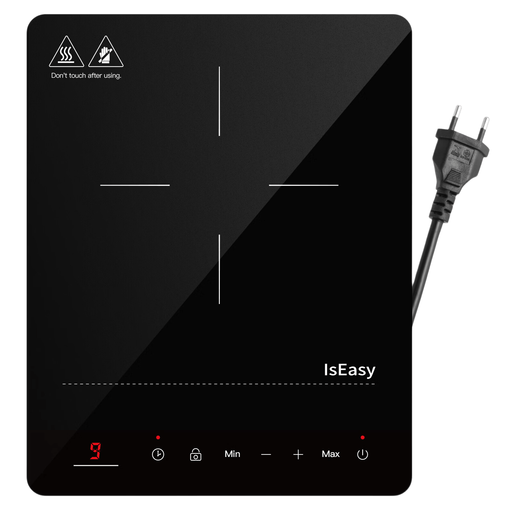
Could be a good option for making coulis if you want a choice of power settings and your pan is induction-compatible.
Specifications include nine heat settings, a 120-W keep-warm setting and an 8-hour timer. According to the product details, it is designed for magnetic cookware with a diameter of 12–26 cm.
 No image available
The five power settings and rotary control let you adjust the heat while cooking, provided your pan is induction-compatible.
Specifications include 1,000 W and five heat settings. The product description also mentions use at home, when camping and in a motorhome.
 No image available
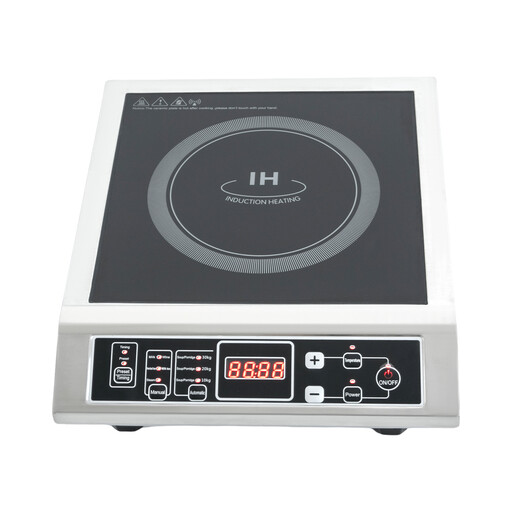
The stated settings may be useful if you want to adjust the heat, but they don’t measure the temperature of the coulis.
Specifications include ten power settings, a timer and a preset function. The product description lists a power range of 400–3,500 W and temperature settings of 176–572 °F.
 No image available
The ten temperature settings give you options for heating, but they don’t replace checking the temperature of the food itself.
Specifications include ten temperature settings, a 3-hour timer and 220–240 V.
 No image available
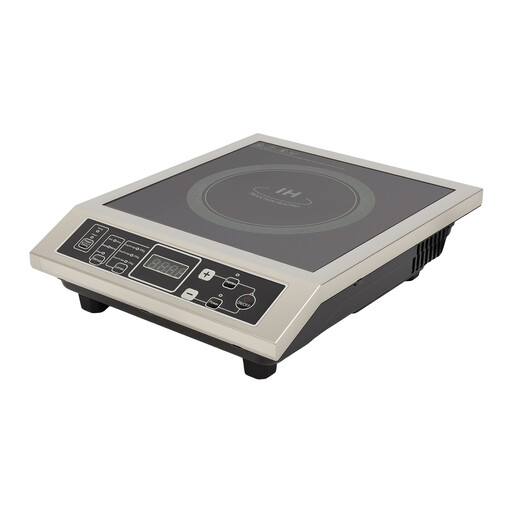
The power settings let you choose a heat level, but don’t indicate how this affects the temperature of the coulis.
Specifications include 3,500 W, ten power settings, a timer and a preset function. The product name also includes the IPX4 rating.
A hob setting alone doesn’t confirm that food is at a safe temperature. The German Federal Institute for Risk Assessment recommends keeping heated food at a temperature of at least 60 °C throughout; for longer storage, hot food should be cooled quickly to below 7 °C. A programme name doesn’t guarantee these conditions.
Follow the instructions for the specific model on where to place it, how to use it and how to clean it. The residual heat indicator on the Rommelsbacher CT 2203/TC ceramic-glass hob warns you that heat remains.
Your statutory rights generally apply against the retailer; a manufacturer’s guarantee is an optional additional service with its own terms and conditions. The Verbraucherzentrale explains the difference. Also check whether a repair service is listed for the specific model.
Electrical appliances within the scope of the EU Low Voltage Directive must meet the relevant EU requirements, including the mandatory CE marking. The European Commission and the German Federal Network Agency explain the requirements and market surveillance. A CE mark isn’t independent proof of cooking performance.