Batch cook with one saucepan
You cook several portions of sauce one after the other with the side dish, and want to use just one cooking zone.


If you cook the sauce and side dish one after the other in a suitable saucepan, a single hob is a space-saving place to start; if you want to cook them at the same time, a double hob is more practical. First check that your saucepan is compatible with the heating technology and the stated base diameter, then consider the controls, footprint and connection. Induction requires suitable cookware; a radiant ceramic-glass or cast-iron hob can be an alternative if you want to keep using your existing saucepan.
You cook several portions of sauce one after the other with the side dish, and want to use just one cooking zone.
You want to prepare the sauce and side dish at the same time, and have room for two suitable saucepans.
You want to check whether your saucepan is induction-compatible before choosing a hob, so you don't end up having to budget for extra cookware.
First decide whether you want to cook the sauce and side dish at the same time, then check the saucepan base and heating technology. With a thick lentil Bolognese, choosing the right heat setting and stirring regularly are two separate considerations.
| What matters | What to check before buying | Who this matters most to |
|---|---|---|
| Cookware and heating technology | Check the material, flat base diameter and the appliance's stated induction compatibility. For example, Rommelsbacher specifies 12 to 20 cm for the CTA 1800/IN. | If I want to keep using my existing saucepan, I'll compare its base with the appliance specifications. Around 36% of consumers prioritise cookware compatibility. |
| Controllable simmering | Compare the controls and settings of the specific model; having lots of settings does not, by itself, guarantee an even simmer. | For a thick sauce, I want to set the heat appropriately while still being able to stir. Around 29% of consumers prioritise controllable simmering. |
| One or two cooking zones | Check whether you really want to cook both dishes at once, and measure the available space and room for two saucepans. CASO specifies a total output of 3,500 W for the ProGourmet 3500; Severin gives a width of 59 cm for the DK 1031. | If the sauce and side dish need to be ready at the same time, I need two suitable saucepans and enough worktop space. Around 21% of consumers prioritise cooking both at once. |
| Space and connection | Measure the appliance and cable route, and check its rated power and the manufacturer's guidance on connecting it. Rommelsbacher advises against using extension leads with multiple sockets for its high-powered double hobs. | If worktop space or available connections are limited, I want to know in advance where the hob can be safely placed and connected. Around 14% of consumers prioritise space and connection requirements. |
Ceramic glass describes the surface, not necessarily the heating technology. Rommelsbacher offers an induction hob and a radiant ceramic-glass hob as separate models.
Check the heating technology and full model name in the specifications before deciding whether your saucepan is suitable.
CASO gives the ProGourmet 3500 a maximum total output of 3,500 W. Power sharing means that the output is divided between the cooking zones.
If you plan to cook both dishes at once, check how the specific model distributes its power rather than assuming the total figure applies to each zone.
A hob does not cool the sauce, keep it chilled in storage or maintain its temperature during chilled transport.
The Federal Institute for Risk Assessment recommends cooling leftovers promptly and storing them in the fridge. If you're preparing several portions, plan suitable containers and a way to keep them chilled during storage and transport.
For larger quantities, shallow containers can make it easier to divide the food up for cooling.
The CTA 1800/IN is a portable single induction hob; the CT 2200/E is a single radiant ceramic-glass hob.
The ProGourmet 3500 is a portable double induction hob for cooking two dishes at once.
The DK 1031 is a double induction hob with two cooking zones and a timer.
The EKP 3582 is a single cast-iron hotplate with a rotary control.
The SIKP 2200 B1 is a portable single induction hob.
This selection features portable induction hobs for cooking on one or two zones. Before buying, check that your saucepan is compatible and that the appliance's connection requirements suit the place where you plan to use it.
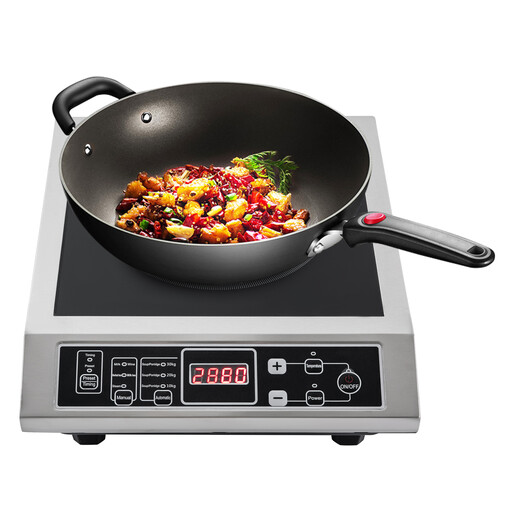 No image available
A portable induction option for cooking on one zone; check whether your saucepan is induction-compatible.
The product title lists 8 temperature settings, 800–3,500 W and a timer function.
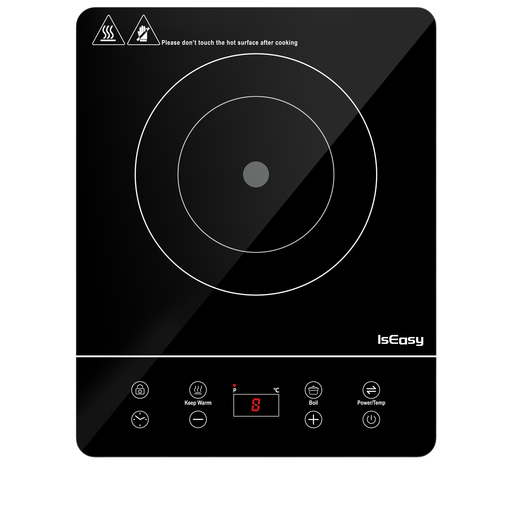 No image available
A portable single cooking zone for your sauce, provided your saucepan is compatible with both induction and the hob.
The product title lists 9 power levels, 9 temperature settings, a timer of up to 8 hours, a child lock and 220–240 V.
 No image available
Two cooking zones are worth considering if you want to prepare the sauce and side dish at the same time and have enough space for the hob.
The product title lists five temperature settings.
 No image available
A single cooking zone for your sauce, if a compact induction hob is compatible with the saucepan you plan to use.
The product title lists 1,000 W and five power levels.
 No image available
A portable induction option for cooking on one zone; check the appliance specifications to confirm your saucepan is compatible.
The product title lists 3,500 W and 10 temperature settings.
Check the material, flatness and base diameter of your saucepan against the instructions for the specific appliance. The Federal Office for Radiation Protection notes that cookware material and size are important factors in determining compatibility.
There is no single answer for every appliance. Rommelsbacher advises against using extension leads with multiple sockets for its high-powered double hobs. Check your appliance instructions and the planned connection; if in doubt, ask a qualified professional to assess the installation.
The Federal Institute for Risk Assessment recommends cooling leftovers to below 7 °C within a few hours. Divide larger quantities between shallow containers to help them cool, store them in the fridge and eat them within two to three days. Keeping them properly chilled during transport is also important.
No. According to Your Europe, the manufacturer uses the CE marking to declare that the product meets the relevant EU requirements; it is not approval from a central EU certification body. Check the information for the specific appliance and listing.
The Federal Office for Radiation Protection recommends that people with an active implant, such as a pacemaker, ask their doctor whether electric or magnetic fields from household appliances could affect it. This does not allow a general conclusion about the suitability of any particular hob.