For a pot of leek soup, an adjustable single hob is usually a space-saving place to start; with induction, the base of the pan must be suitable. Two zones make sense if you really need to use two pans at once. If there’s a long wait before serving, don’t rely on an advertised keep-warm setting: the German Federal Institute for Risk Assessment (BfR) recommends keeping heated food at a minimum of 60 °C throughout until it is eaten; otherwise, later portions should be chilled.
Who cooks at different times?
Cooks serving meals at different times
If you’re not serving a whole pot of leek soup straight away, you’ll need to consider whether you can keep it hot enough or chill the later portions. The BfR recommends keeping food at a minimum of 60 °C throughout when holding it hot.
Cooks who already have a soup pan
If you want to keep using your pan, check its base and the required diameter before choosing a heating method. Induction requires a suitable magnetic pan base.
Cooks using two pans at once
If you want to use two pans on the hob at the same time, you’ll need two cooking zones and enough space. Also check what the stated total power refers to.
What should you look for when buying?
First decide how you’ll handle the later portions, then check pan compatibility, adjustability and whether you really need a second cooking zone.
| Consideration |
What to look for when buying |
Who it matters most to |
| Handling soup between meals |
If keeping it hot, check the temperature of the soup itself; a setting on the appliance won’t tell you this. The BfR recommends a minimum of 60 °C throughout the food. |
If you need to bridge a long gap between portions, weigh up keeping the soup hot against chilling it. Around 36 % of consumers put the safe handling of later portions first. |
| Simmering gently |
Compare the low power settings, controls and shut-off behaviour of the specific model; the hob display does not measure the temperature of the food. |
If you want the soup to keep simmering after it comes to the boil, you’ll need to adjust the heat to suit your pan. Around 29 % of consumers prioritise having control over the simmer. |
| Keeping your existing pan |
For induction, check that the pan has a magnetic base and that its diameter is suitable for the hob. If the base isn’t compatible, consider a conventional hotplate. |
If you’d rather not buy a new soup pan, first check which heating method works with the one you already have. Around 21 % of consumers prioritise pan compatibility. |
| Using two cooking zones |
Measure the space available for the appliance, pans and handles, and check whether you really need to use two pans at once. For double hobs, check the stated total power. |
If you want to cook soup and another dish at the same time, you’ll need two usable zones and enough space. Around 14 % of consumers prioritise cooking with two pans at once. |
Common buying and usage mistakes
-
Assuming the temperature setting is the soup’s temperature
When keeping soup hot, what matters is the temperature throughout the food, not the setting on the appliance. The BfR recommends a minimum of 60 °C.
If you’re keeping soup hot for a long time, check the soup itself. If you can’t keep it hot enough, make sure you have a suitable way to chill later portions.
-
Choosing induction without checking your pan
A pan with an unsuitable base won’t work on an induction hob.
Check the base and diameter of your existing pan before buying. If it isn’t compatible, consider a conventional hotplate.
You may also need suitable cookware for induction.
-
Relying on a timer or second zone to keep soup warm indefinitely
A timer can switch the appliance off, while an extra cooking zone takes up more space. Neither guarantees that the soup will reach a sufficiently high temperature when kept hot.
Choose two zones only if you genuinely need to cook with two pans at once, and check how the specific model switches off. If there’s a long wait, plan how you’ll handle the later portions.
A double hob takes up more space, and running the appliance uses electricity.
Brands and models to help you choose
Rommelsbacher
The CT 2010/IN is a portable single induction hob, while the CT 2203/TC uses radiant heat.
- According to the manufacturer, the CT 2010/IN has ten power settings and a timer of up to 180 minutes. The CT 2203/TC has a residual heat indicator.
- A temperature setting on the hob doesn’t tell you what temperature the soup reaches.
CASO Design
The Touch 2000 and Touch 3500 differ in several ways, including having one and two cooking zones respectively.
- According to the manufacturer, the Touch 2000 is designed for pans with a diameter of 12–24 cm and has a timer from 1–180 minutes. The two zones on the Touch 3500 can be controlled separately.
- The Touch 3500’s stated 3500 W is the combined power of its two zones. At 605 mm wide, it is wider than the 290 mm Touch 2000. Temperature settings don’t measure the temperature of the food.
Severin
The KP 1091 is a single cast-iron hotplate; the DK 1014 has two conventional cooking rings.
- According to the manufacturer, the KP 1091 has a cast-iron heating surface and a power rating of 1500 W. The DK 1014 has two independently adjustable heating rings.
- A double hotplate takes up more space than a single one.
Clatronic
The EKI 3569 is a portable single induction hob with several power and temperature settings.
- Clatronic lists pan detection and automatic shut-off after 120 minutes without use.
- The advertised time saving isn’t an independent comparison for cooking leek soup. Bear the shut-off feature in mind if you plan to use the appliance for longer.
Joybuy products for leek soup
This selection includes portable single hotplates with induction or conventional heating, as well as a double induction hob for two pans.
 No image available
Severin KP 1092 single hotplate, 1500 W
A single cooking zone with continuously adjustable temperature is an option if you want to use your existing pan and simmer the soup.
The product details specify 1500 W and an 18 cm diameter heating ring. According to the instructions, the appliance should be used on a stable, level, heat-resistant surface with a flat, stable pan base.
View at Joybuy
 No image available
IsEasy portable induction hob, 2100 W
A portable single hob with nine heat settings is worth considering if your soup pan is induction-compatible and you only need one cooking zone.
The product details specify nine heat settings, an 8-hour timer and magnetic cookware with a diameter of 12–26 cm. The timer and appliance settings don’t tell you the actual temperature of the soup.
View at Joybuy
 No image available
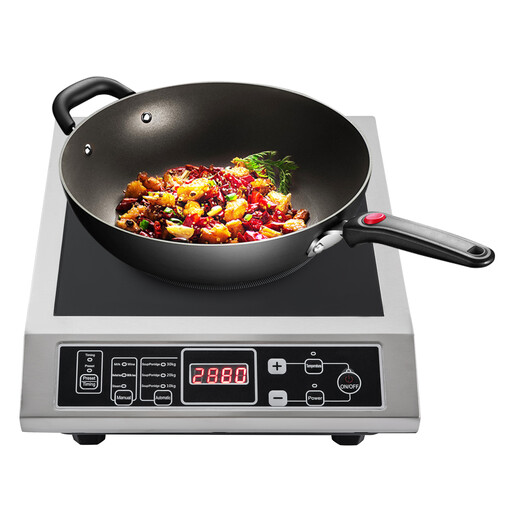
Portable induction hob, 3500 W
This single induction hob is an option if you want to use a simmer setting and have suitable magnetic cookware.
The product details specify eight temperature settings, eight power settings and a timer of up to three hours. A temperature setting doesn’t prove that the soup is hot enough throughout when kept warm.
View at Joybuy
 No image available
DTL06 infrared hotplate, 3500 W
A conventional infrared hotplate is worth considering if you don’t want to rely on an induction-compatible pan.
The product details list a soup mode and manual power adjustment. Heat-resistant cookware made from various materials is described as suitable.
View at Joybuy
 No image available
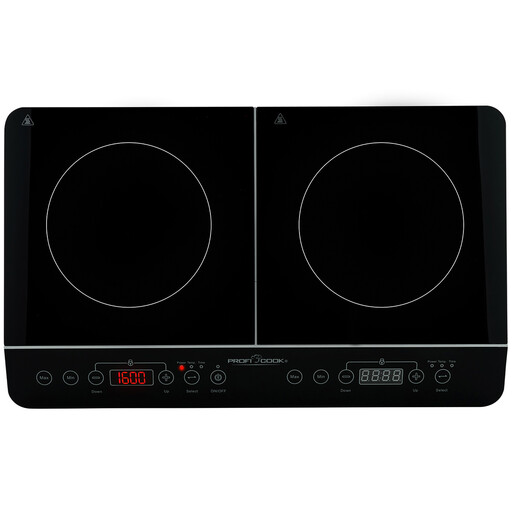
ProfiCook PC DKI 1067 double induction hob
Two cooking zones are a good fit if you want to cook leek soup and another dish at the same time, and both pans are suitable for induction.
The product details specify six power settings and ten temperature settings for each cooking zone, plus a timer of up to 180 minutes. According to the description, the appliance switches off after 120 minutes without use, so it isn’t presented as an unlimited keep-warm function.
View at Joybuy
Frequently asked questions
Is setting the hob to 60 °C enough to keep leek soup safely hot?
No, that won’t tell you the temperature of the soup. The BfR recommends keeping heated food at a minimum of 60 °C throughout when holding it hot. Check the food itself; if you can’t keep it hot enough, make sure you have a suitable way to chill later portions.
Do I need a new soup pan for a portable induction hob?
Not necessarily. Check whether the base of your existing pan is suitable for induction and whether its diameter is right for the specific hob. If the base isn’t compatible, a conventional hotplate is an alternative.
What should I bear in mind when setting up and cleaning the hob?
Follow the instructions for your specific appliance and make sure it’s positioned securely. Even with induction, the cooking surface can become dangerously hot from the hot pan after use; let the appliance cool before cleaning it.
Who is responsible if the appliance develops a fault: the retailer or the manufacturer?
Your statutory rights are against the retailer; a manufacturer’s guarantee is a separate, voluntary offer. According to information from the Consumer Advice Centre, if there’s a fault, you may initially be entitled to a remedy such as a repair or replacement.


