Which type of hob is right for you?

If you want to control the heat as the curd thickens

When making an egg custard, it’s important to be able to adjust the heat easily and keep stirring. EDEKA recommends thickening lemon curd over the lowest heat; a bain-marie is another gentle way to warm it.

If you’re short on worktop space

As well as space for the hob, allow room for the pan and for stirring. In a small kitchen, you’ll also need to consider the appliance’s overall footprint and where you can store it.

If you want to keep using your existing pan

Rommelsbacher says its induction hobs require a ferromagnetic pan base. Check your pan’s material and diameter before opting for induction.

What to look for when buying a hob for a small kitchen

Portable single induction hob

A good fit if: Your pan has a suitable magnetic base and falls within the size range supported by the model.

Bear in mind: A heat setting or temperature selection doesn’t automatically measure the temperature of the curd; a separate probe needs room too.

Radiant hotplate

A good fit if: You want to use an existing pan that isn’t suitable for induction.

Bear in mind: The cooking surface may stay hot after you turn the heat down, so move the pan off the hotplate if needed.

Single cast-iron hotplate

A good fit if: Simple controls and being able to use your existing pans matter more to you than a particularly slim design.

Bear in mind: Allow for residual heat from the cooking surface and don’t rely on the control setting alone.

What matters What to check before buying Who is this important to?
Controlled thickening Low heat settings and easy-to-reach controls; if there’s a probe, check that you can position it appropriately while cooking. When I’m thickening egg custard while stirring, I want to adjust the heat as needed. Roughly 40% of consumers put controlled heating first.
Space and storage Check the appliance’s full width and depth against the space available, and allow room to stir safely. With limited worktop space, I need room for the hob, pan and stirring. Roughly 30% of consumers prioritise space and storage.
Compatibility with your existing pan Compare the pan base and diameter with the specifications for the specific induction model. If I want to keep using my pan, I’ll first check that its base is suitable for induction. Roughly 20% of consumers prioritise cookware compatibility.
Additional appliances and accessories Check whether you already have a suitable pan and whether you really need a separate temperature probe. I want to avoid unnecessary extra appliances and check what I already have for the recipe. Roughly 10% of consumers put avoiding extra appliances first.

Common buying mistakes

  • Confusing a temperature setting with a measurement of the curd

    A selected setting doesn’t automatically show the temperature of the egg custard. CASO distinguishes between operation with and without the ThermoControl probe on the TC 2400.

    Check whether the specific model includes a probe and how it’s intended to be used when cooking.

  • Choosing induction without checking your pan

    Induction hobs need suitable cookware, and the supported pan diameter can vary from model to model.

    Check your pan’s material and base diameter against the appliance specifications. Otherwise, consider a radiant or cast-iron hotplate.

  • Measuring just the cooking zone, not the whole appliance

    In a small kitchen, the appliance’s overall dimensions can determine whether you’ll still have enough room to stir safely.

    Compare the appliance’s full width and depth with the space available, and follow the setup instructions in the manual.

Key brands at a glance

CASO Design

Portable induction hobs with a range of control and temperature features, including a model with a ThermoControl probe.

  • CASO says the TC 2400 has an adjustable range of 40–160 °C and a ThermoControl probe. The manufacturer lists ten power settings and pan sizes of 12–24 cm for the Touch 2000.
  • Both models require suitable cookware. The manufacturer’s specifications don’t demonstrate independently tested temperature accuracy specifically for making lemon curd.

Rommelsbacher

The portable CT 2020/IN uses induction, while the CT 2200/E is a HiLight radiant hotplate.

  • Rommelsbacher lists ten power settings for the CT 2020/IN and says it requires a ferromagnetic pan base. According to the manufacturer, the CT 2200/E has a rotary control and a second switchable heating zone.
  • The CT 2200/E is listed as 41,00 cm deep. Its surface is heated by a heating element, so check that it will fit your space and take care with residual heat.

Severin

The range includes portable induction hobs and a simple single cast-iron hotplate.

  • Severin describes the KP 1071 as having automatic pan detection. According to the manufacturer, the KP 1091 has a continuously adjustable control.
  • The KP 1091 doesn’t use induction. A continuously adjustable control doesn’t measure the temperature of the curd.

WMF

The Kult X Mono is a portable induction hob with touch controls.

  • WMF lists eight power settings, six programmes and a pan size range of 10–28 cm.
  • The programmes and model name alone don’t demonstrate that it’s especially suitable for lemon curd. Check that the controls and pan size range suit your needs.

Joybuy portable hob options

This selection includes portable single hobs with cast-iron heating and induction models. For induction hobs, check that your pan is suitable. Also consider the space available, the controls and residual heat when choosing.

Severin KP 1092 single hotplate

Severin KP 1092 single hotplate

A single cast-iron hotplate for anyone who wants to keep using their existing pan without needing induction; be aware that the surface gets hot and retains heat.

Continuously adjustable temperature control; dimensions: 25 × 28,5 × 8 cm; heating ring: 18 cm diameter; 1.500 W.

View at Joybuy

Portable induction hob with five power settings

Portable induction hob, 5 power settings

A single portable hob for a small kitchen; use it only with a suitable induction pan.

Five power settings; dimensions: 21,5 × 21,5 × 4,7 cm; 1.000 W.

View at Joybuy

Portable induction hob with ten temperature settings

Portable induction hob, 10 temperature settings

A portable induction option if you want a choice of settings; your pan must be suitable for induction.

3.500 W; ten temperature and ten power settings; timer; automatic switch-off if suitable cookware isn’t detected.

View at Joybuy

Portable induction hob with eight temperature settings

Portable induction hob, 8 temperature settings

A portable single hob for suitable induction pans; compare the available settings with the controls you prefer.

3.500 W; eight temperature and eight power settings; timer up to three hours.

View at Joybuy
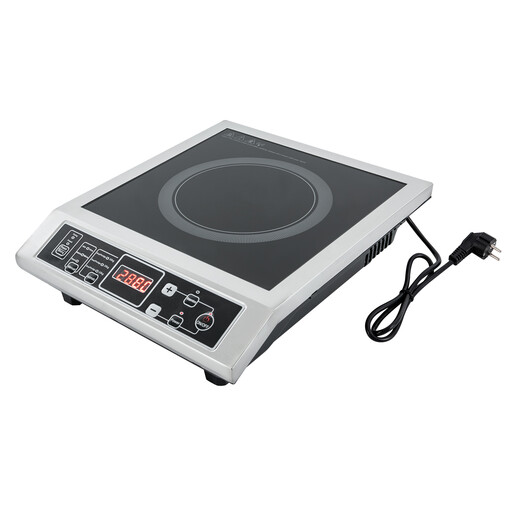
Tabletop induction hob with eight power and temperature settings

Tabletop induction hob, 8 power and temperature settings

A portable hob for suitable iron or stainless steel cookware; check that the available settings suit the way you like to cook.

3.500 W; eight power and temperature settings; timer and reservation function; IPX4; EU plug.

View at Joybuy

Frequently asked questions

Do I have to use an induction hob to make lemon curd?

No. EDEKA’s recipe says to thicken the curd over the lowest heat while stirring; EDEKA also recommends a bain-marie as a gentle way to warm it. Choose the type of hob to suit your pan, the space available and the controls you prefer.

Does a temperature setting measure the temperature of the lemon curd?

Not automatically. CASO lists temperature settings for the Touch 2000 and a ThermoControl probe for the TC 2400. What matters is whether you can position a probe suitably in the food for the recipe you’re making; selecting a setting alone doesn’t measure the temperature of the curd.

What should vulnerable people bear in mind when making lemon curd with eggs?

The German Federal Institute for Risk Assessment recommends that vulnerable groups only eat food containing eggs if it has been thoroughly heated: at least two minutes at 70 °C throughout. This is food hygiene advice, not a food temperature guaranteed by a hob.

What should I consider when setting up and cleaning the hob?

Follow the setup, cooling and cleaning instructions in the manual for the specific model. With radiant and cast-iron hotplates, also take into account that the cooking surface stays hot after use.

What marking should I look for on a mains-powered hob in Germany?

A new mains-powered hob covered by the relevant low-voltage regulations must meet the applicable EU requirements and carry the required CE marking. Your Europe explains that the manufacturer is responsible for compliance; the CE marking is not a blanket guarantee of an independent safety test. Check the marking and German-language safety information on the specific product listing and appliance.