For cooks short on worktop space
If you’re making soup in one pot, the hob, pot and a safe clearance all need to fit in the space available. Dimensions vary by model, as you can see by comparing the CASO Touch 2000 and Rommelsbacher CT 2200/E.


If you only use one soup pot at a time, a portable single hob is a good place to start. Compare its overall dimensions and cooking zone with the space you have available and the base of your pot. Induction is only an option if your pot has a suitable magnetic base; if you use other cookware, consider radiant or cast-iron hobs, whose cooking surfaces can remain hot after they’re switched off. Lentils need to be heated and cooked thoroughly: the German Federal Institute for Risk Assessment recommends this for pulses.
If you’re making soup in one pot, the hob, pot and a safe clearance all need to fit in the space available. Dimensions vary by model, as you can see by comparing the CASO Touch 2000 and Rommelsbacher CT 2200/E.
Before choosing an induction hob, check that your pot’s base is suitable. Bosch explains that induction requires magnetic cookware.
If you’d like clear controls or a timer for simmering after bringing your soup to the boil, compare the features of the specific model. CASO, Rommelsbacher and Clatronic list different controls and timer features for their respective hobs.
When choosing a single hob for making soup, it’s worth considering the space available, your pot, cooking controls and any extra items you may need separately.
A good fit if: your pot has a suitable magnetic base and fits the stated cooking zone.
Bear in mind: You can’t use an existing pot that isn’t suitable for induction.
A good fit if: you want to keep using a pot that isn’t suitable for induction.
Bear in mind: Rommelsbacher warns that the CT 2200/E retains residual heat, so its cooking surface may still be hot after the hob is switched off.
A good fit if: you want to use an existing pot and are considering a model with continuous temperature control, such as the Clatronic EKP 3582.
Bear in mind: The hotplate itself gets hot and must be left to cool before cleaning.
| What matters | What to check when buying | Who should consider this? |
|---|---|---|
| Available space and cooking zones | Overall width and depth, plus space for the pot and cable; one or two cooking zones. | If you want to fit just one soup pot on a small worktop, every centimetre counts. Around 36% of consumers put available space first. |
| Cooking controls | Power settings and timer function on the specific model. | If you want to choose a suitable setting for simmering after bringing your soup to the boil, compare the controls. Around 29% of consumers prioritise cooking controls. |
| Existing soup pot | For induction, check that the pot’s base is suitable and compare its diameter with the cooking zone. | If you want to keep using your pot, check that it’s suitable for induction before choosing a hob. Around 21% of consumers prioritise compatibility with their existing cookware. |
| Purchase and potential additional costs | Consider the hob and any suitable pot you may need together; check the warranty terms separately. | If you want to avoid extra costs, factor in the possibility of needing a new pot. Around 14% of consumers focus mainly on the purchase price and potential additional costs. |
The size of the appliance doesn’t automatically tell you whether your pot’s base will fit the cooking zone. Rommelsbacher specifies a 145–220 mm cooking zone for the CTS 2000/IN.
Measure the base of your pot and compare it separately with the cooking zone and the space available.
Induction requires suitable magnetic cookware, so an existing pot may not work with the hob you choose.
Check that your pot is suitable for induction and measure its base before deciding on a model.
Rommelsbacher lists a residual heat indicator for the CT 2200/E; with a cast-iron hob, the hotplate itself is the heating element.
Follow the instructions in the manual and wait until the cooking surface has cooled before cleaning it.
Worth considering if you want to compare a single induction zone with clearly stated timer and size details.
The single hobs featured here use two different heating methods: induction on the CTS 2000/IN and radiant heat on the CT 2200/E.
The EKP 3582 is an example of a single cast-iron hotplate.
The details for the KP 1071 and DK 1031 provide examples of single and double induction hobs.
The models below are portable single hobs for cooking with one pot. Depending on the heating method, you’ll need to check whether your existing pot is suitable.
 No image available
A single hotplate for one pot if you’re not looking for an induction hob.
 No image available
A portable induction hob if your pot is suitable for induction and you’d like a choice of heat settings.
 No image available
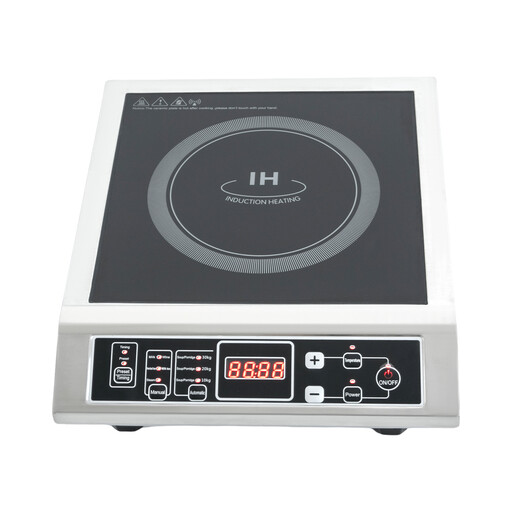
A portable single induction hob if your cookware is suitable for induction.
 No image available
A portable induction hob for one pot if your cookware is suitable and you’d like to use time and temperature settings.
 No image available
A portable infrared hotplate for one pot if you don’t want to use induction.
No. The base of your pot must be suitable for induction. Then compare its diameter with the specifications for the specific appliance. CASO lists pots and pans with a diameter of 12 to a maximum of 24 cm for the Touch 2000.
Compare the appliance dimensions, including the space needed for your pot, with the spot you plan to use, and read the instructions before use. For the Rommelsbacher CT 2200/E, the manufacturer lists a residual heat indicator; wait until the cooking surface has cooled before cleaning it.
With induction, you may need to buy a suitable pot if your existing one isn’t compatible. Whether you’ll have any other expenses depends on how you use the appliance and the specific model. Your statutory rights if a product is faulty and a voluntary warranty are different things; the consumer advice centre explains the difference.
For electric appliances covered by the relevant requirements, applicable EU product rules and CE marking are important. The European Union explains that CE marking is the manufacturer’s declaration that the product complies with the relevant rules, not an independent endorsement of its cooking performance. Check the details for the specific product offer.
No. The German Federal Institute for Risk Assessment recommends heating and cooking pulses such as lentils thoroughly before eating them. Also follow the cooking instructions for the lentils you’re using.