For cooking individual portions in a small space, a portable single-zone induction hob is an obvious choice if your pan has a suitable ferromagnetic base. If your cookware is not induction-compatible, consider a radiant or cast-iron hotplate instead. Two cooking zones are useful if you regularly prepare sauce and a side dish at the same time, but they take up more space. If you’re making lunchboxes, remember to factor in cooling and keeping perishable food chilled throughout.
Which hob is right for you?
Quick, single-portion cooks
If you make mushroom sauce for individual lunches and have limited space, look for an easy-to-use cooking zone for frying and then simmering. The Federal Centre for Nutrition explains how to cool prepared meals and store them chilled.
Cooks with existing cookware
If you want to keep using your pots and pans, first check that their bases are compatible with your chosen heating technology. The German Environment Agency highlights the cookware requirements for induction; Rommelsbacher specifies that the CT 2010/IN requires a ferromagnetic pan base.
Meal preppers
If you prepare sauce and a side dish in one go, consider a hob with two independently controlled zones. Severin describes this option for the DK 1014, while the Federal Centre for Nutrition covers preparing meals for lunch.
What to look for when buying
Portable single-zone induction hob
A good fit if: you usually use an induction-compatible pan and cook on one zone.
Bear in mind: the pan base must be ferromagnetic and compatible with the specific model. Temperature settings don’t guarantee a consistent sauce temperature.
Ceramic-glass hob with radiant heating element
A good fit if: you want to use existing, flat-based cookware that isn’t suitable for induction.
Bear in mind: the cooking surface gets hot and may retain heat. A ceramic-glass surface alone doesn’t tell you whether the appliance uses induction.
Cast-iron hotplate
A good fit if: you want to keep using cookware that isn’t induction-compatible.
Bear in mind: a double hotplate takes up more space; two zones are only useful if you often cook two things at once.
Portable gas stove
Only consider one if: the instructions and location allow you to use the specific appliance, and there’s no suitable power supply available.
Bear in mind: Campingaz expressly rules out using the Camp’Bistro 3 indoors. The German Federal Institute for Risk Assessment warns that carbon monoxide can build up indoors when fuel is burned.
| What you’re looking for |
What to check before buying |
Who it matters most to |
| Heat for frying and simmering |
Check the controls, ease of use and suitable pan size for the specific model. |
If I want to adjust the heat easily when frying and then simmering, straightforward controls are important. Around 33% of consumers prioritise heat control. |
| Existing cookware |
Check the pan material, whether its base is flat, and the permitted base diameter. |
If I want to keep using my existing sauce pan, its base must be compatible with the heating technology. Around 25% of consumers prioritise compatibility with their cookware. |
| One or two cooking zones |
Check the number and diameter of the zones, separate controls, appliance dimensions and power rating. |
If I want the sauce and side dish to be ready at the same time, two independently controlled zones can make things easier. Around 25% of consumers focus on being able to cook two things at once. |
| Space and cleaning |
Consider the width, depth, cable length, clearances specified in the instructions and cooking-surface material. |
In a small kitchen, I want to be able to put the hob away and clean it easily after cooking. Around 17% of consumers prioritise a small footprint and easy cleaning. |
Common buying mistakes
-
Assuming “ceramic glass” means induction
A hob with a ceramic-glass surface can still use a radiant heating element. If you choose based on the surface alone, you could end up buying a different type of hob from the one you intended.
Check the heating technology and pan-base requirements separately.
An incompatible appliance could mean you need to buy an extra pan or a different hob.
-
Choosing two cooking zones when you usually only use one for the sauce
A double hotplate is only a practical advantage if you often heat two pans at the same time.
Plan how you’ll prepare the sauce and side dish, then compare the zones and appliance dimensions.
A double hotplate takes up more worktop and storage space.
-
Packing a lunchbox without planning how to keep it chilled
A hob doesn’t remove the need to cool food or keep it chilled during storage and transport. The German Federal Institute for Risk Assessment recommends keeping perishable food in the fridge at 2 °C to no more than 7 °C, and keeping it chilled when you’re out and about.
Plan cooling, fridge storage and chilled transport as part of preparing your meal.
-
Assuming a cartridge stove can be used anywhere indoors
The manufacturer rules out using the Campingaz Camp’Bistro 3 in enclosed spaces. The German Federal Institute for Risk Assessment points out that carbon monoxide can build up indoors when fuel is burned.
Check the instructions and usage limits for the exact appliance, as well as the requirements for fuel and ventilation.
The Camp’Bistro 3 requires a compatible CP-250 cartridge, which you may need to buy separately.
Brands and suitable product ranges
Rommelsbacher
The CT 2010/IN is a single-zone induction hob, while the CT 2200/E uses a radiant heating element beneath a ceramic-glass surface.
- Rommelsbacher says the CT 2010/IN has one cooking zone for pans with a diameter of 120 to 230 mm and pan detection.
- According to the manufacturer, the CT 2200/E has a second, selectable heating-ring size and a residual-heat indicator.
- The CT 2010/IN requires ferromagnetic cookware; the CT 2200/E’s cooking surface is heated by a radiant element.
CASO Design
The Touch 2000 is a portable single-zone induction hob with separately adjustable power settings and a timer.
- CASO lists a 2,000 W power rating and says it’s suitable for cookware with a diameter of 12 to 24 cm.
- The manufacturer’s temperature settings aren’t independent proof that simmering sauce will reach a particular temperature.
Clatronic
The EKI 3569 is a single-zone induction hob, while the EKP 3582 is a traditional single hotplate.
- Clatronic says the EKI 3569 offers pan detection and ten power settings.
- According to the manufacturer, the EKP 3582 has a continuously adjustable thermostat and a cast-iron hotplate with a diameter of around 180 mm.
- Cookware for the induction hob must be compatible with its heating technology.
Severin
The DK 1014 is a portable, non-induction double hotplate for heating two pans at the same time.
- Severin lists two independently controlled cast-iron heating rings and a total power output of 2,500 W.
- The double hotplate takes up more space; its total power output isn’t the power output of each individual zone.
Campingaz
The Camp’Bistro 3 is a cartridge gas option for locations where use is permitted by the instructions.
- Campingaz lists an adjustable flame and the compatible CP-250 cartridge.
- Campingaz expressly rules out using this model in enclosed spaces, so it isn’t an alternative for an enclosed kitchen.
Joybuy product selection
This selection includes portable single hotplates for making individual portions of sauce, including induction and electric models. Before buying a mains-powered appliance, check that the specific model complies with the relevant EU requirements and has any required CE marking.
 No image available
Severin KP 1092 single hotplate, 1.500 W
For individual portions of sauce when you want continuously adjustable temperature control.
The product name specifies an 18 cm heating ring and 1.500 W.
View at Joybuy
 No image available
IsEasy induction hob, 2.100 W, 28 cm
For individual sauce-making steps on a portable induction hob, provided your pan is induction-compatible.
The product name specifies 2.100 W, nine heat settings, an 8-hour timer and touch controls.
View at Joybuy
 No image available
Portable induction hob, 1.000 W, 5 power settings
For making a portion of sauce on a single portable induction zone, if your pan is suitable.
The product name specifies 1.000 W and five power settings.
View at Joybuy
 No image available
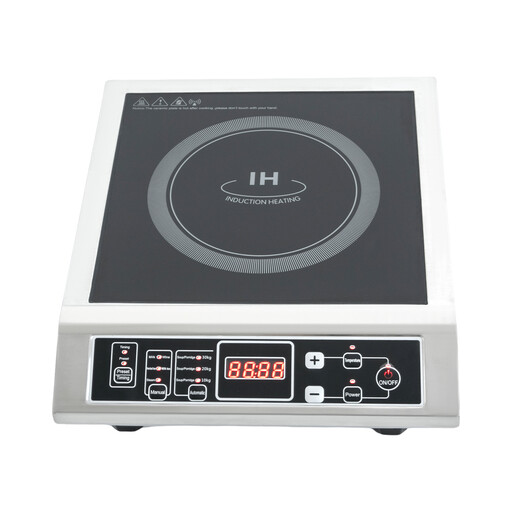
Portable induction hob, 3.500 W, with timer
For individual sauce-making steps on an induction cooking zone, provided your cookware is compatible.
The product name specifies 3.500 W, a timer and a preset function.
View at Joybuy
 No image available
Microcrystalline glass induction hob, 3.500 W
For making an individual portion of sauce on a portable induction hob; compatible cookware is required.
The product name specifies 3.500 W.
View at Joybuy
Frequently asked questions
Which hob is suitable for the sauce pan I already own?
For induction, the pan base must be ferromagnetic and the right size for the specific hob. A ceramic-glass hob may use a radiant heating element instead, so check the heating technology rather than relying on the surface description alone.
How should I store mushroom sauce for lunch on the go?
Cool the prepared sauce and, according to the German Federal Institute for Risk Assessment, store perishable food in the fridge at 2 °C to no more than 7 °C. Keep it chilled when you’re out and about, too. The institute says mushroom dishes that have been kept in the fridge for a short time can be reheated a second time.
Can I use a cartridge stove as an alternative in an enclosed kitchen?
Not as a general rule: Campingaz expressly rules out using the Camp’Bistro 3 in enclosed spaces. The German Federal Institute for Risk Assessment warns that carbon monoxide can build up indoors when fuel is burned. Always follow the instructions and usage limits for the specific appliance.
Does an electric hotplate need a GS mark in Germany?
A GS mark isn’t generally required. For appliances covered by the relevant EU regulations, the required CE marking is what matters; the German Federal Institute for Occupational Safety and Health describes the GS mark as voluntary. CE marking alone isn’t an independent safety test result.
Who should I contact if the hob breaks, and how should I dispose of the old one?
Your statutory rights are against the seller and are separate from any voluntary guarantee, as explained by the consumer advice centre. According to the German Environment Agency, electrical appliances that have reached the end of their life must not be put in household waste.


