What should you look for when buying?
Portable single induction hob
A good fit if: You have a suitable ferromagnetic pot and want to heat the broth quickly. Rommelsbacher lists a cooking zone of 120–230 mm for the CT 2010/IN.
Things to consider: Not every shared pot will work; Rommelsbacher also notes that induction hobs can make audible fan noises.
Portable HiLight ceramic-glass hob
A good fit if: You want to use pots without an induction-compatible base and are looking for a smooth surface that’s easy to wipe clean.
Things to consider: The heating element beneath the ceramic glass gets hot. Pay attention to the residual heat indicator and check that the pot base is compatible with the cooking zone.
Portable cast-iron hotplate
A good fit if: You want to use existing pots without checking whether they’re suitable for induction, and a simple single cooking zone is all you need.
Things to consider: Rommelsbacher says cast-iron hotplates take longer to heat up and retain heat for longer, so allow time for them to cool down.
In a shared kitchen, it’s worth checking which pots are actually available and where you’ll put the hob before narrowing down your choice of technology.
| Priority |
What to look for when buying |
Who should consider this |
| Heating broth quickly |
Check the cooking technology, power settings and cooking zone compatibility; wattage alone doesn’t prove how well a hob can maintain a simmer. |
If I want to heat water and ingredients quickly after work, the time it takes to heat up matters to me. Around 26% of consumers put quick heating at the top of their list. |
| Pot compatibility |
Check the material and diameter of the base of the pot you’ll actually use against the model specifications. |
If we share different pots in the kitchen, I don’t want to rely on just one induction-compatible pot. Around 21% of consumers put pot compatibility at the top of their list. |
| Safe connection and space |
Make sure the power consumption is suitable for the connection you plan to use; check that the hob is stable and the cable can be routed safely. |
If other people also use the worktop, I need a place where no one can accidentally touch the hot hob or trip over the cable. Around 21% of consumers say a safe shared space is their main priority. |
| Controlled simmering |
Check the type and ease of use of the power control; listed settings don’t prove the temperature in the pot will stay constant. |
If I want the broth to keep simmering after it boils, I want to be able to turn the heat down precisely. Around 16% of consumers prioritise being able to control the simmer. |
| Cleaning and storage |
Check the surface material and residual heat indicator; follow the appliance instructions before cleaning or putting it away. |
If the hob needs to be put away after it’s been used by everyone, I want a surface that’s easy to wipe clean, while still allowing time for it to cool down. Around 16% of consumers put easy cleaning at the top of their list. |
Joybuy products for a single cooking zone
This selection includes hobs for making broth on a single cooking zone. For induction models, shared cookware must be magnetically suitable; also check that the connection you plan to use is compatible with the stated power consumption.
 No image available
Severin KP 1092 hotplate, 18 cm heating ring, 1.500 W
A single cooking zone with stepless temperature control could be a good option if you want to adjust the heat while making broth.
The product name lists an 18 cm heating ring and 1.500 W. According to the product description, the cooking surface gets very hot during and immediately after use; allow it to cool completely before cleaning. Cookware should have a flat, stable base.
View at Joybuy
 No image available
IsEasy portable induction hob, 2.100 W, 28 cm
This portable induction hob is an option if you want to switch between several heat settings after bringing the broth to the boil.
The product description lists nine heat settings, a glass surface and dimensions of 35 × 28 × 4,4 cm. It states that the hob is compatible with magnetic cookware with a diameter of 12–26 cm.
View at Joybuy
 No image available
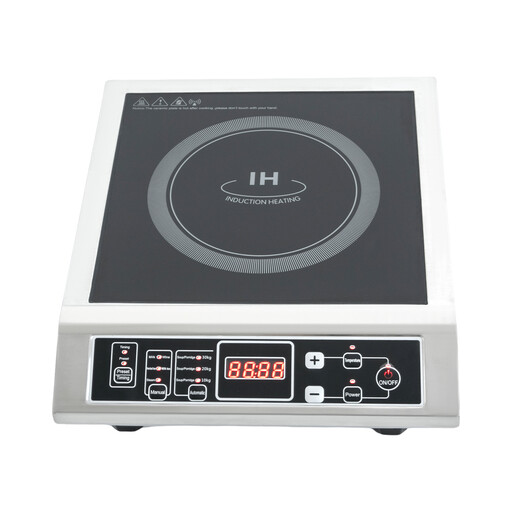
Portable induction hob, 3.500 W, timer and pre-set function
The listed settings may be useful if you want to continue cooking the broth on a lower heat after bringing it to the boil.
The product description lists ten power and temperature settings, as well as a soup function. As an induction hob, the appliance requires suitable magnetic cookware.
View at Joybuy
 No image available
Microcrystalline glass-ceramic induction hob, 3.500 W
This portable induction hob could be a good option if you’re looking for a mobile cooking zone with several power and temperature settings.
The product name lists ten temperature settings; the product description also lists a timer and pre-set function, as well as a soup function. Suitable magnetic cookware is required.
View at Joybuy
 No image available
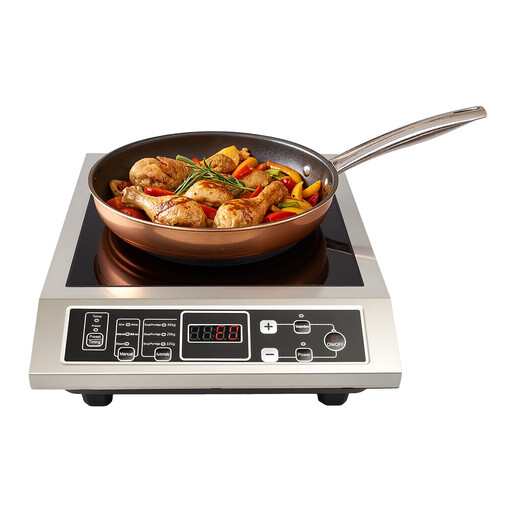
Induction hob for the worktop, 3.500 W, 10 power settings
The adjustable power settings may be useful if you want the broth to keep simmering after it has boiled.
The product description lists a temperature range of 176–572 °F, a 3-hour timer and a 23-hour pre-set function. It states that the hob is suitable for iron or stainless-steel cookware with a base diameter under 9,8 inches.
View at Joybuy
Frequently asked questions
Will any pot work on a portable induction hob?
No, the pot must be suitable for induction. For the Rommelsbacher CT 2010/IN, the manufacturer specifies a ferromagnetic base and a cooking zone of 120–230 mm. Check the pot that will actually be used in the shared kitchen, along with the specifications of the appliance you’re considering.
Is a timer enough to let broth simmer unattended?
No, a timer doesn’t replace supervision while cooking. The German Fire Service Association lists food left cooking unattended or forgotten on the hob as the most common cause of kitchen fires.
Can I wipe the hob clean and put it away straight after cooking?
Wait until the cooking surface has cooled sufficiently, and follow the cleaning instructions for the specific appliance. Rommelsbacher describes the ceramic-glass surface of the CT 2010/IN as easy to clean; according to the manufacturer’s comparison, a cast-iron hotplate retains heat for longer.
What should I look for on the label of an electric hob?
Appliances covered by the relevant EU regulations must meet their conformity and CE requirements. The European Union explains that CE marking is a declaration by the manufacturer, not an independent quality mark. Also look for identifiable manufacturer details and instructions and safety warnings in German, as recommended by the Federal Network Agency.
Who is responsible if a hob I’ve bought is faulty?
For consumer purchases in Germany, the seller is generally responsible for the statutory warranty, not the manufacturer. The Verbraucherzentrale (German Consumer Advice Centre) states that the period is two years; for sales contracts from 31 July 2026 onwards, it can be extended once by twelve months if you opt for a repair. A voluntary guarantee has its own terms and conditions.


