For cooks with very little worktop space
If you’re looking for a single hob that can be put away after cooking a pan of onion sauce, allow for both the appliance’s footprint and the clearance specified in the instructions.


For a single pan of onion sauce, first check that the hob and the clearance it needs will fit on your worktop. Then make sure your existing pan is suitable for the heating type and cooking zone. With a suitable pan, induction lets you adjust the heat directly; a HiLight or cast-iron hob is worth considering if you want to keep using cookware that isn’t induction-compatible. For a gentle simmer, the controls and residual heat matter – a temperature setting doesn’t automatically measure the temperature of the sauce.
If you’re looking for a single hob that can be put away after cooking a pan of onion sauce, allow for both the appliance’s footprint and the clearance specified in the instructions.
If you want to keep using your pan, check its base and the cooking zone first. These determine whether induction or a different type of hob will be suitable.
If you want to adjust the heat after frying, look at the controls and residual heat rather than comparing maximum wattage alone.
| What matters | What to check before buying | Who is this important to? |
|---|---|---|
| Footprint and position | Check the appliance’s width and depth, as well as the clearance specified in the instructions. Allow room for the pan and make sure you can reach a socket. | If I have very little worktop space, the hob and the clearance it needs must fit safely. Around 36% of consumers put available space first. |
| Heat for frying and simmering | Check the power settings, type of control and, where relevant, the timer on the specific model. Don’t mistake a temperature setting for a reading from inside the pan. | If you fry the onions first and then simmer the sauce gently, you need controls that let you adjust the heat as needed. Around 29% of consumers prioritise heat control. |
| A compatible pan | For induction, check that the pan has a magnetic base and the right diameter. For other heating types, make sure the pan size matches the cooking zone. | If I want to keep using my existing pan, its base must be compatible with the hob I choose. Around 21% of consumers put pan compatibility first. |
| Connection and safe use | Follow the positioning instructions, keep ventilation openings clear and check that you can reach a suitable socket and connection point where you plan to use the hob. | If you want to check first that the hob can be used and connected safely where you plan to put it, your work area needs to meet the relevant requirements. Around 14% of consumers prioritise connection and safe use. |
You’ll also need room for the pan and controls, as well as the clearances specified in the instructions. Don’t cover the ventilation openings.
Measure the width and depth, then check them against the positioning instructions for the specific model.
A displayed or selected setting doesn’t measure the temperature inside the pan.
Turn the power down after frying and keep an eye on the contents of the pan as they simmer.
The pan base must be suitable for induction, and its diameter must match the cooking zone on the model you choose.
Check the base and compare the pan’s diameter with the model specifications before choosing an induction hob.
The CT 2010/IN and CT 2200/E offer different heating types and control setups for single hobs.
The ProMenu 2100 is a portable single induction hob for anyone with compatible cookware.
The KP 1071 is a single induction hob with a relatively compact footprint.
The KP-6185 single cast-iron hob is one option if your existing pan isn’t suitable for induction.
The Life IC10S (MD 100090) is another portable induction option.
This selection includes portable single hobs, including induction models and a hob with a heating ring. Make sure the heating type suits your pan, and that the appliance’s footprint and required clearance fit your available space.
 No image available
Could suit you if you’re looking for a single cooking zone with a heating ring and adjustable temperature control.
18 cm heating ring; 1,500 W; continuous temperature control.
 No image available
Worth considering if your pan is induction-compatible and you want a single cooking zone with several power settings.
2100 W; 28 cm; glass surface; nine heat settings; 8-hour timer; touch controls.
 No image available
Could suit you if you’re looking for a portable single induction hob with five power settings and have a compatible pan.
One cooking zone; 1000 W; five power settings.
 No image available
An option if you’re looking for a portable induction hob with adjustable temperature settings and have an induction-compatible pan.
3500 W; ten temperature settings.
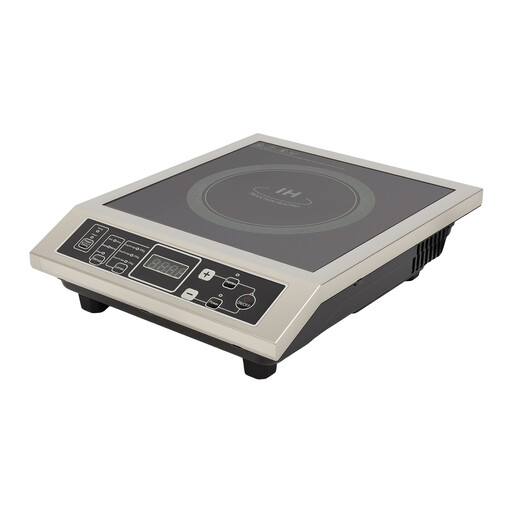 No image available
Could suit you if you’re looking for a single tabletop induction hob with power settings and a timer. Your pan must be induction-compatible.
3500 W; ten power settings; timer.
Only if the pan base is suitable for induction and its diameter matches the cooking zone on the model you choose. Checking the base with a magnet is a handy first step; also compare the result with the model specifications.
Allow for more than just the casing dimensions and follow the positioning guidance in the relevant instructions. Don’t cover any ventilation openings, and leave the clearances specified for the model.
Turn the power down after frying and keep an eye on the contents of the pan. An adjustable setting or temperature selection doesn’t automatically show the actual temperature of the sauce.
Switch off the appliance, unplug it and let it cool before cleaning. The Severin KP 1071 instructions say to wipe it with a damp cloth and not to immerse it in liquid. For other models, follow their individual instructions.
The risk of interference varies from person to person, so it can’t be assessed in general terms. The Federal Office for Radiation Protection advises consulting your doctor for an individual assessment; this does not amount to either a general approval or a general ban.