Making sauces with a suitable induction pan
If you’re frying onions before turning down the heat to simmer, look for a suitable pan base and easy-to-use controls.


If you have an induction-compatible pan that fits the cooking zone, a portable single induction hob is an obvious choice. For other pans, consider an electric ceramic or cast-iron hob. A double hob is mainly worth considering if you regularly need a second cooking zone and have enough space and a suitable connection. Power settings alone don’t tell you how evenly a particular model will simmer your sauce, so check the labelling for the specific appliance variant too.
If you’re frying onions before turning down the heat to simmer, look for a suitable pan base and easy-to-use controls.
If you want to keep using a pan you already have, first check whether it’s suitable for induction. If not, consider an electric ceramic or cast-iron hob.
If you need to put the hob away after use, make sure you have a safe place for it to cool and that its connection is suitable for your shared kitchen.
The percentages below relate to consumers choosing a portable hob for onion sauce in a shared kitchen in Germany. Each figure represents their top buying priority.
| Priority | What to check when buying | Who it matters most to |
|---|---|---|
| Heat for frying and simmering | Check the controls and temperature settings on the specific model; keep an eye on the sauce and stir it as it cooks. | I want to turn down the heat after frying and control the sauce as it simmers. Around 33% of consumers put heat control first. |
| Continuing to use an existing pan | For induction, check that the pan is compatible and compare its base diameter with the model specifications; for other types of hob, check the size of the heating surface. | I want to keep my sauce pan, so its heating type needs to match the hob. Around 27% of consumers prioritise pan compatibility. |
| Space and electrical connection | Consider the appliance dimensions, space for the pan and controls, the instructions and the shared connection. | In a shared kitchen, I want to set up the hob safely without overlooking the shared connection. Around 27% of consumers prioritise space and the connection. |
| Cleaning, cooling and storage | Check the care instructions and residual heat, and allow for a suitable place to cool the hob before putting it away. | If the shared worktop needs to be clear again after cooking, cleaning and cooling time matter too. Around 13% of consumers prioritise these points. |
A pan with a base that isn’t suitable for induction won’t work as intended on an induction hob.
Before buying, check that the pan is induction-compatible and measure its base diameter. If it isn’t suitable, compare electric ceramic or cast-iron hobs.
If your existing pan isn’t suitable, you may also need to buy induction-compatible cookware.
You won’t use a second cooking zone at the same time for a single sauce pan, but it takes up extra space and you’ll need to consider the electrical connection. Following a shared-flat kitchen fire, the Institute for Loss Prevention and Loss Research documented damage to an overloaded extension lead.
Choose a double hob only if you regularly need to use two pans at once, and follow the connection instructions in the manual. Rommelsbacher advises against using extension leads with its high-powered double hobs.
According to Rommelsbacher, cast iron retains heat for longer; ceramic hobs can also remain hot after use.
Set aside a safe place for the hob to cool and follow the warnings and care instructions for the specific model.
The Touch 2000 is a portable single induction hob for compatible pans.
The single hobs listed include induction, electric ceramic and cast iron; the right option depends in part on the pan you already have.
The EKP 3582 is a single cast-iron hob for existing pans, if you don’t need induction.
The IK 65 SLIM is a slim, portable single induction hob for suitable pans.
The Kult X Mono is a portable single induction hob with one-touch programmes.
This selection includes single hobs and ceramic models with several cooking zones. For each appliance, check that your pan, available space and electrical connection are suitable for your kitchen. New electric cooking appliances with 230 V AC intended for sale in Germany must meet the relevant EU requirements, including CE marking. According to the European Union’s Your Europe website, the manufacturer uses this mark to declare conformity; CE is not an independent quality mark. Check the labelling on the specific appliance variant.
 No image available
Designed for a single sauce pan, this hob has continuously variable temperature control; the pan base should be flat and stable.
The product name lists 1,500 W and an 18 cm heating ring. Let the hob cool completely before cleaning, and check the labelling on this specific variant.
 No image available
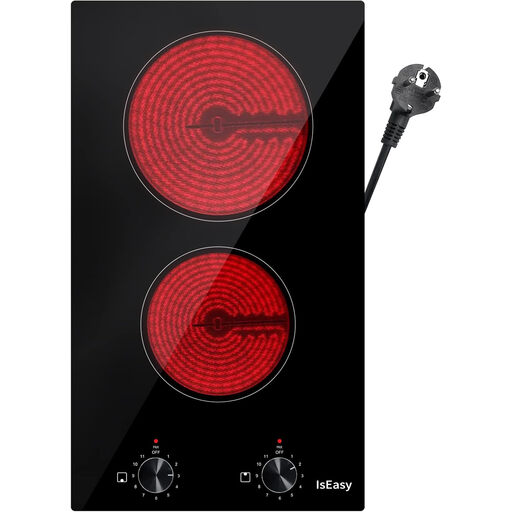
The product description lists two independently usable cooking zones and compatibility with common cookware materials. For a single sauce pan, the second zone means you’ll need extra space and a suitable connection.
The product title lists 11 power settings and 3,200 W. Check the dimensions and the labelling on the specific variant.
 No image available
This single induction hob is only suitable if your pan is magnetic and fits the stated diameter range.
The title lists nine heat settings and a timer of up to 8 hours; the product description specifies magnetic cookware measuring 12 to 26 cm, dimensions of 35 × 28 × 4.4 cm and a weight of 1.9 kg. Check the labelling on the specific variant.
 No image available
This single cooking zone is designed for one pan; as an induction hob, it requires suitable cookware.
The product description lists dimensions of 21.5 × 21.5 × 4.7 cm. Check that your pan and available space are suitable, and look at the labelling on the specific variant.
 No image available
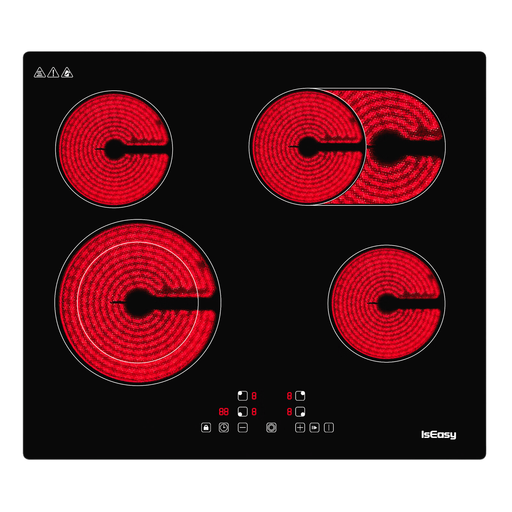
The product title describes a 60 cm hob with several zones, not a portable single hob. It’s therefore only suitable if you don’t need a portable appliance.
Before choosing, check the appliance dimensions, the shared connection and the labelling on the specific variant.
Check that it’s labelled as suitable for induction and compare the base diameter with the specifications for the specific model. For the CASO Touch 2000, the manufacturer lists pans measuring 12 to 24 cm and a maximum load of 6 kg.
Check the power ratings and appliance instructions when assessing the connection and any appliances being used at the same time. Rommelsbacher advises against using extension leads with its high-powered double hobs; following a shared-flat kitchen fire, the Institute for Loss Prevention and Loss Research documented damage to an overloaded extension lead. This manufacturer guidance isn’t a blanket approval or ban for every individual appliance.
Allow hot parts to cool sufficiently and follow the cleaning instructions for your chosen model. According to Rommelsbacher, cast iron retains heat for a long time; the CT 2010/IN also has a residual heat indicator.
Your statutory rights when goods are faulty are separate from any voluntary guarantee. For a typical online purchase from a trader, you generally have a 14-day right to cancel from the date of delivery; check the applicable terms and return postage arrangements before buying. The Verbraucherzentrale explains the difference between statutory rights and a guarantee; the European Union’s Your Europe website sets out the cancellation period.
No. For electrical appliances covered by the relevant rules, CE is a mandatory mark with which the manufacturer declares that the appliance meets the applicable EU requirements; it isn’t an independent quality test. Check the labelling and product details for the specific appliance variant. The European Union’s Your Europe website explains what the mark means.