What should you look for when buying?
If you’re serving the sauce later, its actual temperature is what matters. When holding food hot, the Federal Institute for Risk Assessment recommends a minimum of 60 °C throughout. A display or keep-warm function doesn’t replace checking the temperature of the sauce itself.
Single induction hob
A good fit if: your pan has a magnetic base that matches the hob’s specified diameter, and you need one cooking zone.
Keep in mind: an unsuitable pan won’t work as intended, and a keep-warm setting doesn’t guarantee an even temperature throughout the sauce.
Conventional single hob
A good fit if: you want to keep using a pan that isn’t induction-compatible.
Keep in mind: the hotplate retains heat and may stay hot after you turn the setting down or switch it off.
Double hob
A good fit if: you regularly cook sauce and a side dish at the same time on separate cooking zones.
Keep in mind: consider the space available and the electrical connection requirements. With induction, both pans must also be compatible.
| What you need |
What to check before buying |
Who should pay particular attention? |
| Sauce for later servings |
Check the keep-warm function, running time and how the hob switches off. If holding the sauce hot, measure its temperature in several places. |
If I want to serve sauce later, I don’t want to leave it lukewarm; I want to keep a reliable eye on its temperature. Around 36% of consumers are likely to consider this their most important concern. |
| Searing and simmering |
Compare how easy it is to use the lower power settings and the switch-off timer on the specific model. |
When I want to turn the heat down after searing, having precise control matters more to me than a high maximum power setting. Around 29% of consumers are likely to prioritise this. |
| Using a pan you already own |
For induction, check that the base is magnetic and the right diameter. If your cookware isn’t compatible, consider a conventional hob. |
If I want to keep my sauce pan, the hob needs to suit its base so I don’t have to change pans unexpectedly. Around 21% of consumers are likely to consider their existing pan the deciding factor. |
| Two pans at once |
Check the number of cooking zones, the space available and the connection requirements. For induction, make sure both pans are compatible. |
If I’m cooking sauce and a side dish at the same time, I need two usable cooking zones, not an extra setting on a single hob. Around 14% of consumers are likely to prioritise this need. |
Portable hobs at Joybuy
This selection includes portable single hobs for onion sauce: induction models and an infrared hob for heat-resistant pans. With induction, your pan must be compatible. None of the appliance settings listed here guarantees that the sauce reaches at least 60 °C throughout.
 No image available
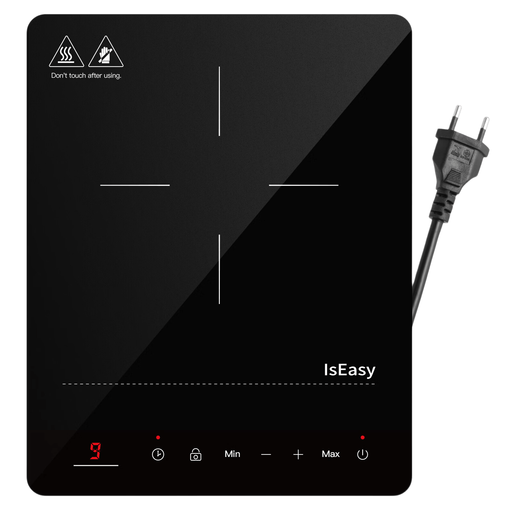
IsEasy induction hob, 2100 W
For making sauce on a single portable induction hob; suitable magnetic cookware is required.
Nine heat settings, an 8-hour timer and a 120-W keep-warm setting, according to the product description. The keep-warm setting doesn’t guarantee that the sauce reaches at least 60 °C throughout.
The product name also specifies a 28-cm cooking surface.
View at Joybuy
 No image available
Portable induction hob, 1.000 W
A single portable induction hob for sauce and onions; your pan must be suitable for induction.
The product name specifies five power settings and 1.000 W.
View at Joybuy
 No image available
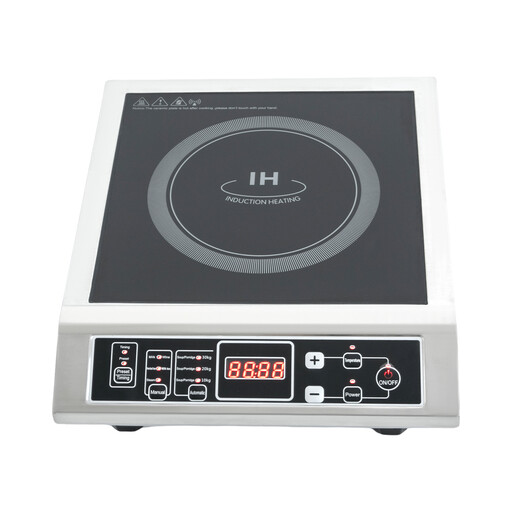
Portable induction hob with IGBT heating, 3500 W
For cooking on a single portable induction hob; suitable magnetic cookware is required.
The product description lists ten power and temperature settings, as well as a timer.
The product description also lists a pre-set function.
View at Joybuy
 No image available
dtl06 infrared hob, 3500 W
A portable conventional hob for heat-resistant pans; the product name lists touch and rotary controls.
The product name also lists a timer.
View at Joybuy
 No image available
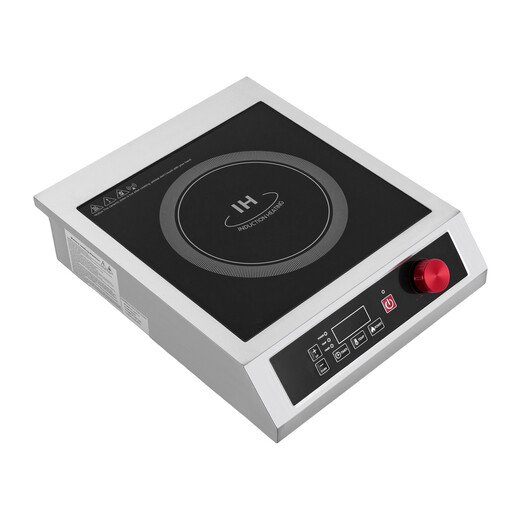
Countertop induction hob, 3500 W
For use as a single portable induction hob; your pan must have a suitable magnetic base.
The product description lists ten power levels, ten temperature settings and a timer of up to ten hours.
The specified temperature range is 40–300 °C. The product name also mentions an EU power cable.
View at Joybuy
Frequently asked questions
Will a 70 °C keep-warm setting keep the sauce safely hot?
No, the setting alone isn’t enough to guarantee this. CASO Design lists a keep-warm function at around 70 °C for the ProChef 3500. When holding food hot, the Federal Institute for Risk Assessment recommends an actual temperature of at least 60 °C throughout. Check the sauce itself, and note whether and when the appliance switches off.
Can I use my existing pan on an induction hob?
If a magnet sticks to the base of your pan, that’s a useful first check. Also compare the base diameter and, if specified, the weight of the filled pan with the requirements for the particular appliance.
What should I do if I’m not keeping the sauce hot the whole time?
Don’t leave the sauce lukewarm until your later meal. Instead, cool it quickly and follow appropriate food hygiene guidance for storage and reheating.
What should I bear in mind when setting up and cleaning the hob?
Check the instructions for your specific appliance for requirements on positioning, ventilation and connection. Let a conventional hotplate cool before cleaning it; an induction surface can also become hot from the pan.
Is the CE mark an independent quality mark?
No. Electrical appliances covered by the relevant EU rules must carry the CE mark. It indicates the manufacturer’s declaration of conformity; it isn’t a certificate from a central EU testing body. Check the marking and product information for the specific appliance.


