Control the heat while simmering
If you want to fry onions and then gently simmer a small amount of sauce, look at how easily the hob can be turned down and how it works with your pan.


For a single portion of onion sauce, a portable single hob is usually all you need. The key is whether your pan suits the cooking zone and, if applicable, meets the requirements for induction. Induction is particularly efficient when heating up, while a cast-iron hotplate works with non-induction cookware but retains heat for longer. Adjustable settings make it easier to switch from frying to simmering, but they don’t guarantee a specific temperature in the sauce.
If you want to fry onions and then gently simmer a small amount of sauce, look at how easily the hob can be turned down and how it works with your pan.
If you want to keep using your small frying pan or saucepan, check its base material and diameter first. With induction, your cookware must be suitable and fit the cooking zone.
If you only need one cooking zone, allow space not just for the appliance itself, but also for the pan handle, cable and the clearances specified in the instructions.
A good fit if: your pan is suitable for induction and its base diameter is compatible with the model.
Consider: the pan requirement limits your choice, and the temperature settings don’t tell you the temperature of the sauce.
A good fit if: you want to keep using cookware that isn’t suitable for induction.
Consider: cast iron heats up more slowly and retains heat for longer after you turn it down or switch it off.
A good fit if: you’re looking for a smooth-surface hob that doesn’t use induction.
Consider: this type of hob uses a heating element and is not an induction hob.
First compare the cooking technology and pan size that suit you. For simmering, you’ll also need to consider how easily the heat can be adjusted and how much space the hob takes up in your actual set-up.
| Priority | What to look for when buying | Who is it important to? |
|---|---|---|
| Frying and simmering | Check how the heat control works with your pan. The settings don’t indicate a specific sauce temperature; with cast iron, remember that it retains heat. | If you want to gently simmer a small amount of sauce after frying, how the hob responds when you turn it down is what matters most. Around 33% of consumers say heat control is their main buying priority. |
| Using a pan you already own | For induction, compare the base material and diameter with the specifications for the particular model. Bosch home appliances recommends checking whether a magnet sticks firmly to the base of the pan. | If you don’t want to buy a new pan, compatibility with the cookware you already own comes first. Around 27% of consumers prioritise being able to keep using their pan. |
| Limited worktop space | Check the appliance dimensions and cooking zone against the pan, handle and available space. The instructions for the Tristar KP-6185 require at least 30 cm of clearance around the appliance. | If you’re cooking just one portion and space is limited, you’ll need to be able to position the hob and pan safely. Around 20% of consumers say available space is their main priority. |
| Running and maintenance | Consider how long you’ll use it, the pan requirements and the care instructions. According to the German Environment Agency, the efficiency gap between hob types is greatest when heating up and smaller when keeping food warm for longer. | If you’re weighing up buying a pan, day-to-day use and cleaning together, you’ll want to make sure the demands fit your cooking routine. Around 20% of consumers prioritise running, purchase or maintenance costs. |
An unsuitable base or a pan with the wrong diameter may mean it won’t work with the model you’ve chosen.
Check the material and base diameter before buying. If your cookware isn’t compatible, consider a cast-iron or non-induction glass-ceramic hob.
A manufacturer’s power or temperature settings don’t measure the temperature in the pan. With cast iron, retained heat can continue to affect the sauce after you turn the hob down.
Turn the heat down after frying and watch how the sauce simmers in your pan. If you’re using a cast-iron hotplate, allow for residual heat.
You’ll need extra room for the pan handle and the required clearances.
Measure the appliance and pan together, and follow the set-up instructions for the particular model.
The rated power alone doesn’t tell you how much electricity the hob will use throughout a full cooking cycle. An energy label for ovens doesn’t apply to a hob.
Take actual usage and cooking time into account; don’t use the wattage to work out a flat cost per portion of sauce.
The Touch 2000 is an example of a portable single induction hob with separately adjustable power and temperature settings.
The CT 2010/IN and CT 2200/E demonstrate two different cooking technologies: induction and a glass-ceramic hob with a heating element.
The EKP 3582 is an example of a traditional single hotplate that doesn’t require induction-compatible cookware.
The KP-6185 is an example of a compact single cast-iron hotplate for smaller pans.
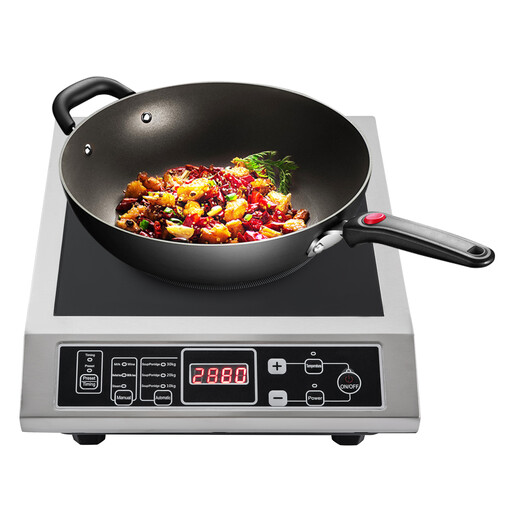
The KP 1071 is an example of a portable single induction hob with a timer.
This selection includes portable single hobs with one cooking zone, including induction and infrared models as well as a traditional electric hotplate.
 No image available
A single cooking zone with stepless control suits different stages of cooking, from frying to simmering.
The product name specifies a 18 cm heating ring and 1,500 W.
 No image available
Nine heat settings give you options for different stages of cooking; this model requires induction-compatible cookware.
The product description specifies cookware with a diameter of 12–26 cm and an 8-hour timer. Check your pan base against these specifications.
 No image available
Ten temperature settings and ten power settings give you options for different stages of cooking; a compatible induction pan is required.
The product description lists a timer and automatic shut-off if compatible cookware isn’t detected.
 No image available
Eight temperature settings and eight power settings let you choose from different heat options. The hob requires compatible magnetic cookware.
The product description lists a timer and automatic shut-off.
 No image available
Use the manual mode and rotary control to adjust the power. According to the product details, this model is suitable for heat-resistant pans.
The product name also specifies a timer. This infrared hotplate is not an induction hob.
Check whether a magnet sticks firmly to the base of the pan, then compare its base diameter with the suitable range for the hob model. Bosch home appliances recommends the magnet test as a practical first check; for example, the manufacturer specifies 12–24 cm for the CASO Touch 2000.
No, you can’t assume a fixed saving per portion. According to the German Environment Agency, the efficiency gap between hob types is greatest when heating up and narrows when keeping food warm for longer. Actual costs also depend on how long you use the hob and your electricity tariff.
Use a flat, stable surface and follow the clearances in your model’s instructions. The manufacturer requires at least 30 cm of clearance around the Tristar KP-6185; this distance doesn’t automatically apply to other hobs.
Electric hobs covered by low-voltage regulations, including appliances designed for 230-V AC, must carry CE marking before being placed on the German market. The Federal Institute for Occupational Safety and Health explains this requirement; the European Commission notes that CE marking doesn’t mean the appliance has been individually tested by a public authority.
The German consumer advice centre says induction cooking zones are not suitable for people with pacemakers. If this applies to you, check with your healthcare provider and the implant manufacturer before deciding whether to use an induction hob.
No, service information may relate to a specific model. SEVERIN lists a repair service for the KP 1071; check the service terms for the particular appliance and the seller you’re buying from.