If you want to cook pears gently
If you want to bring the liquid to the boil first, then cook the pears over a low heat, look for clear low settings and the ability to adjust the heat as they cook.


If you have a suitable induction-compatible pan, a portable induction hob with clear, low heat settings is a good option for gently cooking pears after bringing the liquid to the boil. If you want to keep using the shared kitchen’s existing pan and it isn’t induction-compatible, consider a cast-iron or HiLight hob. Before choosing, check the pan’s base and size, the space available and the power connection. A high maximum wattage alone doesn’t tell you how gently the liquid will simmer in your pan.
If you want to bring the liquid to the boil first, then cook the pears over a low heat, look for clear low settings and the ability to adjust the heat as they cook.
If you’d rather not buy another pan, check its base and diameter before choosing an induction hob. If it isn’t suitable, an electric cast-iron or HiLight hob may be a better option.
If you want to put a single cooking zone away after use, compare the appliance dimensions, cable layout and residual heat warnings. Make sure you also have a suitable, safe place to set it up.
For gently cooking pears after bringing the liquid to the boil, low heat settings and the right pan matter more than the maximum wattage. The hob and its power connection must also suit the shared kitchen.
A good fit if: Your existing pan has a suitable magnetic base and a diameter compatible with the model.
The trade-off: You’ll need compatible cookware. Low settings don’t automatically mean the liquid will simmer gently and evenly in every pan.
A good fit if: Your existing pan isn’t induction-compatible and you prefer a rotary control.
The trade-off: The cast-iron plate itself gets hot; a thermostat doesn’t guarantee a particular temperature in the pear-poaching liquid.
A good fit if: You want to use a pan that isn’t induction-compatible and its base matches the heating zone diameter.
The trade-off: The cooking surface heats up and may retain heat after the hob is switched off. Bear this in mind when it’s cooling down and when you clean it.
| Priority | What to check when buying | Who it matters to |
|---|---|---|
| Gentle cooking | Low power or temperature settings and easy-to-use controls; keep an eye on the liquid in your own pan after bringing it to the boil, and adjust as needed. A pear recipe from LECKER describes poaching over a low heat without allowing the fruit to continue boiling. | If I want to cook pears gently after bringing them to the boil, I need to be able to turn the heat down in a clear, controlled way. Around 33 % of consumers say gentle cooking is their top buying priority. |
| Pan compatibility | For induction, check for a suitable ferromagnetic base and a diameter approved for the model. For other hob types, check that the pan base matches the heating zone. CASO and Rommelsbacher specify model-specific requirements. | If I want to keep using the shared kitchen’s pan, I want to know in advance whether its base and size will suit the hob. Around 27 % of consumers put compatibility with their existing pan first. |
| A safe place to set it up | Check the appliance dimensions, cable layout, residual heat warnings and required power connection; follow the instructions for the specific appliance. | If I’m setting up a hob in a shared kitchen, I need a suitable space and want to keep an eye on hot surfaces and cables. Around 20 % of consumers say safe set-up and use are their top priority. |
| Cost and cleaning | Check whether you’ll need suitable cookware for induction, and follow the cleaning instructions for the relevant cooking surface. | If I want to keep additional purchases and cleaning to a minimum, I compare the hob and the pan I already have together. Around 20 % of consumers focus above all on effort and cleaning. |
When cooking pears, bringing the liquid to the boil is followed by a period over a low heat. Maximum power doesn’t tell you how the appliance will behave with your pan once you turn it down.
Compare the low settings and how easy the controls are to use. Keep an eye on the liquid and adjust the heat as needed; a recipe from LECKER describes poaching over a low heat.
An induction hob requires compatible cookware, and the base diameter must also suit the specific model.
Check the material and diameter of your existing pan before buying. If it isn’t induction-compatible, compare a cast-iron or HiLight hob and check that its heating zone is the right size.
If you don’t already have a suitable pan, you may need to buy additional cookware for induction.
An automatic shut-off function is no substitute for keeping an eye on the hob while cooking. The German Fire Service Association lists unattended food, or food forgotten on the hob, as a common cause of kitchen fires.
Stay nearby while you cook and follow the appliance instructions.
The ProMenu 2100 portable single-zone induction model is aimed at buyers who want a choice of power settings.
The CT 2020/IN is an induction hob, while the CT 2200/E is a HiLight hob. The two models heat the pan in different ways.
The KP 1071 is a portable single-zone induction hob with a timer and pan detection.
The EKP 3582 is a classic electric single hotplate with a cast-iron plate and rotary thermostat.
The KP-6191 is an electric single hotplate with a rotary control.
The following portable induction and infrared hobs may be suitable for cooking pears in a shared kitchen; check the cookware requirements and low heat settings for each model.
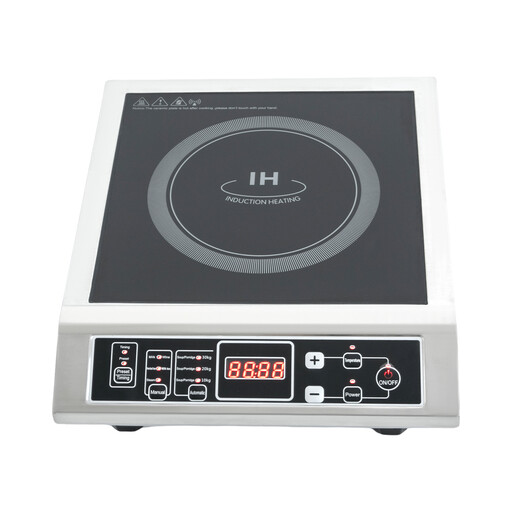 No image available
May be suitable for gently continuing to cook after bringing the liquid to the boil, if your pan is induction-compatible.
10 temperature settings from 176–572 °F and 10 power settings from 400–3500 W; the product description says it has a gentle simmer mode. The title mentions a timer and preset function.
Induction-compatible cookware is required. Check that the pan base and hob are compatible before buying.
 No image available
May be a good option if you want to keep using an existing pan and adjust the heat with a rotary control.
The product description lists a rotary control, timer, automatic shut-off and compatibility with heat-resistant cookware made from various materials.
Use only heat-resistant cookware and follow the manufacturer’s instructions.
 No image available
May be suitable for gently continuing to cook, if your pan is induction-compatible.
Rated for 220–240 V; the product description lists 2100 W, a glass surface and a gentle simmer setting.
Induction-compatible cookware is required. Check that the pan base is suitable for the hob before use.
First, bring the liquid to the boil according to your recipe, then turn the heat down low. A recipe from LECKER suggests poaching the pears for about 20 minutes, turning them occasionally and without letting them continue to boil; the right setting depends on the recipe and the fruit. Stay nearby while they cook.
It depends on the pan base and the specific hob. Check whether the base is ferromagnetic and whether its diameter is within the range specified for the model. CASO specifies a pan diameter of 12–24 cm for the ProMenu 2100; Rommelsbacher requires a ferromagnetic base for the CT 2020/IN.
Check the instructions for the specific appliance and the rating of the power connection you have. Rommelsbacher advises against using multiway extension leads with its high-powered double hobs; this manufacturer guidance isn’t a general rule for every single hob.
When you buy from a trader in the EU, you have a statutory guarantee of at least two years from the date you receive the goods, which you can claim from the seller. Any additional manufacturer’s guarantee offered is separate.
No. For products that must carry the CE marking under EU rules, the manufacturer uses it to declare that the product meets the relevant requirements. It isn’t an independent approval mark.