For batch-cooking polenta, choose a hob with low heat settings that you can adjust to suit your pan – but you’ll still need to stir regularly. Induction requires compatible cookware. For a large batch, the pan base and the weight of the filled pan must also meet the specifications of the particular appliance. A double hob is most useful if you’re cooking another dish at the same time.
Which hob is right for you?
If you batch-cook larger quantities of polenta
If you’re cooking several portions at once, check the pan base, the weight of the filled pan and the cooking zone together. CASO Design specifies a pan diameter of 12–24 cm and a maximum load of 6 kg for the ProMenu 2100; these specifications apply to this model.
If you want to adjust the heat while simmering
REWE’s basic recipe recommends reducing the heat once the polenta has come to the boil and stirring regularly as it simmers. A low heat setting that’s easy to select is therefore a useful feature to look for.
If you’re cooking another dish as well
If you’re making a sauce or side dish alongside the polenta, a hob with two independently controlled zones can be useful. Rommelsbacher describes the CT 3410/IN as having two separately controlled cooking zones.
What should you look for when buying?
| What you need |
What to check when buying |
Who will find this especially important? |
| Control the simmer |
Check the low heat settings and how to adjust them. REWE’s basic recipe recommends lowering the heat once the polenta has come to the boil and stirring regularly. |
If I want to keep the polenta gently simmering after it comes to the boil, I look for a suitable low setting and continue stirring regularly. Around 36% of consumers would put control over simmering first. |
| A large, full pan |
Measure the pan base and compare the combined weight of the pan, contents and lid with the limits for the specific appliance. CASO Design specifies a maximum load of 6 kg for the ProMenu 2100. |
If I’m making several portions in a large pan, the cooking zone and permitted total weight need to be suitable. Around 29% of consumers would prioritise pan size and portion quantity. |
| Use your existing pan |
For induction, check that the pan base is magnetic and also follow the measurements specified for the model. |
If I want to keep using my existing pan for polenta, I first check that it’s compatible with the type of hob I’ve chosen. Around 21% of consumers would make their existing cookware their main consideration. |
| Cook two dishes at once |
Only choose a second zone if you’ll actually cook two things at once; check the zone sizes and the appliance’s electrical specifications. |
If I’m making a sauce or side dish at the same time as the polenta, I need space for a second pan. Around 14% of consumers would prioritise cooking two dishes at once. |
Avoid common buying mistakes
-
Don’t confuse high maximum power with good simmer control
With polenta, it’s also important to be able to lower the heat appropriately once it has come to the boil. REWE’s basic recipe also recommends stirring regularly as the polenta simmers.
Check the low heat settings and how to operate the specific model. A temperature setting doesn’t prove that polenta won’t stick if you leave it unstirred.
-
Don’t check only the pan diameter
For a large batch, the weight of the filled pan may matter as much as the diameter of its base. For the CASO ProMenu 2100, the manufacturer specifies a maximum load of 6 kg and a pan diameter of 12–24 cm.
Weigh the filled pan with its lid on, then compare both its weight and base diameter with the specifications for your chosen model.
-
Don’t choose induction without checking your pan
Induction requires a suitable pan with a magnetic base. A cast-iron hob uses a different heating method; here too, the pan must be compatible with the appliance, as explained in its instruction manual.
Check your existing pan first. If it isn’t suitable for induction, compare other heating methods and check the relevant appliance specifications.
-
Don’t assume batch-cooking means safe storage
According to the German Federal Institute for Risk Assessment, the risk of microbial contamination increases the longer prepared food is stored.
Make sure you have enough fridge or freezer space, and cool hot food quickly if you plan to store it for longer. The German Federal Institute for Risk Assessment recommends a temperature below 7 °C.
Brands to consider
CASO Design
Portable single induction hobs. For the ProMenu 2100, the manufacturer specifies both a pan size and a maximum load.
- CASO Design specifies 12 power levels, a pan diameter of 12–24 cm and a maximum load of 6 kg for the ProMenu 2100.
- These specifications for one model don’t prove a particular level of simmering performance with polenta, or tell you about the brand as a whole. CASO Design lists CE and GS certification; a manufacturer’s claim of this kind isn’t an independent cooking test.
Rommelsbacher
Portable single and double induction hobs, including the CT 2010/IN and CT 3410/IN.
- The manufacturer specifies a cooking zone for pans with a diameter of 120–230 mm for the CT 2010/IN. For the CT 3410/IN, it specifies two independently controlled zones and a total output of 3.400 W.
- The zone specifications don’t confirm the maximum load for a large pan of polenta or guarantee a particular cooking performance.
Severin
The KP 1091 is a conventional portable cast-iron hob, which uses a different heating method from induction.
- Severin specifies an 18.5 cm heating ring, 1.500 W and a continuously adjustable control.
- These specifications don’t show how evenly a large pan of polenta will heat. Check that the pan sits securely and that its use is permitted in the appliance instructions.
ProfiCook
The PC-EKI 1062 is a portable single induction hob with several settings.
- ProfiCook specifies ten power levels and ten temperature settings for this model, with a display ranging from 60 °C to 240 °C.
- The temperature display doesn’t show what temperature a particular quantity of polenta will reach in the pan.
Steba
The IK 65 SLIM is a portable single induction hob.
- Steba specifies a 23 cm cooking surface and eight power levels, from 300 W to 2.000 W.
- The power settings alone don’t show whether a particular large batch of polenta will simmer evenly on the lowest setting.
Joybuy product selection
This selection includes portable single and double induction hobs for batch-cooking polenta. Before choosing, check that the pan, the heat settings you need and the number of cooking zones suit your plans.
 No image available
IsEasy induction hob, 2.100 W, 9 heat settings, 8-hour timer
For anyone who wants to turn the heat down after bringing the polenta to the boil. You’ll still need to stir regularly.
The product description specifies magnetic cookware with a diameter of 12–26 cm.
View at Joybuy
 No image available
Double induction hob, 2 zones, 5 temperature settings
For anyone who wants to cook polenta and another dish at the same time on two independently controlled zones.
The product title specifies five temperature settings. The power ratings for the zones aren’t listed.
View at Joybuy
 No image available
Single induction hob, 1.000 W, 5 power levels
For anyone looking for a portable single induction hob with several power levels.
The product title specifies 1.000 W and five power levels. Check that your existing pan is suitable for induction.
View at Joybuy
 No image available
Induction hob, 3.500 W, 10 temperature settings
For anyone who wants to choose from several temperature settings on a portable single induction hob.
The product description specifies power levels from 400 W to 3.500 W and a maximum load of 110,2 lb. Compatible magnetic cookware is required.
View at Joybuy
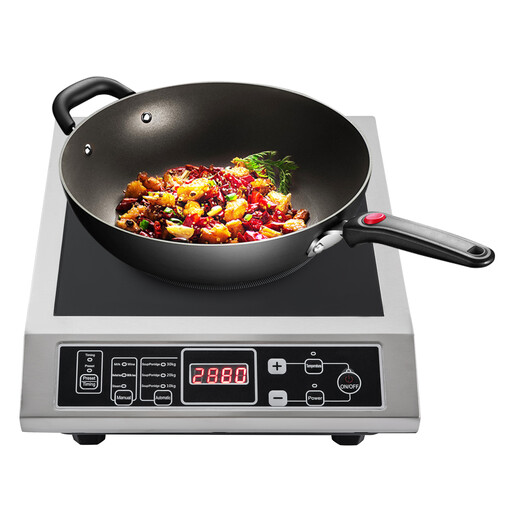 No image available
Induction hob, 3.500 W, 8 temperature settings
For anyone looking for a portable single induction hob with several temperature settings.
The product description specifies power levels from 800 W to 3.500 W and a maximum load of 50 kg. Suitable cookware is required for induction.
View at Joybuy
Frequently asked questions
Do I still need to stir polenta when using a hob with adjustable heat?
Yes. REWE’s basic recipe recommends turning down the heat once the polenta has come to the boil and stirring it regularly as it simmers. A temperature setting doesn’t replace this step.
What should I check when using a large pan for polenta?
Compare the diameter of the pan base and the weight of the filled pan with the specifications for the specific appliance. For the CASO ProMenu 2100, the manufacturer specifies a pan diameter of 12–24 cm and a maximum load of 6 kg; these figures don’t automatically apply to other models.
Can I use my existing pan on an induction hob?
Only if the pan is suitable for induction and its measurements meet the hob’s requirements. The German consumer advice centre says a magnetic pan base is essential for induction cookware.
When is a portable double hob worth it?
A double hob is worth considering if you’ll actually be making a sauce or side dish on a second zone while the polenta cooks. Check the measurements of each zone and the electrical specifications of the specific appliance.
How should I cool several portions of batch-cooked polenta?
The German Federal Institute for Risk Assessment recommends quickly cooling hot food to below 7 °C if you plan to store it for longer. Make sure you have enough fridge or freezer space before batch-cooking; the hob won’t cool the food for you.


