Batch-cooking polenta for workdays
If you’re preparing food for several lunches, you’ll need a hob that lets you turn down the heat after bringing it to the boil. Emmi kocht einfach explains that polenta should be left to cook gently after boiling.


If your pan is suitable for induction and its base fits the cooking zone, a portable induction hob with easy-to-use power settings could be a good choice. For polenta, the key is being able to turn the heat down after bringing it to the boil. A high maximum power rating doesn’t tell you how gently it will continue to cook in the pan. If you want to keep using a pan that isn’t suitable for induction, consider a cast-iron or radiant ceramic-glass hob, and bear in mind that its surface gets hot.
If you’re preparing food for several lunches, you’ll need a hob that lets you turn down the heat after bringing it to the boil. Emmi kocht einfach explains that polenta should be left to cook gently after boiling.
If you want to keep using your polenta pan, first check whether its base is suitable for induction and fits the hob. CASO Design and Rommelsbacher specify pan-size and cookware requirements for particular induction models.
If you plan to put the hob away after use, consider its dimensions, cable length and how to handle the hot surface. CASO Design lists the dimensions and cable length for a particular model; Rommelsbacher includes a residual-heat indicator on two hobs.
| Buying priority | What to check | Who is it important to? |
|---|---|---|
| Gentle simmering | Easy-to-use low power settings; controls that are accessible while stirring. A timer doesn’t replace stirring. | I want to turn down the heat after bringing it to the boil and keep an eye on the polenta while stirring. Around 33% of consumers put gentle simmering first. |
| Using a pan you already own | Whether the pan base is suitable for induction; whether its diameter matches the stated cooking zone. | If I want to keep using my existing pan, I’ll first check that it works on induction and fits the cooking zone. Around 27% of consumers say cookware compatibility is their top priority. |
| One or two cooking zones | For a double hob, check its dimensions, total power and how the power is shared between zones. | If I want to cook polenta and another hot dish at the same time, I really do need two zones. Around 20% of consumers prioritise cooking two things at once. |
| Space and storage | Appliance dimensions and cable length; guidance on residual heat and cooling. | With limited worktop space, I need room to stir and must be able to handle the cable and hot surfaces safely. Around 20% of consumers prioritise the space needed and how easy the hob is to put away. |
The maximum power rating doesn’t tell you how the hob performs on a low setting. Polenta should cook gently after coming to the boil, and needs to be stirred as directed in the recipe.
Compare the controls and adjustable power settings. Follow the method in your polenta recipe.
Induction hobs need a suitable pan base and the right pan size. If your pan isn’t suitable, a conventionally heated hob may work better with the cookware you already have.
Check the pan base and diameter first. If your pan isn’t suitable for induction, you may need to buy a compatible pan to use with an induction hob.
If you’re only using a polenta pan, the extra zone won’t offer an immediate benefit. It’s useful if you regularly cook another hot dish at the same time.
Choose according to your batch-cooking routine, and check the dimensions and total power of the specific double hob.
A hob doesn’t replace the need to cool, refrigerate and transport prepared food safely.
The German Federal Institute for Risk Assessment recommends considering refrigeration facilities at your destination and transporting food containers in a cool bag.
CASO Design’s ProMenu 2100 is a portable single induction hob.
The range includes a portable induction hob and a radiant ceramic-glass single hob.
The KP 1091 is a portable cast-iron hob that doesn’t use induction.
The IK 35 is a portable induction hob, where the dimensions and cable length may affect where you can set it up.
The EKI 3569 is a portable single induction hob with touch controls and pan detection.
This selection includes portable single induction hobs and conventionally heated single hobs for cooking one pan of polenta. Before buying, check that your pan is suitable and review the voltage and marking details for the specific appliance.
 No image available
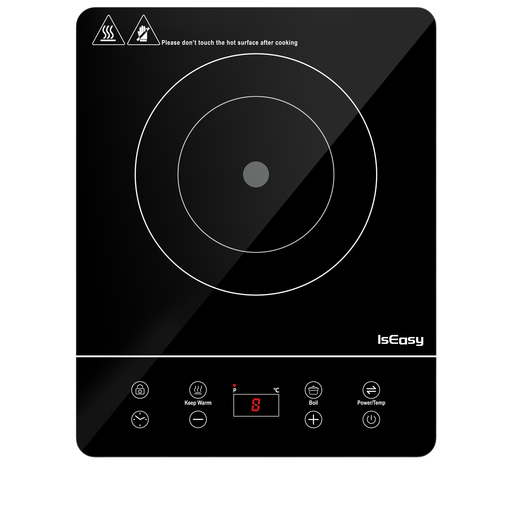
An option if your pan is suitable for induction and you want to turn down the power after bringing it to the boil.
The product name lists 9 power settings, 9 temperature settings and 220–240 V. Suitable cookware is listed as magnetic pans with a diameter of 12–26 cm.
 No image available
An option if you’re looking for a portable induction hob and your pan is suitable for it. The number of settings doesn’t guarantee a particular cooking temperature for polenta.
The product name lists 10 temperature settings and 3500 W. Induction-compatible cookware is required.
 No image available
An option if you’d prefer infrared to induction. The product information specifies heat-resistant pans and indoor use.
The product name lists 3500 W, a timer, and touch and rotary controls.
 No image available
An option if your pan is magnetic and suitable for induction. The product information warns that the surface gets very hot during use.
The product name lists 10 power settings and touch controls.
 No image available
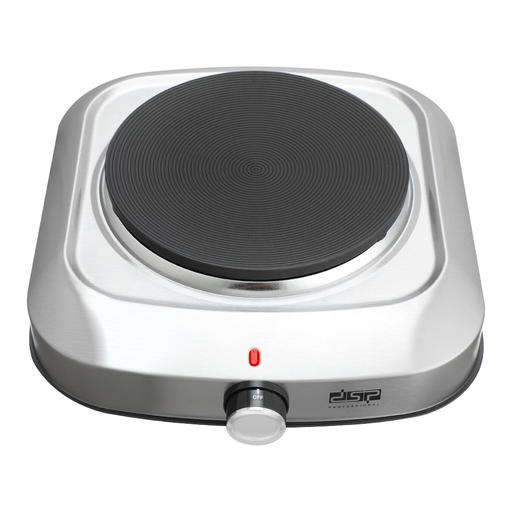
An option if you need a single cooking zone with adjustable temperature. Before buying, check that the hob suits your pan and the place where you plan to use it.
The product name lists 1500 W and adjustable temperature settings. The product information warns that a slight smell and some smoke may occur during first use, and recommends running it for 3–5 minutes in a well-ventilated room.
There’s no one setting that works for every appliance. Bring it to the boil according to your recipe, turn down the heat to let it cook gently, and stir as directed. Before buying, check that the power is easy to adjust; a timer won’t do the stirring for you.
Before setting it up, check the appliance dimensions, cable length and instructions for the specific model. After use, let the surface cool in line with the manufacturer’s guidance. Rommelsbacher lists a residual-heat indicator for the CT 2010/IN and CT 2203/TC.
Plan how to chill and transport it separately from the hob. The German Federal Institute for Risk Assessment recommends considering refrigeration facilities at home and at your destination, and transporting food containers in a cool bag. The right way to store it also depends on the ingredients and storage conditions.
Statutory rights cover faults and are your responsibility to pursue with the seller; a guarantee is an additional voluntary promise subject to its own terms. The German Consumer Advice Centre explains the difference. For a specific offer, check who the seller is and review the guarantee terms separately.
New electric hobs covered by the EU Low Voltage Directive must meet the relevant EU requirements and carry the required CE marking. The European Commission explains that by applying the CE marking, the manufacturer declares that the product complies with the applicable EU rules. It is not an independent test of safety or performance.