Making polenta on an extra cooking zone
You mainly need an extra cooking zone where the polenta can continue cooking over a low heat after coming to the boil, with enough room to stir it easily.


If you’re only making polenta, a portable single-zone induction hob is an obvious choice, provided your pan is induction-compatible and the hob offers low settings. Power levels don’t measure the temperature inside the pan. If you want to cook a side dish at the same time, a double hob may be worth considering, although its total power can be shared between the two zones. If you have a heavy pan or one that isn’t induction-compatible, check the heating technology, base area and any stated weight limit.
You mainly need an extra cooking zone where the polenta can continue cooking over a low heat after coming to the boil, with enough room to stir it easily.
You want to prepare a side dish alongside the polenta. You’ll need to consider the space available, suitable pans and the power shared between the two zones.
You’d like to keep using your existing pan. Its induction compatibility, base area and weight when full can all affect your choice of hob.
A good fit if: you’re making polenta on one extra zone and have a suitable induction pan.
Bear in mind: There’s only one cooking zone, and low settings don’t guarantee a particular temperature inside the pan.
A good fit if: you want to cook polenta and a side dish at the same time on the same unit, and both pans are induction-compatible.
Bear in mind: The total power may be shared between both zones, so check the specifications for the model you’re considering.
A good fit if: you want to keep using a pan that doesn’t have an induction-compatible base.
Bear in mind: The hotplate itself gets hot, and the control settings don’t measure the temperature of the food.
A good fit if: you want to use cookware without an induction-compatible base and prefer a smooth cooking surface.
Bear in mind: The cooking surface heats up and may stay hot after cooking.
| Priority | What to check | Who this matters most to |
|---|---|---|
| Gentle heat | Low power settings and a timer; keep stirring rather than assuming the food will stay at a constant temperature. | If I want to leave the polenta to swell over a low heat after bringing it to the boil, I need easy-to-adjust settings and must keep stirring. Around 36% of consumers prioritise gentle heat after boiling. |
| Cooking a side dish at the same time | Two cooking zones and their combined total power; also check the available space and whether your pans are suitable. | If I want the polenta and side dish to be ready at the same time, I need two usable zones. Around 29% of consumers prioritise cooking two dishes at once. |
| Using an existing pan | For induction, check the material, flat base and suitable diameter; otherwise, consider a different heating technology. | If I want to keep my existing pan, it needs to suit the heating technology and cooking zone. Around 21% of consumers base their choice mainly on whether they can continue using the pan they already own. |
| Using a large or heavy pan | Compare the base area with the available cooking surface; only take a weight limit into account if one is expressly stated for the model. | If I’m using a large, full pan for guests, I pay particular attention to the support area and any stated weight limit. Around 14% of consumers give this priority. |
With polenta, it also matters whether you can turn the heat down easily after bringing it to the boil. Power ratings don’t tell you what temperature the pan will reach.
Compare the low settings and, where relevant, the timer on the specific appliance. Keep stirring as directed by the recipe, and don’t treat a temperature setting as a measurement of the temperature inside the pan.
Induction requires compatible cookware; the material, base and size all need to suit the hob.
Check that your pan is compatible and read the model specifications before buying. ROMMELSBACHER specifically states that the CT 2020/IN needs a ferromagnetic, or iron-containing, pan base. Otherwise, you could consider a different heating technology.
If your existing pan isn’t suitable, you may need to buy an additional compatible one.
For the CASO S-Line 3500, the manufacturer states a total power of 3.500 W. This doesn’t mean that each cooking zone has 3.500 W available.
Plan to cook two dishes at once based on the total power and the instructions for the specific appliance.
ROMMELSBACHER lists the AK 1580 cast-iron hotplate as discontinued.
When deciding what to buy, check the availability of the specific model rather than assuming an older product page means it’s still in stock.
The S-Line models mentioned here include portable single- and double-zone induction hobs.
The models mentioned here include induction, cast-iron heating and radiant ceramic glass.
The IK 65 SLIM is a portable single-zone induction hob, with controls and footprint you can compare with other models.
The Kult X Mono is an example of a portable, single-zone induction hob.
The PC-EKI 1062 is an example of a portable single-zone induction hob.
The following Joybuy appliances include portable single- and double-zone hobs, including induction and ceramic-glass models.
 No image available
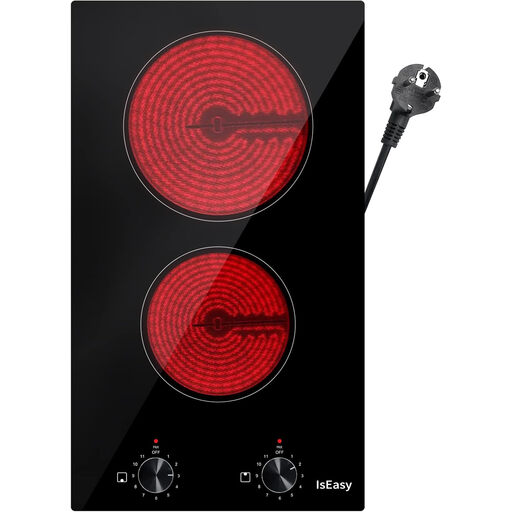
An option if you want to cook polenta and a side dish at the same time on two cooking zones.
The product name lists two cooking zones, 11 power settings and 3.200 W; it also gives a size of 29,5 cm.
 No image available
An option for cooking polenta on one extra induction zone.
The product name lists 2.100 W, 28 cm, nine heat settings, a glass surface and an 8-hour timer.
 No image available
An option if you want to cook polenta and a side dish at the same time on the same portable unit.
The product name lists two cooking zones and five temperature settings.
 No image available
An option for cooking polenta on one portable induction zone.
The product name lists 1.000 W and five power settings.
 No image available
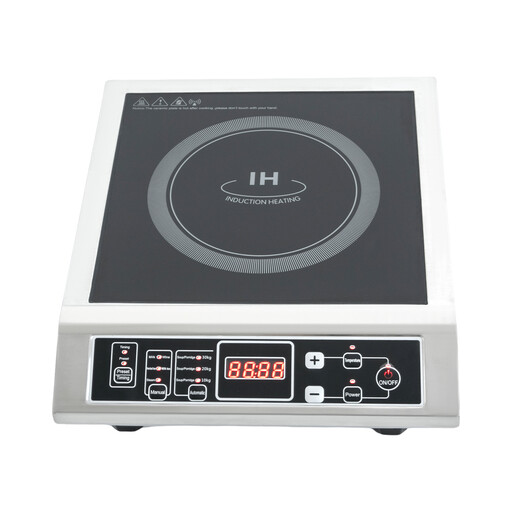
An option for an extra portable cooking zone; the product name lists a timer and reservation function.
The product name also states 3.500 W.
Bring the liquid to the boil in a suitable pan placed securely on the hob, then turn down the heat after stirring in the polenta. Alnatura’s recipe says to leave the polenta to swell over the lowest heat for about 20 minutes, stirring occasionally. The exact time depends on the recipe and the type of polenta you use.
No. A radiant hob can also have a ceramic-glass surface. For induction, your cookware needs to be compatible with the specific model. Steba’s instructions suggest a simple check: see whether a magnet sticks to the base of your pan.
Check the appliance’s connection and voltage specifications against your power supply, and follow the instructions provided. The Steba IK 65 SLIM instructions call for a stable, level, heat-resistant surface and warn against using the appliance if the glass or cable is damaged. If the hob indicates that the surface is hot, let it cool before cleaning.
New electric domestic hobs covered by the EU Low Voltage Directive must carry the CE marking. This is the manufacturer’s declaration of conformity, not an independent quality mark. The Bundesnetzagentur also recommends checking the product identity, manufacturer details, German-language instructions and declaration of conformity for the specific offer.
When you buy from a business seller, you’re generally entitled to a statutory warranty of at least two years from the date you receive the goods. The seller is your point of contact. This is separate from the 14-day right to cancel that generally applies to online contracts.