Who should think carefully about their choice?

Households with staggered mealtimes

If polenta won’t be served to everyone at the same time, you’ll need to choose between keeping it hot in a controlled way and cooling it before reheating it later. The BfR offers guidance on hot holding, while the German Federal Centre for Nutrition (BZfE) describes reheating leftovers as an alternative.

Fans of traditional polenta

If you’re making polenta the traditional way, easy-to-use low heat settings are important. The BZfE describes simmering it over a low heat for 30 to 40 minutes, stirring constantly (article dated 4 June 2025).

Anyone using a pot they already own

If you want to keep using your existing pot, check that its base and diameter are compatible with the cooking technology and cooking zone of the model you’re considering. Manufacturers such as CASO Design, Rommelsbacher and Severin give model-specific information on compatible pan or cooking-zone sizes.

What should you look for when buying?

What matters What to check before buying Who is it important to?
Serving at different times Check the keep-warm function and shut-off time; a setting on the appliance doesn’t confirm the temperature of the polenta itself. If I serve at different times, I need a plan for keeping the food hot or reheating it later. Around 36% of consumers say staggered serving is their top priority.
Slow cooking Compare low heat settings and ease of use; according to the BZfE, traditional polenta needs to simmer for 30 to 40 minutes, with constant stirring. If I’m making traditional polenta, I want to be able to adjust the heat easily once it has come to the boil. Around 29% of consumers put slow cooking first.
Using an existing pot Check the material and diameter of the pot base against the specifications for the hob you’re considering. If I want to keep using my existing pot, the heating technology needs to suit its base. Around 21% of consumers say pot compatibility is their top priority.
Using two pots at once Check whether you really need two cooking zones, and consider the appliance’s dimensions and whether each zone can be controlled separately. If I need a second pot on the hob at the same time as the polenta, I need two usable cooking zones. Around 14% of consumers prioritise this.

Common mistakes when choosing

  • Assuming a keep-warm setting guarantees a safe food temperature

    An appliance setting doesn’t tell you whether the polenta stays hot enough throughout. The BfR recommends keeping heated food at a minimum of 60 °C throughout until it is eaten.

    Check the temperature of the polenta itself, and bear in mind that a timer may switch off the heating function.

  • Choosing induction without checking your existing pot

    An induction hob needs a suitable ferromagnetic pot base; the base diameter must also meet the specifications for the model you choose.

    Compare your pot base with the cooking-zone size before buying. If your pot isn’t suitable, a radiant or cast-iron hob may be an alternative heating option.

    If your existing pot isn’t suitable for induction, you may need to buy a compatible one to use this type of hob.

  • Assuming a ceramic glass surface means the hob is induction

    A smooth cooking surface doesn’t tell you how the appliance heats. The Rommelsbacher CT 2010/IN and CT 2203/TC models reviewed use different heating technologies.

    Check the hob type in the model description, rather than relying on the surface description alone.

  • Assuming a shut-off timer will keep food hot indefinitely

    A timer can switch off the heating function once the set time has elapsed. After that, the food is no longer being actively heated.

    Compare the timer limit on the model you’re considering with the gap between meals, and plan when to serve accordingly.

Brands worth considering

CASO Design

The COMFORT C2000 portable induction hob may appeal to households comparing a specific model with a keep-warm function. You’ll need a suitable pan.

  • CASO Design lists 10 power levels, a keep-warm function at approximately 60 °C, compatible pan sizes from 12 to 22 cm and a timer of up to 180 minutes for this model.
  • The keep-warm specification doesn’t prove that the polenta reaches at least 60 °C throughout. The BfR’s recommendation relates to the temperature of the food itself.

Rommelsbacher

The CT 2010/IN and CT 2203/TC models use different heating technologies. Which one is right for you depends, among other things, on the pot you already own.

  • Rommelsbacher lists a diameter of 120 to 230 mm for the CT 2010/IN induction zone, and a timer of up to 180 minutes. The CT 2203/TC has a selectable radiant zone of 140 or 210 mm and a residual-heat indicator.
  • These specifications apply to the models listed and aren’t features of every appliance from the brand. The CT 2203/TC’s nine power levels don’t indicate a specific temperature for the polenta.

Severin

The KP 1091 single cast-iron hob is an option if you don’t need induction and want a straightforward single cooking zone.

  • Severin lists an 18.5 cm heating ring, 1.500 W and stepless heat control for the KP 1091.
  • Stepless heat control doesn’t measure the temperature of the food. If you’re serving at different times, you’ll need to assess hot holding separately.

WMF

The portable Kult X Mono is an induction model with a keep-warm programme, for households with compatible cookware.

  • WMF lists eight power levels, six programmes including keep warm, and a timer of up to nine hours.
  • The programme and timer don’t confirm the temperature of the polenta throughout. Check the temperature of the food itself.

Silvercrest

The SIKP 2200 B1 is an induction model for households whose pots are compatible with this heating technology.

  • On 4 August 2026, F.A.Z. Kaufkompass published a test of 19 portable induction hobs.
  • The test covers induction hobs and doesn’t apply to radiant or cast-iron hobs. It also doesn’t prove that polenta can be kept hot safely.

Portable hobs at Joybuy

The Joybuy products below cover portable cooking options, including single and double hobs for making polenta and other similar dishes.

SEVERIN KP 1092 hotplate, 1.500 W

SEVERIN KP 1092 hotplate, 1.500 W

If you want your polenta to keep cooking on a low heat after it comes to the boil, stepless heat control is useful.

The product name specifies an 18 cm heating ring and 1.500 W.

View at Joybuy

Induction hob with IGBT technology, 3.500 W

Induction hob with IGBT technology, 3.500 W

An induction hob needs cookware with a compatible base. Check the appliance requirements against your pans.

The product name specifies eight temperature settings, a power range of 800 to 3.500 W, a timer function and overheat protection.

View at Joybuy
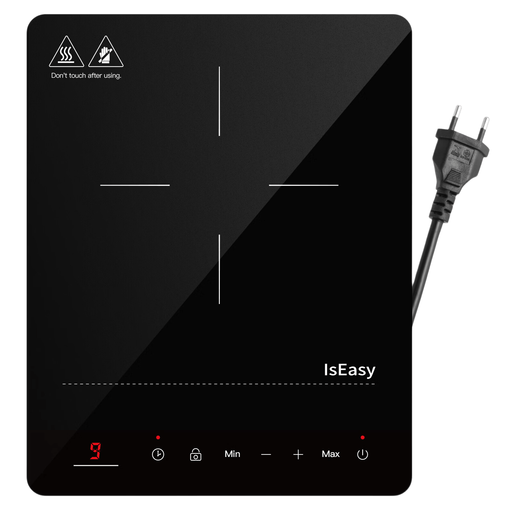
IsEasy induction hob, 2.100 W, 9 heat settings and an 8-hour timer

IsEasy induction hob, 2.100 W

Adjustable heat settings and a timer are useful features for slow cooking; with induction, you’ll need a compatible pot.

The product name specifies a 28 cm cooking surface, 9 heat settings, an 8-hour timer and a child lock.

View at Joybuy

Induction hob with two cooking zones and 5 temperature settings

Induction hob with two cooking zones

Two cooking zones may be useful if you really plan to use a second pot at the same time as the polenta.

The product name specifies 5 temperature settings and functions such as keeping warm, simmering and slow cooking.

View at Joybuy
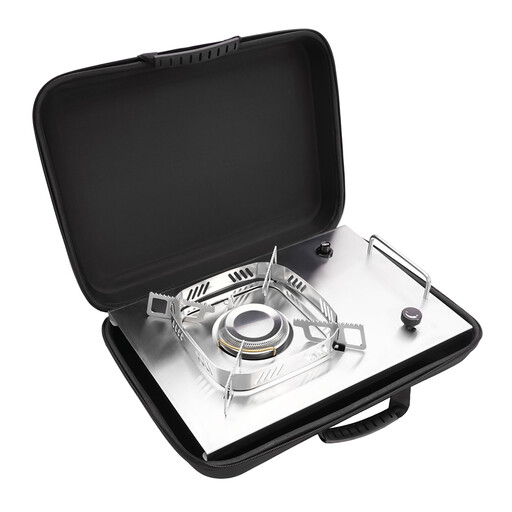
Portable camping stove with piezo ignition, 2.600 W

Portable camping stove with piezo ignition, 2.600 W

This model is only suitable as a portable cooking option if its specific heating technology and cookware requirements are right for how you intend to use it.

The product name specifies 2.600 W and piezo ignition.

View at Joybuy

Frequently asked questions

Is setting a hob to 60 °C enough to keep food hot safely?

No. The BfR recommends keeping heated food at a minimum of 60 °C throughout until it is eaten. A hob setting or keep-warm programme doesn’t measure the temperature of the polenta. The BfR’s guidance is a food-safety recommendation, not a legal temperature requirement for private households claimed here.

What can I do if someone won’t be eating until much later?

Don’t rely on a hob that has switched itself off. The BfR warns against keeping food hot at too low a temperature; the BZfE describes storing and reheating leftovers as an alternative. Follow good kitchen hygiene when cooling and serving the food again.

Can I use my existing pot on an induction hob?

Only if the base is suitable for induction and meets the size requirements of the model you choose. Rommelsbacher specifies a ferromagnetic base and a cooking-zone size of 120 to 230 mm for the CT 2010/IN; check the specifications for the appliance you’re considering.

What marking should an electric hob sold in Germany carry?

Mains-powered hobs covered by the EU Low Voltage Directive must meet the relevant conformity requirements and carry CE marking. CE is a manufacturer’s declaration of conformity, not an independent quality mark; check the marking and safety documentation for the specific product.

Is a manufacturer’s guarantee the same as statutory warranty rights?

No. Statutory warranty rights apply against the seller; a guarantee is an additional, voluntary service with its own terms. Consumer advice services and retailer information can help you understand the difference. Also check the specific product details on repair services and returns.