Batch-cooking soup with limited space
If you’re making lunch portions one after another in a single pan, a portable single hob may be enough. First, check the pan base, cooking zone and available surface space.


For potato soup that you’re batch-cooking for several lunches, a portable single hob should be enough if you’re only using one pan at a time. With induction, the pan’s base and diameter need to be compatible with the hob. If your cookware isn’t suitable for induction, consider a radiant or solid hotplate instead. A double hob is mainly useful when you want to cook two things at once. A power setting or keep-warm function doesn’t measure the soup’s temperature: the German Federal Institute for Risk Assessment recommends keeping heated food at a minimum of 60 °C throughout, and highlights the importance of proper chilling during storage and transport.
If you’re making lunch portions one after another in a single pan, a portable single hob may be enough. First, check the pan base, cooking zone and available surface space.
For induction, the pan needs a suitable base and must be the right size for the cooking zone. Germany’s Federal Office for Radiation Protection explains the requirements for suitable cookware. If your pans aren’t suitable for induction, compare radiant and solid hotplates.
If you want to have a second pan on the hob at the same time, check that both cooking zones can be used and that the appliance’s width, power connection and position are suitable.
First, check whether your soup pan is suitable for the heating technology you’ve chosen. Then decide whether one cooking zone is enough or whether you really want to cook two things at the same time.
| What matters | What to look for | Who will find this most important? |
|---|---|---|
| Control the simmer | Check the adjustment options on the specific model. Settings and timers don’t show the soup’s actual temperature. | If I’m simmering soup for a while, I want to be able to adjust the heat appropriately. Around 36% of consumers put control over simmering first. |
| Keep your pan | For induction, compare the pan material and base diameter with the manufacturer’s specifications; otherwise, look at radiant or solid hotplates. | If you want to keep using your existing soup pan, first check that it’s suitable for the heating technology. Around 29% of consumers prioritise being able to keep using their pan. |
| Cook two things at once | Look for two usable cooking zones, space for pans of the right size, sufficient total power and a suitable appliance width. | If I want to cook a side dish or a second portion alongside the soup, having a second usable zone matters to me. Around 21% of consumers prioritise cooking two things at the same time. |
| Space and power connection | Measure the available surface and check the specific appliance’s rated power, mains connection and placement instructions. | If you have a small worktop or a particular spot in mind for your hob, you’ll also need to consider the right power connection. Around 14% of consumers prioritise available space and planning the connection. |
A pan without a suitable base, or with a base that’s the wrong diameter, may not work with a particular induction cooking zone.
Check your pan’s material and base diameter against the specifications for the specific appliance. If you want to keep your pan, compare suitable radiant or solid hotplates too.
Double hobs can vary in heating technology, width and rated power. The second zone is only useful if both pans fit and you have enough space.
Measure the space available and check that both cooking zones, the connection requirements and the placement instructions suit the way you cook.
A setting on the appliance doesn’t prove that the soup is at the desired temperature throughout or that it will stay properly chilled during transport and storage.
Plan cooking, keeping food hot, cooling and transport as separate steps. The German Federal Institute for Risk Assessment recommends keeping food at a minimum of 60 °C throughout when holding it hot, and warns against inadequate chilling during storage and transport.
The CT 2010/IN and CT 1800/E are two different types of portable single hob: induction and radiant-heated glass ceramic, respectively.
The Touch 2000 is a portable single induction hob for a suitable pan and a limited amount of space.
The range includes portable single and double hobs with induction or solid hotplates.
The relevant model for this guide is the portable single induction hob SIKP 2200 B1.
The Kult X Mono is a portable single induction hob with direct-select programmes.
This selection features portable single hobs for cooking soup in one pan, including induction and radiant-heating models. For the specific listing, check that the required CE marking is present and that instructions and safety information are available in German. Germany’s Federal Network Agency explains that CE marking isn’t an independent quality seal.
 No image available
A single cooking zone with continuously adjustable temperature control may suit you if you want to heat one soup pan at a time and adjust the setting as needed.
The product description lists an 18 cm heating ring and 1,500 W. The cooking surface gets hot during use and must be allowed to cool completely before cleaning.
 No image available
The single induction zone is designed for a soup pan, provided its base is suitable for induction and it’s within the stated size range.
The product description lists nine heat settings, a timer and magnetic cookware with a diameter of 12–26 cm. Induction requires suitable cookware.
 No image available
This portable hob with a single induction zone is an option if you use one suitable pan at a time for your soup.
The product description lists five heat settings and 1,000 W. Suitable cookware is required for induction.
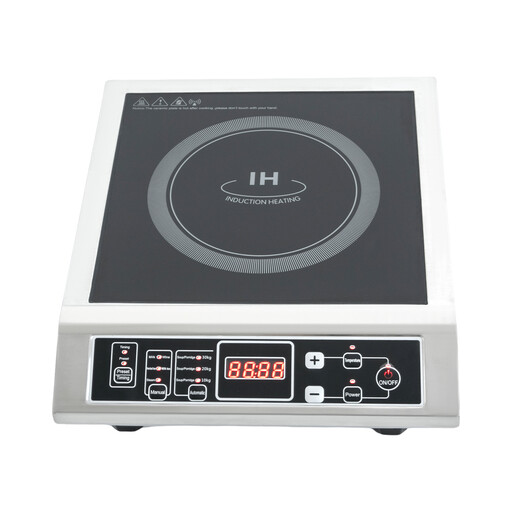 No image available
A portable induction cooking zone may suit you for making soup, provided your pan is compatible and the appliance’s connection requirements work for your cooking area.
The description lists 3,500 W, ten power settings, a timer and a preset function. Check the model’s connection and placement instructions.
 No image available
The product description identifies this as an infrared hotplate and lists a soup mode. It also states that heat-resistant cookware made from various materials is suitable.
It’s listed as 3,500 W, with a timer and automatic shut-off. According to the description, this model is intended for indoor domestic use.
Yes. The pan base must be suitable for induction, and its diameter must match the cooking zone. For the CT 2010/IN, Rommelsbacher specifies a ferromagnetic base and a 120–230 mm cooking zone. Check the specifications for the model you’re considering.
No. An appliance setting doesn’t prove that the soup is at the right temperature throughout. The German Federal Institute for Risk Assessment recommends keeping heated food at a minimum of 60 °C throughout; plan to chill it properly for storage and transport.
A double hob is mainly useful if you want to cook soup and another dish at the same time in separate pans. Check both cooking zones, cookware compatibility, the appliance’s width and total power, and the connection available where you plan to use it.
New, ready-to-use appliances in the relevant mains voltage range must meet the applicable requirements for electrical equipment, including the required CE marking. Germany’s Federal Institute for Occupational Safety and Health describes the scope of these requirements, while the Federal Network Agency explains the need for instructions and safety information in German. CE marking isn’t an independent practical test.
In Germany, statutory warranty rights for faulty goods are claims against the seller; a guarantee is an additional voluntary promise, subject to its own terms. The consumer advice centre recommends treating them as separate things and checking the details for the specific model and seller.