For cooks serving meals at different times
If you’re serving portions one after another, it’s important to keep an eye on the temperature of the soup. The BfR recommends keeping food at a minimum of 60 °C throughout when holding it hot.


For potato soup served at staggered mealtimes, the hob should suit the base and diameter of your soup pot; you only need a second cooking zone if you want to heat another pan at the same time. When keeping food hot, it’s the temperature of the soup that matters, not just the appliance setting: in its kitchen hygiene guidance from March 2026, the German Federal Institute for Risk Assessment (BfR) recommends keeping food at a minimum of 60 °C throughout. If there’s a longer break, it’s more appropriate to cool the soup quickly and reheat it thoroughly later.
If you’re serving portions one after another, it’s important to keep an eye on the temperature of the soup. The BfR recommends keeping food at a minimum of 60 °C throughout when holding it hot.
If you want to keep using your current pot, check its base and diameter against the specifications for the appliance you’re considering. Rommelsbacher and CASO Design list suitable pot bases and size ranges that vary by model for their induction hobs.
If you’re preparing another dish at the same time as the soup, you may need two separately controlled cooking zones. Severin describes the DK 1042 as a double hot plate with two independently controlled heating rings.
| What you need it for | What to check before buying | Who will find this especially important? |
|---|---|---|
| Keeping soup hot | Adjustability, how the appliance switches off and checking the temperature of the food; the BfR recommends a minimum of 60 °C throughout. | When portions are being served one after another, I want to keep the soup hot in the pot and be able to control it. Around 40% of consumers put keeping food hot first. |
| Using an existing pot | Check that the base is suitable for induction and compare its permitted diameter with the specifications for the particular model. | I want to keep using my existing soup pot and find out in advance whether its base is suitable for the hob. Around 30% of consumers prioritise pot compatibility. |
| Using two pots at once | Check the number of cooking zones, whether they can be controlled independently and how much space the hob needs. | If I’m heating a second pot as well as the soup, one cooking zone won’t be enough. Around 15% of consumers place particular importance on being able to use two pots at the same time. |
| Considering space and ongoing costs | Check the appliance dimensions, your existing cookware and the service terms separately; the rated power alone doesn’t tell you how much electricity it will use. | If space is limited, I want to know whether the hob will fit and work with my pot. Around 15% of consumers prioritise the space required and potential ongoing costs. |
A setting on the hob doesn’t prove that the food has reached the recommended temperature throughout.
Stir the soup and check the temperature of the food itself. For longer breaks, the BfR recommends quickly cooling hot food to below 7 °C, then reheating it to at least 70 °C throughout for two minutes before eating.
Induction models need compatible cookware, and the permitted base diameter can vary from one appliance to another.
Compare the base and diameter of your soup pot with the manufacturer’s specifications. If the pot isn’t suitable, consider a hob that doesn’t require a particular type of pot base.
A timer or automatic switch-off can stop the appliance. Once it has switched off, the selected setting can no longer maintain the soup’s temperature.
Check the operating time and switch-off behaviour of the specific model, and don’t rely on a hob to bridge a longer break between mealtimes without checking it.
The CT 2010/IN is a portable single induction hob for compatible pots.
The ProSlim 2000 is a portable single induction hob for compatible cookware.
The range includes the KP 1091 single hot plate and the DK 1042 double hot plate, both with cast-iron heating surfaces.
The HK 30 is a portable single ceramic glass hob that doesn’t require a particular type of pot base.
The SIKP 2200 B1 is a portable single induction hob.
This selection includes portable hobs for making potato soup, including induction and ceramic or infrared models, as well as appliances with one or two cooking zones. Pay particular attention to pot compatibility and whether you want to heat a second pot at the same time.
 No image available
The two cooking zones are ideal if you want to heat soup and another pot at the same time.
The product title lists five temperature settings and keeping food warm as intended uses. An appliance setting doesn’t prove that the soup is at the right temperature throughout.
 No image available
The product title says it’s suitable for heat-resistant pots, making this model an option if you don’t want to be limited to induction cookware.
The product title lists 3500 W, a ceramic cooking surface, a timer, touch and rotary controls, and cooking soup as an intended use. Check pot compatibility against the specifications for the specific appliance.
 No image available
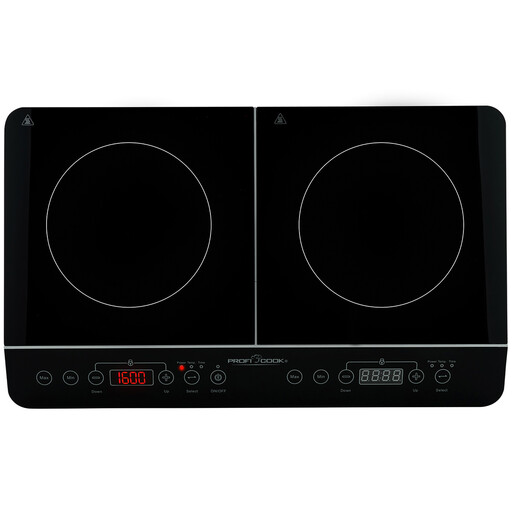
This double hob is worth considering if you want to heat another pot at the same time as your potato soup.
The product title lists two cooking zones, ten settings and a timer. According to the product information, the appliance switches off automatically after 120 minutes without operation; bear this limit in mind when serving meals at different times.
 No image available
This model may suit you if you’re looking for a single portable cooking zone for a compatible soup pot.
The product title lists 3500 W and ten temperature settings. According to the product information, you’ll need magnetic cookware that’s suitable for induction; the timer runs for up to three hours.
 No image available
The product title lists a soup function and ten power levels for cooking on a portable induction hob.
The title also lists six functions and a control lock. According to the safety information, people with pacemakers should keep a minimum distance of 30 cm while the appliance is in use; check the guidance for the specific appliance.
Don’t judge by the setting alone; check the temperature of the food itself. In its kitchen hygiene guidance from March 2026, the BfR recommends keeping food at a minimum of 60 °C throughout when holding it hot. For longer breaks, the BfR recommends quickly cooling hot food to below 7 °C, then reheating it to at least 70 °C throughout for two minutes before eating. This isn’t a guarantee about how a hob will perform.
According to their manufacturers, the portable single hobs covered here are designed to plug into a socket. Before use, check the instructions and the specifications for the particular appliance, especially the guidance on where to place it, how to connect it and which pots are suitable.
No. If a product is faulty, your statutory rights are with the seller; a guarantee is an additional voluntary promise subject to its own terms. The Verbraucherzentrale (German consumer advice centre) clearly distinguishes between these two rights. For a specific appliance, check the seller’s information and the guarantee terms.
New electric hobs covered by Directive 2014/35/EU and operating at 50 to 1,000 V AC must meet the relevant conformity requirements. According to information from the European Union, the manufacturer is responsible for conformity assessment and the required CE marking. A product listing doesn’t prove that the specific item you buy complies, or that it’s suitable for keeping soup hot.