Pudding makers who want precise heat control
If you heat milk, whisk in the pudding mix and then thicken it while stirring, easily accessible low heat settings matter more than a high maximum power output.


Choose the heating type based on your pan first: induction requires a suitable magnetic pan base, while HiLight and solid hotplates do not. When thickening pudding while stirring, easy-to-adjust heat settings are important. However, a keep-warm function does not prove that the pudding has reached the required temperature throughout: the German Federal Institute for Risk Assessment recommends keeping food at a minimum of 60 °C in all areas.
If you heat milk, whisk in the pudding mix and then thicken it while stirring, easily accessible low heat settings matter more than a high maximum power output.
If everyone isn’t eating at the same time, you’ll need to choose between serving pudding straight away, keeping it hot under controlled conditions, or cooling it quickly for longer storage.
If you want to keep using your existing pudding pan, check whether it’s suitable for induction and compare its base diameter with the cooking zone.
Dr Oetker recommends bringing cooking pudding to the boil, then thickening it while stirring vigorously. For keeping food hot, the German Federal Institute for Risk Assessment recommends a minimum temperature of 60 °C throughout.
| Priority | What to check before buying | Who it matters most to |
|---|---|---|
| Heat control when thickening | Compare how easy the heat settings are to use and check the pan size recommended for the specific model. | When I thicken pudding while stirring after bringing it to the boil, I want to be able to adjust the heat quickly. Around 36% of consumers would say that controllable heat for thickening is their top buying priority. |
| Serving at different times | Consider a keep-warm function and timer as useful controls; if keeping food hot for longer, check the temperature of the pudding. | When people are eating at different times, I need to choose between keeping food hot under controlled conditions and cooling it quickly for later. Around 29% of consumers would put staggered serving times first. |
| Using an existing pan | Check that the pan base is suitable for induction and compare its diameter with the appliance specifications. | If I want to keep using my existing pudding pan, the hob needs to be compatible with it. Around 21% of consumers would say pan compatibility is their top buying priority. |
| Space and cooking zones | Check the appliance’s overall dimensions and that it can stand safely where you plan to use it; only choose a second zone if you actually need one. | If worktop space is limited, I want to know whether there’s enough room for the appliance, pan and stirring. Around 14% of consumers would put space requirements first. |
An appliance setting of around 60 °C doesn’t prove that the pudding has reached at least 60 °C throughout. The German Federal Institute for Risk Assessment’s recommendation refers to the temperature of the food itself.
Check the temperature of the pudding while keeping it hot. If you plan to store it for longer, make sure you can cool it quickly.
Ceramic glass describes the surface: the Rommelsbacher CT 2010/IN uses induction, while the CT 2203/TC has a HiLight radiant heating element.
Match the heating technology to your pan base. Induction requires a suitable ferromagnetic base.
If your pan isn’t suitable for induction, you may need to buy an additional compatible pan.
The Tristar KP-6245 has two cooking zones, but naturally needs more space. According to the manufacturer, this model doesn’t have a keep-warm function.
Only prioritise a second zone if you regularly use two pans at the same time.
The portable single induction hobs listed here have different controls and features. Both require a suitable induction pan.
Rommelsbacher offers the portable induction hob CT 2010/IN and the portable HiLight radiant hob CT 2203/TC.
The KP 1091 is a portable solid hotplate, while the KP 1071 is an induction alternative.
The KP-6245 is a portable electric double hotplate for situations where you need to use two cooking zones at the same time.
The Joybuy products below are portable single induction hobs for households looking to adjust the heat when thickening pudding. Induction requires a suitable magnetic pan base.
 No image available
A portable single hob for making pudding when you want to adjust the heat as you stir.
Touch controls, 9 heat settings and an 8-hour timer are listed in the product name. The stated pan diameter range is 12–26 cm.
For use with suitable magnetic cookware only.
 No image available
A portable single hob for anyone looking for a straightforward way to adjust the heat.
The product name lists 5 power settings and 1,000 W output.
Induction requires suitable magnetic cookware.
 No image available
A portable single hob for thickening pudding when you want to adjust the temperature settings to suit your cooking.
The product name lists 3,500 W and 10 temperature settings.
Use with suitable magnetic cookware only.
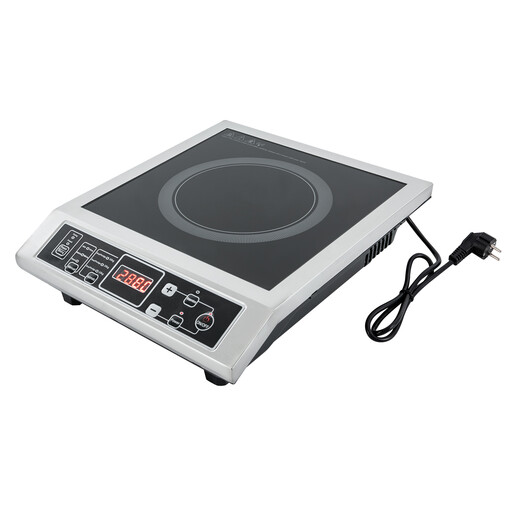 No image available
A worktop hob for adjusting the heat across several settings while thickening pudding.
The product name lists 3,500 W and 8 power settings.
According to the product description, the appliance is suitable only for iron and stainless steel cookware.
 No image available
A portable single hob for making pudding when you want to adjust the heat as you stir.
Touch controls, 10 power settings and 6 functions are listed in the product name.
For suitable magnetic cookware only.
No. The German Federal Institute for Risk Assessment recommends keeping heated food at a minimum of 60 °C throughout. An appliance setting of around 60 °C doesn’t measure the temperature of the pudding itself, so check the food directly.
Dr Oetker recommends bringing the milk to the boil, stirring in the mixed pudding powder, then simmering the pudding over a medium heat for one minute while stirring vigorously. Always follow the instructions for the product you’re using.
For longer storage, the German Federal Institute for Risk Assessment recommends cooling hot food quickly to below 7 °C. A hob doesn’t replace this cooling process.
The pan base must be magnetic or ferromagnetic and suitable for the appliance’s stated size range. A ceramic glass surface alone won’t tell you whether the hob uses induction or a radiant heating element.
For mains-powered appliances covered by the EU Low Voltage Directive, the CE marking is relevant. It indicates the manufacturer’s declaration of product conformity, but doesn’t prove that the appliance can safely keep pudding hot.