Making pudding when the hob is already in use
If you need an extra spot for your pudding pan, look for easy-to-reach controls so you can adjust the heat as you stir.


For an extra pan of pudding, a straightforward single hob is usually enough, provided the pan is compatible with the heating technology you choose. If you need two pans at once, consider a double hob. Induction requires compatible cookware, while HiLight and conventional electric hobs may offer alternatives. When thickening pudding, it’s important to heat it gently and keep stirring. If you’re sharing a power supply, you’ll also need to consider the combined load of appliances running at the same time.
If you need an extra spot for your pudding pan, look for easy-to-reach controls so you can adjust the heat as you stir.
If you’re making pudding and other dishes at the same time, consider whether you really need two extra cooking zones and whether your power supply can handle them.
If you’d like to keep using your current pan, check first that its base is compatible with your chosen heating technology and the pan size specified by the manufacturer.
First, check how many pans you’ll need to use on the additional hob at once. Then consider pan compatibility, ease of use and the capacity of your power supply.
| Criterion | What to check before buying | Who it matters most to |
|---|---|---|
| Heat control when thickening | Check how easy it is to use the lower power settings or dial. Don’t assume a temperature setting tells you the temperature inside the pan. | If I want to control the heat precisely while stirring the pudding, I need settings that are easy to adjust. Around 36 % of consumers prioritise heat control when thickening. |
| Extra cooking zones | Check whether you’ll actually use one or two zones at the same time. With a double hob, consider the controls, total power and electrical connection. | If I need to cook pudding and other dishes at the same time, I may need two extra zones. Around 29 % of consumers prioritise cooking several things at once. |
| Pan you already own | For induction, check that the pan has a compatible base and is within the size specified for the model. With heated hobs, bear in mind that they retain heat. | If I want to keep using my current pudding pan, it needs to work with the heating technology. Around 21 % of consumers prioritise compatibility with their existing cookware. |
| Ease of use | Compare a single hob with a dial against the extra features you’ll actually use. Also consider the space available and how easy and safe it is to operate. | If I’m only heating one extra pan, I don’t want to pay for features I won’t use. Around 14 % of consumers prefer a straightforward additional cooking spot. |
Two cooking zones are only useful if running both appliances at once won’t overload the available power supply.
Before choosing, check which appliances will be running at the same time and what load your power supply can safely handle. Don’t simply plug a high-powered double hob into a multi-socket extension lead.
Induction hobs need compatible cookware, and the permitted pan size can vary between models.
Check the base of your pan and the manufacturer’s guidance on diameter. If you want to keep using a pan that isn’t suitable for induction, compare heated alternatives and remember that they retain heat.
A power or temperature setting doesn’t tell you what temperature the pudding reaches in the pan. You need to keep stirring as it thickens.
Choose a hob with controls you’re comfortable using, and allow time for stirring rather than leaving the pudding unattended to cook on a timer.
The models featured include single and double hobs with different heating technologies.
The S-Line 2100 and S-Line 3500 are an induction single hob and a double hob respectively.
The EKP 3582 is a conventional electric single hob with a dial.
The KP 1071 is an example of a single induction hob with a timer and compact controls.
This selection includes portable single and double hobs for an extra pudding pan or cooking several things at once, with induction and ceramic glass options.
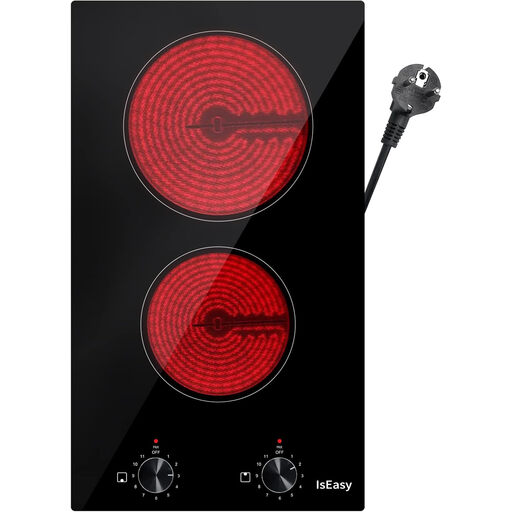 No image available
For two pans at once; the product description lists common materials such as aluminium, stainless steel and glass.
11 power settings, 3.200 W total power, 29,5 cm and dials.
 No image available
A single hob for an extra pan; induction requires suitable magnetic cookware.
Nine heat settings, an 8-hour timer, touch controls and cookware from 12–26 cm, according to the product description.
 No image available
Two independently controlled zones may suit you if you need two pans at once; both require suitable induction cookware.
The product description lists 1.500 W and 1.000 W for the separate zones, along with five temperature settings.
 No image available
An extra cooking zone with a dial for one pan; as an induction hob, it needs suitable cookware.
Five power settings and a dial.
 No image available
For an extra pan, provided the cookware is magnetic and compatible with the hob.
3.500 W, plus ten temperature settings and ten power settings, according to the product description.
No. A timer doesn’t replace stirring as the pudding thickens. RUF Lebensmittelwerk recommends stirring the pudding continuously while it heats, so make sure you can keep an eye on it as it cooks.
Take the appliance’s power rating into account, along with any other appliances running at the same time. Rommelsbacher advises against connecting its high-powered double hobs through a multi-socket extension lead. If you’re unsure about the electrical circuit, ask a qualified electrician to check it. Unplug the hob before cleaning and wait for it to cool down; always follow the instructions for your specific model.
For new mains-powered hobs covered by the Low Voltage Directive, the manufacturer must carry out the required conformity assessment, issue an EU Declaration of Conformity and apply the CE marking. The European Commission describes the scope of the directive; the German Federal Network Agency lists German-language operating instructions with the required safety information as a relevant criterion. A CE mark alone is not an independent safety test and does not confirm that a particular appliance on sale complies with the requirements.
Your statutory rights when goods are faulty are separate from any voluntary guarantee. If a product is faulty, repair or replacement may be available in the first instance. The Verbraucherzentrale explains the difference. According to guidance from the German Federal Ministry for the Environment, old electrical appliances should be taken to an authorised collection point or a retailer required by law to accept them, rather than put in household rubbish.