For cooks with limited worktop space
If you want to make pumpkin soup on a single hob that you can put away afterwards, think about the space needed not just for the appliance, but also for the pan and its handles.


For making pumpkin soup on a small worktop, a portable single hob is a good option if the appliance and the full pan can sit securely in the space available, and the pan base is compatible with the heating technology. Bosch Hausgeräte DE specifies that induction requires a ferromagnetic base; for pans that are not induction-compatible, a radiant or cast-iron hob may be suitable. Also check that the specific model lets you control the heat finely enough: the number of power settings alone does not guarantee a particular simmering result.
If you want to make pumpkin soup on a single hob that you can put away afterwards, think about the space needed not just for the appliance, but also for the pan and its handles.
If you want to keep using your existing pan, its base and diameter must be compatible with the heating technology and the specifications of the model you choose.
If you want to turn the heat down to a simmer after bringing the soup to the boil, check how the specific appliance is operated. Power settings and timers vary by model and do not guarantee a particular cooking result.
Suitable if: your soup pan has an induction-compatible base and its size is right for the model you choose.
Bear in mind: not all existing pans will work, and the fan may be audible.
Suitable if: you want to keep using a pan that is not induction-compatible and have room for the specific appliance.
Bear in mind: the heating surface may still be hot after you switch it off. Follow the manufacturer’s instructions before cleaning.
Suitable if: you want to use standard cookware without needing it to be induction-compatible.
Bear in mind: Rommelsbacher says cast-iron hobs take longer to heat up and retain heat for longer than induction hobs.
| Priority | What to check when buying | Who is this important to? |
|---|---|---|
| Space and pan size | Check the available space, appliance dimensions, pan-base diameter and permitted pan size together. | If your worktop space is limited, the appliance, pan and handles all need to fit in the cooking area. Around 36% of consumers put available space at the top of their list. |
| Pan compatibility | For induction, check the pan base and the size specifications of the specific hob; consider a different heating technology if needed. | If you want to keep using your existing soup pan, pay particular attention to the heating technology and base size. Around 29% of consumers say pan compatibility is their top priority. |
| Control when simmering | Compare the power controls, control panel and, where applicable, the automatic switch-off timer on the specific model. | If you want to simmer your soup for a while after bringing it to the boil, you need settings that suit the cooking stage you want. Around 21% of consumers prioritise control. |
| Purchase and maintenance costs | Consider your existing pan, the surface you’ll need to clean and any additional purchases you may need to make. | If you want to keep your existing cookware and make cleaning as straightforward as possible, take both into account when choosing. Around 14% of consumers put purchase and maintenance costs first. |
A small hob won’t necessarily be suitable for a larger soup pan. The Rommelsbacher RK 501 measures 14 × 14 cm, but according to the manufacturer its heating zone is 8 cm.
First check the pan base, then compare the cooking zone, permitted pan size and available space with the specifications of the specific model.
Ceramic glass can describe the surface of a radiant hob. Induction, on the other hand, requires a suitable magnetic pan base, as Bosch Hausgeräte DE explains.
Check the appliance’s heating technology and whether your existing pan is suitable, rather than judging by the surface alone.
Maximum power alone doesn’t tell you how well a particular model can be adjusted to simmer a thick soup on a low setting.
Compare the controls, available settings and, where applicable, the timer on the specific model. Don’t assume the wattage guarantees a particular cooking result.
Worth considering if you want to compare single induction, radiant and cast-iron hobs based on pan size and the space available.
The S-Line 2100 is a single induction hob for buyers who want to check the compatible pan size and available space in advance.
The single cast-iron hob KP 1091 may be suitable if your pan is not induction-compatible.
The Kult X Mono is another single induction option if one-touch programmes and a timer are important to you.
This selection includes portable single hobs for making pumpkin soup: one cast-iron hob and induction models. With induction, the pan must have a suitable magnetic base.
 No image available
A cast-iron hob with a single cooking zone, if you don’t want to use an induction pan.
18 cm heating ring; stepless temperature control; 1.500 W; dimensions: 25 × 28,5 × 8 cm.
 No image available
A portable single hob for a soup pan, provided its base is suitable for induction.
9 heat settings; 8-hour timer; touch controls; according to the product description, suitable for cookware with a magnetic base and a diameter of 12 to 26 cm.
 No image available
A portable single hob for use at home or away, provided your pan is suitable for induction.
One cooking zone; 5 power settings; 1.000 W.
 No image available
A portable single hob with a soup function according to the product description; the pan must be suitable for induction.
10 temperature settings; timer up to 3 hours.
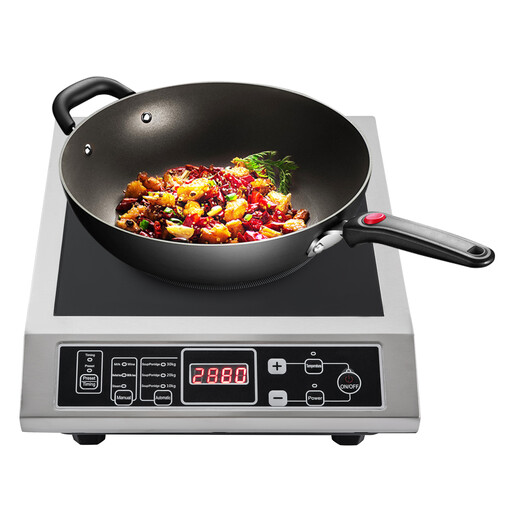 No image available
A portable single hob with porridge and soup functions according to the product description; the pan must be suitable for induction.
8 temperature and power settings; timer up to 3 hours; the product description states a maximum load of 50 kg.
Yes, if the pan base is induction-compatible and its size matches the hob’s specifications. A magnet sticking to the base is a useful indication that it may be suitable; also compare the diameter with the range specified for the specific model.
Allow space not only for the appliance, but also for the full pan, and follow the manufacturer’s safety and care instructions. Radiant and cast-iron hobs may retain heat after they have been switched off.
In Germany, statutory consumer rights are with the seller and are separate from a voluntary manufacturer’s warranty. If there’s a fault, the first step may be to request a repair or replacement; a warranty is subject to its own terms and conditions. Verbraucherzentrale explains the difference.
No. For electrical appliances covered by the relevant EU rules, the manufacturer must meet the applicable requirements and apply the required CE marking. The European Commission explains on Your Europe that the mark does not mean the product has been independently tested or approved by a central EU body.