Careful rice pudding cooks
If you're making a small portion, turn the heat down once it comes to the boil and keep an eye on the pan. REWE's basic recipe calls for a gentle simmer and regular stirring.


Choose your hob based first on the pan you already own: induction only works with a suitable pan base and the right diameter, while infrared and cast-iron hobs can be alternatives. For rice pudding, being able to select a low heat setting easily and stirring regularly matter more than the maximum wattage. Also check the appliance dimensions and installation guidance against the space you have available.
If you're making a small portion, turn the heat down once it comes to the boil and keep an eye on the pan. REWE's basic recipe calls for a gentle simmer and regular stirring.
If you don't want to buy a new pan, choose your hob based on the material and diameter of its base. For induction, both need to be compatible with the hob.
A single cooking zone may be all you need for one pan. As well as the appliance dimensions, allow for the installation clearances specified for the model you choose.
For a portion of rice pudding, first check that your pan is compatible, then consider how easy the hob is to use on a low heat.
A good fit if: your pan is suitable for induction and its base falls within the size range specified for the model.
Things to consider: An unsuitable pan may mean an extra purchase, and a power setting is no substitute for keeping an eye on the pan and stirring.
A good fit if: you want to keep using a pan that isn't suitable for induction and the hob is compatible with its base.
Things to consider: The cooking surface itself gets hot. Claims of faster or more energy-efficient heating are not independent evidence of how well it cooks rice pudding.
A good fit if: you're looking for a simple cooking zone with a control dial for a compatible pan.
Things to consider: The hotplate and accessible surfaces may stay hot. Follow the installation guidance and let the appliance cool before cleaning it.
| What matters | What to check before buying | Who it matters most to |
|---|---|---|
| Gentle simmering | The controls and low power settings on the specific model; a preset temperature is not the same as a measured food temperature. | If I want to turn the heat down precisely after bringing the pan to the boil and adjust it as I stir, an easy-to-use low setting is important. Around 36% of consumers give gentle simmering and heat control top priority. |
| Using a pan I already own | Check the pan base and its suitability for the chosen type of heating against the appliance's stated size range. | I don't want to have to replace my small pan just because I'm buying a single hob. Around 29% of consumers put being able to keep using their existing pan first. |
| Available space | Allow for the appliance dimensions and the installation clearances specified for the model. | If I have very little room on the worktop, I want to fit in a single cooking zone without overlooking the installation guidance. Around 21% of consumers prioritise the space available. |
| Total cost | Factor in the appliance and any compatible pan you may need; the wattage alone doesn't tell you how much it costs to cook one portion. | I want to know before buying whether I'll need a pan as well as the appliance, and how using it will fit into my budget. Around 14% of consumers put purchase and running costs first. |
Ceramic glass describes the surface, not the heating technology. A pan may therefore be unsuitable even if the cooking surface looks similar at first glance.
Check the full model name and the stated heating technology before checking your pan for compatibility.
Induction models have specific requirements for pan base and diameter, which vary from one model to another.
Compare your pan's material and base diameter with the specifications for the appliance you're considering.
A timer or a programme for heating milk doesn't prove that rice pudding will cook successfully without supervision. REWE's basic recipe calls for turning the heat down and stirring regularly once the pan has come to the boil.
Turn the heat down, keep an eye on the pan and stir regularly.
The instructions for the Tristar KP-6185 require a level surface and at least 30 cm of clearance around the appliance. The space needed may therefore be greater than the hotplate's footprint.
Check the instructions for the specific model against the place where you plan to use it.
The ProSlim 2000 is a portable single induction hob. CASO Design specifies a pan size range of 12–22 cm.
The CT 2010/IN is a single induction hob for pans with a ferromagnetic base. Rommelsbacher specifies a cooking zone size of 120–230 mm.
The KP-6185 is a cast-iron hotplate with a cooking zone specified by the manufacturer as 15 cm.
The PC-EKP 1210 is a single infrared hob with a ceramic glass surface. The manufacturer specifies a 20.5 cm cooking surface and stepless control.
The KP 1091 is a cast-iron hotplate with an 18.5 cm heating ring.
The Kult X Mono is a single induction hob; WMF specifies a pan size range of 10–28 cm.
The products below include single induction hobs, an infrared hotplate and electric single hotplates to suit different pans and cooking preferences.
 No image available
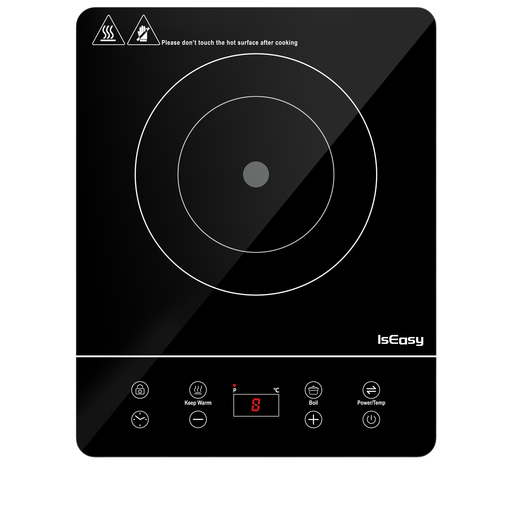
An option if you're looking for an induction hob with several settings and have a compatible pan.
One cooking zone; nine power settings and nine temperature settings, according to the product name. The stated pan diameter is 12–26 cm; magnetic, induction-compatible cookware is required.
 No image available
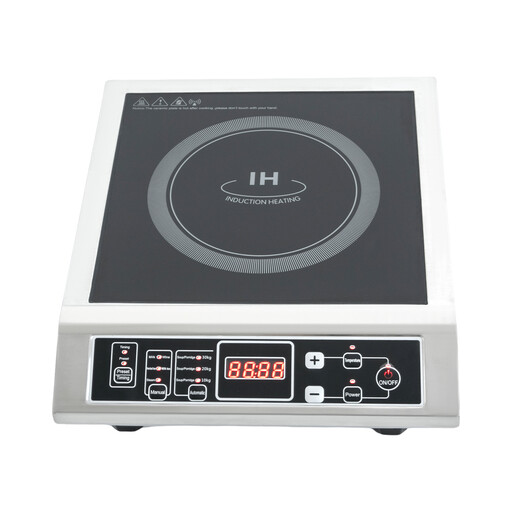
An option if you're looking for a portable induction hob with a timer and have compatible magnetic cookware.
The product name specifies 3500 W, along with a timer and reservation function. The description states that compatible magnetic cookware is required.
 No image available
An option if your pan isn't suitable for induction and you're considering a hotplate with a rotary control.
The product name specifies an infrared hotplate, a timer and touch and rotary controls. According to the title, it's designed for heat-resistant pans.
 No image available
An option if you're looking for a portable induction hob with several heat settings and use magnetic cookware.
The product name specifies ten power settings, six functions and a safety lock. According to the description, aluminium and ceramic pans without a magnetic base are not suitable.
 No image available
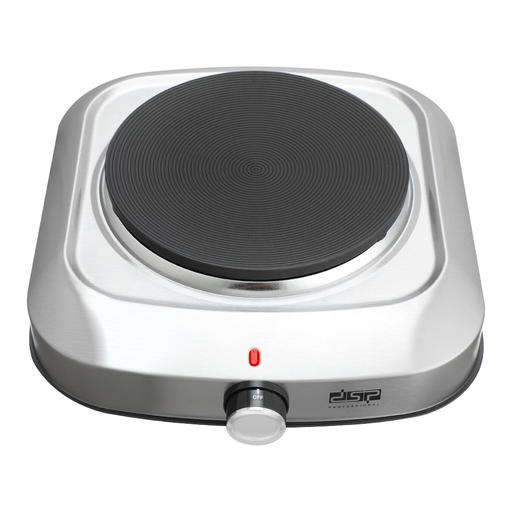
An option if you're looking for a single cooking zone with an adjustable temperature control.
The product name specifies 1500 W. The description gives a heating diameter of 185 mm and several settings on the temperature control. It notes that a slight smell and a little smoke may occur on first use, and recommends using the appliance in a well-ventilated area.
No. A hob's power settings don't prove that rice pudding will cook successfully without stirring. REWE's basic recipe recommends turning the heat down and stirring regularly once the pan has come to the boil.
Follow the instructions for the appliance. For the Tristar KP-6185, the instructions require a level surface and at least 30 cm of clearance around the appliance; accessible surfaces may get hot. Switch off the hotplate before cleaning and let it cool down.
Wattage is the rated output, not the electricity used to cook a finished portion; cooking time and how you use the appliance also affect consumption. In Germany, you have statutory rights against the seller if goods are faulty. According to the Verbraucherzentrale, for purchases made from 31 July 2026, the statutory period may increase from two to three years if a fault is fixed by repair within the original period. A manufacturer's guarantee is separate from this.
For products covered by relevant harmonised EU legislation, the manufacturer uses the CE marking to declare that the product complies with the requirements; it is not an independent quality mark. The Bundesnetzagentur lists checks such as the marking, product identification and any required information in a German-language instruction manual as part of its market surveillance.
In Germany, waste electrical appliances must not go in household rubbish. The Umweltbundesamt lists local collection points and suitable retailer take-back schemes as disposal options.