What to consider when choosing
Single induction hob
Suitable if: You’re using a pan suitable for induction and preparing the ingredients one after another in a single pan.
Things to consider: An unsuitable pan base won’t work; the number of heat settings alone also doesn’t prove that the hob can maintain a steady simmer.
Electric radiant hob
Suitable if: You want to keep using a pan that isn’t suitable for induction and need a single electric cooking zone.
Things to consider: The Rommelsbacher CT 2203/TC uses a HiLight radiant heating element; its residual-heat indicator reminds you that the hob may still be hot.
Double induction hob
Suitable if: You really want to heat two pans at the same time, for example risotto and stock.
Things to consider: Two zones need more worktop space. Also check the appliance’s total power rating and connection requirements.
Start by comparing pan compatibility and your cooking routine. Then use the appliance dimensions, connection and control options to narrow down your choice.
| What matters |
What to check when buying |
Who this matters most to |
| Adjusting the heat |
Power settings and controls; treat a timer as a way to set the running time only. |
If you’re frying mushrooms and then want to cook the rice at a controlled heat, the controls you use to switch between cooking stages matter. Around 29% of consumers put heat control first in this scenario. |
| Keeping your existing pan |
For induction, check that the pan base is magnetic and that the pan size is within the model’s permitted range. |
If you want to keep your existing risotto pan, you’ll want to know before buying whether it’s compatible with the heating technology. Around 22% of consumers prioritise pan compatibility. |
| Planning a safe connection |
Take the rated power, connection requirements and any appliances running at the same time into account. |
If you plan to use the hob on a kitchen circuit that’s already in use, you’ll want to avoid overloading it and follow the appliance instructions. Around 21% of consumers prioritise the power connection. |
| Making the most of your space |
Compare the appliance dimensions and cable length with the space available and the position of the socket. |
If you have limited worktop space, the hob needs to fit into your kitchen both when in use and when stored away. Around 14% of consumers prioritise the space it takes up. |
| Heating two pans at once |
Check whether you need two zones at the same time, then compare the dimensions and total power rating. |
If you want to heat a second pan alongside your risotto, an extra cooking zone can help you do so. Around 14% of consumers prioritise cooking on two zones at once. |
Joybuy products
This selection includes portable single induction hobs for cooking with a suitable pan. Check compatibility and the details on each product page before buying.
 No image available
IsEasy portable induction hob, 2100 W, 9 heat settings
For preparing several cooking stages one after another on a portable hob; a pan suitable for induction is required.
Details stated in the product name: 2100 W, 28 cm, glass ceramic surface, touch controls, 9 heat settings and an 8-hour timer.
View at Joybuy
 No image available
Portable single induction hob, 1000 W, 5 power settings
A portable single hob for cooking in one pan; check that the pan base is suitable for induction.
Details stated in the product name: 1000 W and 5 power settings.
View at Joybuy
 No image available
Portable induction hob, 3500 W, 10 temperature settings
For cooking in one pan on a portable induction hob; make sure the pan base is suitable.
Details stated in the product name: 3500 W and 10 temperature settings.
View at Joybuy
 No image available
Portable induction hob, 3500 W, 8 temperature settings
For cooking in one pan on a portable hob; your cookware must be suitable for induction.
Details stated in the product name: 3500 W and 8 temperature settings.
View at Joybuy
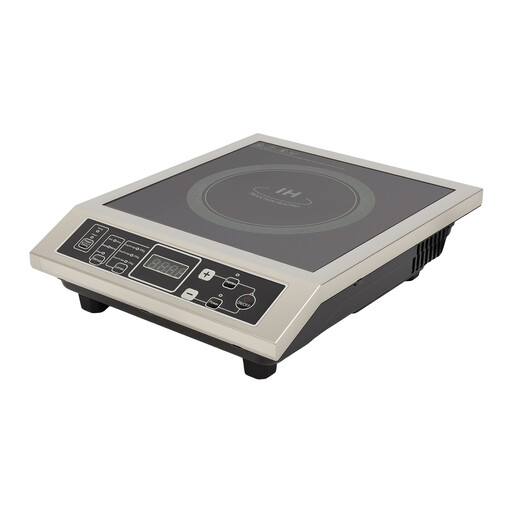 No image available
Portable induction hob, 3500 W, 10 power settings
A single hob for preparing several cooking stages one after another; check that your pan is suitable for induction.
Details stated in the product name: 3500 W, IGBT heating, 10 power settings, timer and EU plug.
View at Joybuy
Frequently asked questions
How can I check whether my pan will work on an induction hob?
Check whether a magnet sticks firmly to the base of the pan, then compare the base size with the range stated for the hob you’re considering. The magnet test doesn’t replace the other requirements in the appliance instructions.
How should I plan where to put the hob and how to connect it?
Check the instructions for the specific appliance, including its dimensions, plug and rated power, and take any appliances running at the same time into account. The Institute for Loss Prevention and Loss Research documents the fire risk caused by overloaded extension leads.
Can I leave cooked risotto out overnight for my lunchbox?
No. The Federal Institute for Risk Assessment recommends cooling heated food and keeping it chilled until it’s reheated. It’s also important to keep it properly chilled during transport and storage until lunchtime; a hob timer can’t do that for you.
What do CE marking, guarantees and statutory rights mean when buying in Germany?
For electric hobs covered by the relevant regulations, CE marking is part of the required conformity assessment process; it isn’t an independent quality mark. Statutory rights are distinct from a guarantee, which is an additional voluntary offer with its own terms and conditions.
Is an outdoor camping stove suitable for use in an enclosed kitchen?
The TÜV Association warns against using outdoor camping stoves in enclosed spaces or tents. This isn’t a blanket statement about every other type of gas appliance; you’ll need to check the appliance type, instructions and set-up requirements separately.


