Home cooks with guests arriving later
If everyone isn’t eating at the same time, the stew needs to be kept hot enough or chilled until it’s time to reheat it. The BfR recommends keeping food at a minimum of 60 °C throughout while hot-holding it.


Choose your hob based first on the base and diameter of your pan: induction requires a compatible ferromagnetic base, while radiant and cast-iron hobs do not. If you’re serving portions later, it’s the temperature of the stew that matters, not the appliance setting. The German Federal Institute for Risk Assessment (BfR) recommends keeping food at a minimum of 60 °C throughout while hot-holding it. Alternatively, you can cool the stew, store it in the fridge and reheat it before serving.
If everyone isn’t eating at the same time, the stew needs to be kept hot enough or chilled until it’s time to reheat it. The BfR recommends keeping food at a minimum of 60 °C throughout while hot-holding it.
If you want to keep using your existing pot, check its base and diameter against the hob’s heating technology and the specifications for the model you’re considering.
If you want to cook a stew and a side dish at the same time, a hob with two cooking zones could be a good option. Make sure you have enough space and a suitable electrical connection for the way you plan to use it.
First, check that your pan is compatible with the heating technology. Then consider the number of cooking zones, adjustable heat and how you plan to use the hob.
| What matters to you | What to look for when buying | Who is this particularly important to? |
|---|---|---|
| Serving at different times | Check the controls and timer settings; use a suitable food thermometer to check the actual temperature of the food. | If guests are eating later, I want to know whether the stew will stay hot enough throughout, or whether it can be chilled and reheated later. Around 36% of consumers prioritise being able to serve food safely at different times. |
| Controlling the heat while simmering | Compare the power settings, type of controls and automatic shut-off behaviour of the specific model. | Once the stew has come to the boil, I want to be able to set the heat for a gentle simmer without assuming that the appliance setting matches the temperature of the stew. Around 29% of consumers prioritise being able to adjust the simmering heat. |
| Keeping and using an existing pot | Measure the base rather than the rim and check whether it’s suitable for induction; check the hob’s stated pan diameter range. | If I want to keep using my stew pot, its base material and size need to be compatible with the hob. Around 21% of consumers prioritise being able to use their existing pot. |
| Space and power for two dishes | Check the dimensions and rated power, and consider which other appliances will be plugged in at the same time. | To cook a stew and a side dish at the same time, I need two cooking zones and enough space without overloading the electrical connection. Around 14% of consumers prioritise being able to cook two dishes at once. |
A temperature setting doesn’t show that the stew has reached that temperature throughout. For extended hot-holding, the BfR recommends keeping food at a minimum of 60 °C throughout.
If needed, check the temperature of the stew with a suitable food thermometer rather than relying solely on the appliance display.
You may need a suitable food thermometer to check the temperature.
Induction hobs require a ferromagnetic pan base. The diameter must also match the specifications for the model you choose.
Before buying, check the base material and diameter. If your existing pot isn’t compatible, you may need a different pot or another type of hob.
The hob may switch off when the timer ends, even if not all your guests have eaten.
Plan mealtimes around the timer. For portions being served later, choose between controlled hot-holding and chilling the food before reheating it.
Two cooking zones need more worktop space. Several high-power appliances can overload a shared extension lead.
Check the appliance dimensions and rated power against the space available and the intended electrical connection. Don’t plug several high-power appliances into the same extension lead without checking first.
The CT 2020/IN is a portable single induction hob; the CT 2200/E is a single HiLight ceramic-glass hob without induction.
The ProMenu 2100 is a portable single induction hob for pans within the stated size range.
The DK 1014 is a portable double cast-iron hob; the DK 1031 is a double hob with two induction zones.
The IK 65 SLIM is a slimline portable single induction hob for one pan.
The EKI 3569 is a portable single induction hob with touch controls.
This selection includes portable single induction hobs and a portable infrared hob, including models for pans that aren’t induction-compatible.
 No image available
For a pan with a compatible ferromagnetic base; the description lists cast-iron and stainless-steel cookware.
3500 W; eight temperature settings; power range 800–3500 W; timer; overheat protection.
The appliance setting doesn’t prove that the stew reaches a safe temperature throughout.
 No image available
For a compatible magnetic pan; the product description lists a cookware diameter of 12–26 cm.
Nine heat settings; timer up to 8 hours; touch controls; 28 cm; glass surface; 1.9 kg.
An appliance setting or timer doesn’t confirm the temperature throughout the stew.
 No image available
For a pan with a compatible induction base, when one cooking zone is all you need.
1000 W; five power levels.
The appliance setting doesn’t show the temperature throughout the stew.
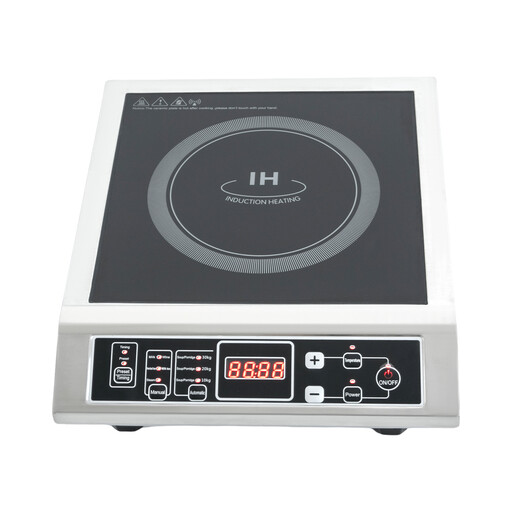 No image available
For a pan with a compatible ferromagnetic base; the description lists cast-iron and stainless-steel cookware.
3500 W; timer; preset function.
An appliance setting or timer doesn’t confirm the temperature throughout the stew.
 No image available
An alternative if your existing pan isn’t induction-compatible; the product title specifies heat-resistant pans.
3500 W; timer; touch controls and rotary dial.
An appliance setting or timer doesn’t prove that the stew is hot enough throughout.
Don’t rely on the control setting alone. When hot-holding cooked food, the BfR recommends keeping it at a minimum of 60 °C throughout until it’s eaten. If you can’t keep the stew hot enough continuously, the BfR recommends cooling it, storing it in the fridge and reheating it immediately before serving.
The BfR recommends heating food to at least 70 °C throughout for two minutes when cooking or reheating it. Make sure the heat is distributed evenly and check the temperature if needed.
Follow the instructions for positioning and cleaning the specific appliance, and check which other appliances will need power at the same time. The Institute for Loss Prevention and Loss Research documents fires caused by overloaded extension leads, so don’t plug a hob into the same extension lead as other high-power appliances without checking first.
As part of its market surveillance, the Federal Network Agency checks, among other things, for CE marking and information identifying the product and manufacturer. If a product is faulty, remember that your statutory rights are separate from any voluntary manufacturer’s guarantee.