What should you look for when buying?
Single induction hob
Right for you if: Your stew pot is induction-compatible, its dimensions and weight when full meet the appliance’s specifications, and you only heat one vessel at a time.
The trade-off: A single zone takes up less space than a double hob, but you can’t use it to heat a second dish at the same time.
Double induction hob
Right for you if: You want to heat stew and a side dish or stock at the same time in two induction-compatible vessels, and the appliance and power connection will fit the space you have in mind.
The trade-off: A double hob needs more space. Check the power rating of the specific model too.
Conventional electric hob
Right for you if: You want to keep using a pot that isn’t induction-compatible.
The trade-off: On double hobs, the heating plates vary in size and power. Take particular care to match the larger zone to the base of your pot.
The checks that matter most depend on whether your main concern is pot compatibility, controlling the heat while simmering, cooking two dishes at once or setting up the hob at your dining area.
| Priority |
What to check when buying |
Who is this important to? |
| Pot compatibility and load capacity |
Induction compatibility and base diameter; compare the stated load limit with the pot when full. |
If I want to use my large, full stew pot on the additional hob, the size of the cooking surface matters just as much as the permitted weight. Pot compatibility is the main priority for around 33% of consumers. |
| Heat control while simmering |
Compare the power settings and controls of the specific model; a water-boiling time doesn’t tell you how well it will simmer a stew. |
If I want to fine-tune the heat once the pot is hot, I check the controls on the model I’m considering rather than relying on its maximum power alone. Around 27% of consumers say heat control is their top priority. |
| Cooking two dishes at once |
Check the number and size of the zones, as well as the space available for both vessels. |
If I want to keep stew and a side dish or stock hot at the same time, I need two suitably positioned cooking zones. Around 20% of consumers make cooking two dishes at once their main priority. |
| Space and power connection |
Check the external dimensions, cable length and power rating against the space and connection you plan to use. |
If I have limited worktop or serving space for the hob, I need enough room for the appliance, pots and controls. Space and the power connection are decisive factors for around 20% of consumers. |
Joybuy products for portable cooking
The products below include portable single and double hobs, including induction and ceramic-glass models. Before choosing, check that the cooking technology suits your pot and that the hob has the number of zones you need.
 No image available
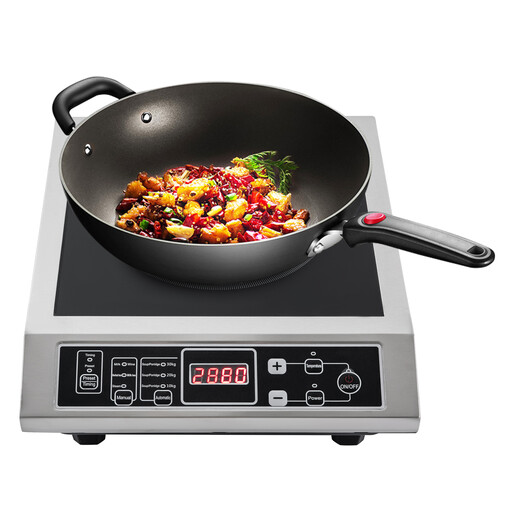
Induction hob with IGBT technology, 8 temperature settings
For one compatible pot on a single cooking zone. The wide choice of settings may be useful if you want to adjust the heat while cooking.
800–3500 W; 8 temperature and 8 power settings; timer function; suitable for cast iron and stainless steel cookware.
Joybuy
 No image available
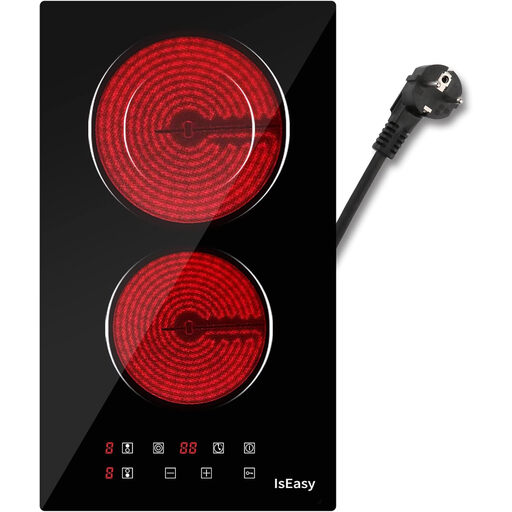
IsEasy ceramic-glass hob, 2 zones
Two cooking zones let you cook stew and another dish in a separate vessel at the same time.
3200 W total power; 9 power settings; timer from 1–99 minutes; dimensions: 51 × 29,5 × 5,6 cm.
Joybuy
 No image available
IsEasy portable induction hob, 2100 W
One cooking zone for a single induction-compatible pot. Check that the base of your pot falls within the stated diameter range.
2100 W; 9 heat settings; suitable for magnetic cookware with a base diameter of 12–26 cm; dimensions: 35 × 28 × 4,4 cm; weight: 1,9 kg; 8-hour timer.
Joybuy
 No image available
Induction hob with two cooking zones
Two independently controlled zones for cooking stew and another dish in a separate vessel at the same time.
1500 W and 1000 W for the two zones; 5 temperature settings; dimensions: 48 × 23,5 × 7,5 cm.
Joybuy
 No image available
Portable tabletop induction hob, 1000 W
A single cooking zone for one compatible pot. Its stated compact footprint can help when checking how it will fit in your available space.
1000 W; 5 heat settings; rotary control; dimensions: 21,5 × 21,5 × 4,7 cm.
Joybuy
Frequently asked questions
How can I check my existing stew pot before buying?
Check that the base of the pot is suitable for the cooking technology you want to use, then compare its diameter with the specifications for the particular appliance. Also take the weight of the full pot into account if a load limit is stated. For example, CASO Design specifies 12–24 cm and a maximum of 6 kg for the ProMenu 2100. For induction, the Federal Office for Radiation Protection recommends cookware made from suitable materials and in the right size.
What should I bear in mind when setting up and cleaning the hob?
Allow enough space for the hob and pots, and check that the power connection you plan to use is suitable for the appliance’s rating. Don’t overload extension leads or plug them into one another. Follow the instructions for your model when cleaning it and allowing it to cool; a conventional hotplate may still be hot after cooking.
How should I store the ingredients for seafood stew until it’s time to cook?
The Federal Institute for Risk Assessment advises keeping perishable foods as cold as possible until they’re prepared. If your stew contains mussels, the Institute recommends cooking them thoroughly before eating. This food hygiene advice doesn’t mean that any particular hob automatically guarantees safe cooking.
What are my rights in Germany if the hob I bought online doesn’t fit or is faulty?
According to the Verbraucherzentrale, online purchases generally come with a 14-day right to cancel; you must notify the retailer that you wish to cancel. Your statutory rights if a product is faulty are separate and apply against the seller. A guarantee, on the other hand, is voluntary. Check the terms and conditions and guarantee for your specific purchase.
Can I put an old electric hob in my household rubbish?
Waste electrical and electronic equipment shouldn’t simply be put in household rubbish. The Federal Ministry for the Environment outlines return options, including through online retailers that are required to accept returns. Ask the retailer you’re dealing with how you can return your appliance.


