For making sauce in one pan
If you fry onions before leaving the sauce to simmer, a single cooking zone is enough. Make sure you can adjust the heat to suit both steps.


If your pan is suitable for induction, a portable single induction hob with easy-to-use settings could be a good choice. You can fry the onions, then adjust the heat to let the sauce simmer. If your pan isn’t suitable for induction, a conventional single hotplate or a portable ceramic glass hob with radiant heating are possible alternatives. You’ll also need to consider the size of the cooking zone, a safe place to set it up and a suitable power socket in the shared kitchen.
If you fry onions before leaving the sauce to simmer, a single cooking zone is enough. Make sure you can adjust the heat to suit both steps.
Before choosing a hob, check whether your pan is suitable for induction. If it isn’t, consider a conventional hotplate or a ceramic glass hob with radiant heating.
If you use the hob on a shared surface and put it away afterwards, consider its footprint, the power connection and how you’ll handle hot parts.
A good fit if: the base of your pan is induction-compatible and the pan suits the hob’s cooking zone.
Keep in mind: Not every pan is suitable, and having lots of settings doesn’t guarantee that the sauce will cook at an even temperature.
A good fit if: you want to keep using a pan that isn’t suitable for induction.
Keep in mind: The hotplate retains heat and stays hot after it’s switched off.
A good fit if: your pan isn’t suitable for induction and you’re looking for a portable hob with a glass surface.
Keep in mind: Ceramic glass describes the surface, not the heating technology. The surface may still be hot after cooking.
This table compares the options according to the main priorities to consider when buying a portable hob for making onion sauce in a shared kitchen.
| Priority | What to check before buying | Who it matters most to |
|---|---|---|
| Heat for frying and simmering | Check the low-heat settings and how they’re controlled. Adjust the heat as needed while cooking. | If I fry the onions first and then let the sauce simmer, I want to be able to control the heat for both steps. Around 36% of consumers focus above all on adjusting the heat between frying and simmering. |
| Using a pan I already own | Check whether the base of the pan is suitable for induction and compare its diameter with the stated cooking zone size. | If I want to keep using my existing pan, the heating technology needs to be compatible. Around 29% of consumers put pan compatibility first. |
| Shared cooking space | Check that the appliance’s dimensions and cable suit the space available. Check the power connection and set-up instructions. | If I share the worktop with others, I need enough space to set the hob up and a safe way to handle hot parts. Around 21% of consumers pay particular attention to the space available and the power connection. |
| Upfront and ongoing costs | Check whether your existing cookware is compatible and what servicing is available for the specific model. | If I’m weighing up the total cost, I want to know whether I’ll need to buy compatible cookware as well. Around 14% of consumers focus above all on the purchase price and possible ongoing costs. |
Ceramic glass can also be the surface of a hob with radiant heating. Only induction requires a compatible pan base.
Check the model description for the heating technology, pan requirements and cooking zone size separately. If your existing pan isn’t compatible, you may also need to buy suitable cookware.
The rated power and number of settings don’t tell you how the sauce will behave in your own pan at a low heat.
Look at the controls and the low-heat settings available instead of choosing based on maximum power alone.
In a shared kitchen, the cable, space for setting up the hob and hot parts also need to fit in the area available. Overloaded extension leads can be a safety risk.
Compare the appliance’s dimensions and cable length with the space available, and check the instruction manual and recommended power connection. ELEKTRO+ points out that extension leads are no substitute for an electrical circuit; the Federal Office of Civil Protection and Disaster Assistance warns against overloading them.
The S-Line 2100 is an example of a portable single induction hob with several settings.
The CT 2010/IN is a portable induction hob, while the CT 2200/E is a ceramic glass hob with radiant heating.
The KP 1032 is a portable single induction hob for one pan and limited worktop space.
The EKP 3582 is a conventional electric single hotplate, offering an alternative if your existing pan isn’t suitable for induction.
The SIKP 2200 B1 is one specific tested model, not evidence of how all the brand’s hobs perform.
This selection includes portable single induction hobs, an infrared hob and a conventional single hotplate. Before buying, check that the heating technology and cooking zone suit your pan and the shared kitchen.
 No image available
Its nine stated power levels could be useful for making a sauce on a single cooking zone. Your pan must be suitable for induction.
The product details list an 8-hour timer, a pan size range of 12–26 cm and appliance dimensions of 35 × 28 × 4.4 cm.
 No image available
The single cooking zone and five power levels are designed for cooking one dish in one pan. You’ll need an induction-compatible pan.
The product details list a rotary control and appliance dimensions of 21.5 × 21.5 × 4.7 cm.
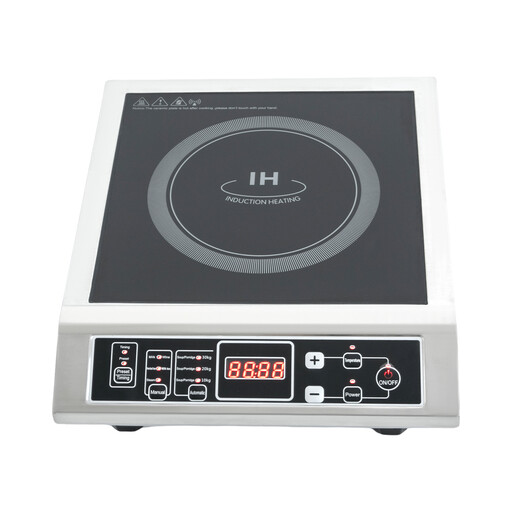 No image available
The product description lists 10 temperature and power settings, as well as a timer. How well it suits your sauce also depends on the pan and how easy it is to control at a low heat.
The stated power is 3,500 W. Check the appliance specifications against the power connection available in the shared kitchen.
 No image available
An infrared hob is an alternative if you’d prefer not to be limited by the pan requirements of an induction hob. Check the product details to make sure your cookware is suitable.
The description lists four preset programmes, manual controls and a timer.
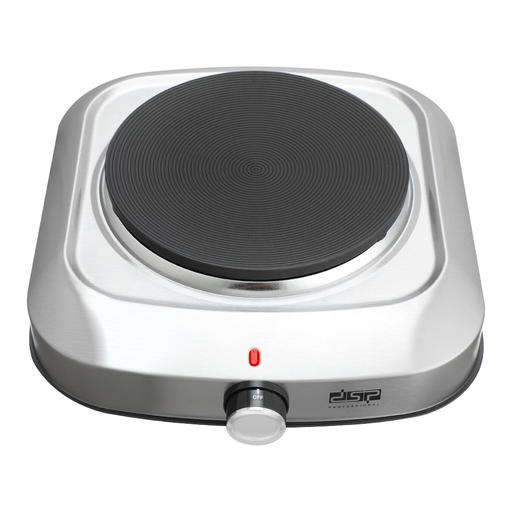 No image available
A conventional single hotplate could be a good choice if you want to use a pan that isn’t suitable for induction.
The product title lists a 185 mm hotplate and 1,500 W; the description mentions an adjustable temperature control. According to the product description, the protective film may cause a slight smell and a little smoke the first time you use it. Follow the ventilation advice given there.
According to Bosch, a magnet that sticks firmly to the base of the pan is a useful indication that it’s suitable for induction. Also compare the base diameter with the size range specified for the hob in question.
An extension lead is no substitute for a suitable electrical circuit. ELEKTRO+ and the Federal Office of Civil Protection and Disaster Assistance warn against overloading extension leads. Check the appliance instructions and recommended power connection rather than assuming that any kitchen installation will be suitable.
Follow the cleaning instructions for your appliance and wait until hot parts have cooled sufficiently before putting it away. Rommelsbacher lists a residual heat indicator for both the CT 2010/IN and the CT 2200/E.
When you buy from a retailer, you’re generally entitled to statutory rights against the seller. These are separate from any voluntary manufacturer’s guarantee. The consumer advice centre Verbraucherzentrale states that the period is two years from the purchase or delivery of the goods you’ve paid for; additional rules may apply in specific cases.
No, the CE mark isn’t an independent performance test seal. As part of its market surveillance, the Federal Network Agency checks matters including labelling, manufacturer details and whether instructions are provided in German. This doesn’t replace checking the specific offer or carrying out an independent performance test.