Patient onion cooks
If you want to brown onions slowly, keep an eye on the heat and the contents of the pan as they cook. Good Food recommends cooking caramelised onions slowly for 30–40 minutes, stirring occasionally.


Choose a portable hob based on whether you can adjust the heat to suit your pan and the quantity of onions when browning them slowly. The appliance’s settings alone don’t guarantee evenly low heat. Induction requires a compatible pan base, while a non-induction hob may be a better choice if you want to keep using your existing pan. For staggered mealtimes, you’ll also need to distinguish between keeping food safely hot and cooling it quickly: a timer is no substitute for supervision or checking the food’s temperature.
If you want to brown onions slowly, keep an eye on the heat and the contents of the pan as they cook. Good Food recommends cooking caramelised onions slowly for 30–40 minutes, stirring occasionally.
If portions won’t be served at the same time, it’s important to know whether the onions can be kept safely hot or should be cooled quickly for longer storage. The German Federal Institute for Risk Assessment (BfR) provides guidance on both options.
If you’re looking for an extra cooking zone without replacing your pan, check that its base is suitable, particularly if you’re considering induction. The consumer advice centre recommends checking the pan manufacturer’s instructions.
A good fit if: your pan is induction-compatible and you’d like an extra cooking zone with adjustable power settings.
Trade-off: The pan base and compatible diameter must suit the specific model; a timer and adjustable settings don’t guarantee a particular browning result.
A good fit if: you want to keep using an existing pan that isn’t induction-compatible.
Trade-off: Check the level of temperature control and the plate diameter; a cast-iron hotplate may stay hot after cooking.
A good fit if: you really do need to use another pan on the extra cooking zone at the same time as the onions.
Trade-off: A double hob takes up more space; check the power and cookware compatibility of the specific model.
Good Food recommends slow cooking and occasional stirring. So compare the temperature controls first, then check that your pan is compatible, and finally consider the space available where you plan to use the hob.
| Buying priority | What to check | Who is this important to? |
|---|---|---|
| Slow browning | Compare the temperature controls and how easy they are to use; your pan must be compatible with the hob. | If I want to brown onions slowly over a low heat, I need to adjust the power easily and be able to stir occasionally. Around 36% of consumers prioritise adjustable low heat. |
| Serving at different times | A timer can help manage cooking, but it doesn’t measure the food’s temperature. Plan how you’ll cool it if there will be a longer wait. | If we won’t all be eating at the same time, I want to know how to handle the cooked onions safely until they’re served. Around 29% of consumers prioritise staggered mealtimes. |
| Existing pan | For induction, check the pan manufacturer’s compatibility guidance and the hob’s supported base diameter. | If I want to keep using my existing pan, it needs to be compatible with the hob. Around 21% of consumers prioritise compatibility with the cookware they already own. |
| Space and ease of use | Check the appliance dimensions and the location of a suitable socket against the space available; follow the safety instructions. | If I want to use an extra cooking zone in a limited space, the appliance and its controls need to suit the location. Around 14% of consumers prioritise space and safe operation. |
A timer controls how long the appliance runs, but it doesn’t confirm that the food is at the right temperature throughout or make it safe to leave cooking unattended.
Stay nearby while cooking. Switch the hob off before leaving the kitchen or the house. When keeping food hot, it’s the temperature of the food that matters, not the appliance setting.
An induction hob needs a compatible pan base. You’ll also need to check that its diameter falls within the range supported by the appliance.
Check the manufacturer’s information for both the pan and the hob. If your existing pan isn’t compatible, compare it with a non-induction hob as an alternative.
Depending on the cookware you already own, you may need to buy a suitable pan for induction.
Good Food’s recipe calls for slow cooking and occasional stirring. So a high maximum power rating doesn’t mean that onions will brown better over a low heat.
Compare the temperature controls, pan compatibility and ease of use before considering the maximum wattage.
The details below relate to the models and manufacturer information listed. They don’t guarantee a particular browning result or that a model is available.
The ProMenu 2100 is a portable single induction hob for buyers comparing models with multiple settings and a timer.
The portable CTS 2000/IN induction hob may be worth considering if a long adjustable cooking time and power control are important to you.
The KP 1091 and KP 1071 models differ in whether they use induction.
The manufacturer describes the IK 60 E as an induction hob that can be used both portably and as a built-in appliance.
This selection features portable single hobs for slow cooking: induction models and non-induction hobs. With either type, you’ll need to check that your pan is compatible.
 No image available
For slow cooking with several adjustable heat settings; compatible magnetic cookware is required.
Nine heat settings and an 8-hour timer. The stated cookware diameter is 12–26 cm.
The timer is no substitute for supervision while cooking or checking the food’s temperature.
 No image available
For buyers looking for a portable induction hob with several temperature settings; the pan must be induction-compatible.
The description lists ten temperature settings, a timer of up to three hours and power settings from 400 W.
The timer is no substitute for supervision while cooking or checking the food’s temperature.
 No image available
A non-induction option if you want to use heat-resistant cookware.
The description lists manual adjustment, a rotary control, four preset modes and a timer with automatic shut-off.
The cookware information refers to heat-resistant cookware.
 No image available
An extra cooking zone with settings for slow cooking; magnetic cookware is required.
The product description lists ten heat settings, six functions and touch controls.
According to the description, aluminium and ceramic cookware without a magnetic base won’t work properly.
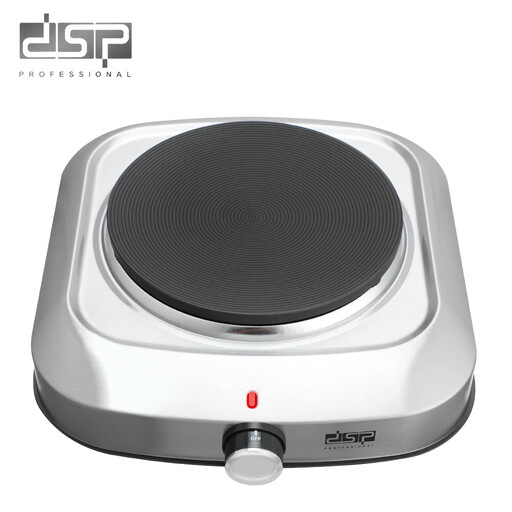 No image available
A non-induction hotplate with a temperature control, suitable for use with an existing pan.
The stated hotplate diameter is 185 mm, and a multi-position temperature control is listed.
The product description says that some odour and light smoke may occur the first time it’s used. It recommends running the hotplate for 3–5 minutes in a well-ventilated area.
Start with a low heat and stir occasionally. Good Food recommends cooking caramelised onions for 30–40 minutes; if the mixture starts to catch, you can add a little water. You can’t use this to determine a specific appliance setting.
Leaving food lukewarm isn’t a safe way to keep it hot. The BfR recommends keeping heated food at a temperature of at least 60 °C throughout until it’s eaten. For longer storage, hot food should be cooled quickly to below 7 °C. A hob display doesn’t automatically measure the temperature of the onions.
No. A timer controls how long the appliance runs, but it doesn’t replace supervision while cooking. Switch the hob off before leaving the kitchen or the house.
Check whether the pan manufacturer says its base is suitable for induction, then compare its diameter with the range supported by the specific hob. If the pan isn’t compatible, a non-induction hob may be a suitable alternative.
An electric hob sold in Germany and covered by the EU Low Voltage Directive must carry the required CE marking. The required operating and safety instructions must be available in German. The German Federal Network Agency explains that CE indicates the manufacturer’s declaration of conformity; it isn’t an independent quality mark.