What should you look for when buying?
When you’re making courgette soup for different mealtimes, key considerations include temperature control, whether your existing pan is compatible and how you plan to cook.
| Consideration |
What to check before buying |
Who is this important to? |
| Safe temperature control |
Check whether you can adjust the heat, and plan to use a suitable food thermometer. The BfR recommends keeping food hot at a temperature of at least 60 °C throughout. |
If I want to serve later portions hot, I need a plan for the temperature of the soup itself, not just the hob setting. Around 36% of consumers put temperature control for later portions first. |
| A compatible soup pan |
Check that the pan is suitable for induction and that its base diameter matches the specifications for the exact hob model. |
If I want to keep using my existing pan, the heating technology needs to suit its base. Around 29% of consumers prioritise compatibility with their soup pan. |
| Bringing to the boil and simmering |
Compare the controls and ease of use of the specific model. An appliance setting isn’t a measurement of the soup’s temperature. |
If I want to simmer the soup after bringing it to the boil, adjustable settings matter for the way I cook. Around 21% of consumers prioritise control when boiling and simmering. |
| Worktop space and cooking zones |
Measure the space available for the appliance and pan, and check the dimensions and connection requirements for the specific model. |
If I’m only heating the soup pan, I don’t want to set aside unnecessary space for a second zone. But if I’m making another dish, I might need one. Around 14% of consumers prioritise worktop space or being able to cook two things at once. |
Joybuy products for portable induction hobs
The models below are portable induction hobs for one or two pans. They may suit you if your soup pan is induction-compatible; check the base size against the specifications for each model. Mains-powered appliances within the scope of German low-voltage regulations must meet the applicable conformity requirements. The German Federal Institute for Occupational Safety and Health points out that the CE mark is not an independent safety test mark.
 No image available
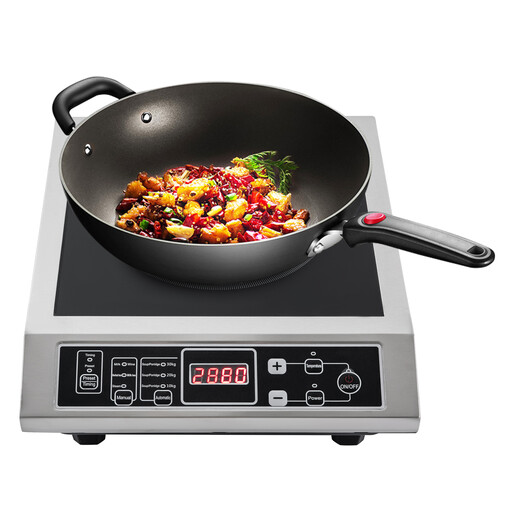
Induction hob with IGBT technology, 8 temperature settings
For soup when you want to adjust the heat; use it only with induction-compatible cookware.
Features listed in the product name: 8 temperature settings, 800–3500 W and a timer function. The setting doesn’t measure the soup’s temperature.
View at Joybuy
 No image available
IsEasy induction hob, 2100 W, 9 heat levels
A portable single cooking zone for a compatible soup pan; the pan base must be suitable for induction.
Features listed in the product name: 2100 W, 28 cm, 9 heat levels, an 8-hour timer and touch controls.
View at Joybuy
 No image available
Induction hob with two cooking zones, 5 temperature settings
For households that genuinely want to heat a second pan at the same time as the soup; make sure you have room for both pans.
Features listed in the product name: two cooking zones and 5 temperature settings. Both pans need to be induction-compatible.
View at Joybuy
 No image available
Induction hob with one cooking zone, 5 power levels
A single cooking zone for an induction-compatible soup pan, if you don’t need a second zone at the same time.
Features listed in the product name: one cooking zone and 1000 W. The product description lists five heat settings; the setting isn’t a measurement of the food’s temperature.
View at Joybuy
 No image available
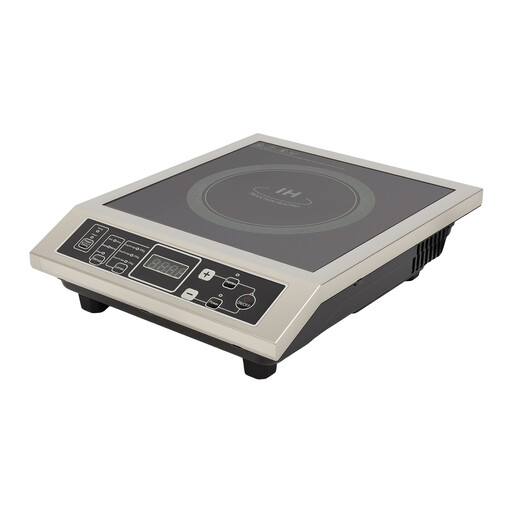
Tabletop induction hob with 10 power levels, 3500 W
A portable cooking zone with adjustable heat; check that the location and connection are suitable for the specific appliance.
Features listed in the product name: 3500 W, 10 power levels, a timer function and an EU plug. Induction requires compatible cookware.
View at Joybuy
Frequently asked questions
Can I leave the soup on a low heat until the next mealtime?
A low heat or temperature setting on its own doesn’t prove that the soup is being kept safely hot. The German Federal Institute for Risk Assessment recommends a temperature of at least 60 °C throughout the food. If you’re storing it instead, the BfR recommends cooling hot food promptly to below 7 °C, storing perishable food at 2 to 7 °C at most, and reheating food to 70 °C throughout for at least two minutes.
How do I check whether my pan is suitable for an induction hob?
Check that the pan base is ferromagnetic, then compare its diameter with the range specified for the particular appliance. For example, Rommelsbacher specifies a cooking zone of 120 to 230 mm for the CT 2010/IN.
What should I bear in mind when setting up and cleaning the hob?
Follow the setup and connection instructions in the manual for your chosen model. Allow space for the pan and cable, and take care around hot surfaces and residual heat. Before cleaning, disconnect the appliance from the mains as instructed in the manual and let it cool down.
Are a warranty and statutory rights the same thing?
No. If you buy from a retailer, your statutory rights are against the seller. A warranty is an additional voluntary promise with its own terms and conditions. The Verbraucherzentrale recommends checking the warranty terms separately from the repair service listed for the specific model.
Does an electric hob sold in Germany have to carry a GS mark?
No. The German Federal Institute for Occupational Safety and Health distinguishes the voluntary GS mark, which involves independent safety testing, from the CE mark. Electrical appliances within the scope of low-voltage regulations, including covered appliances rated at 50 to 1,000 V AC, must meet the relevant conformity requirements. The CE mark itself is not an independent safety test mark.


