Cooking stew in a small space
You need to fit the hob, pan and enough clear space around it into a compact area. CASO Design gives the S-Line 2100 a footprint of 277 × 357 mm and a maximum load capacity of 6 kg.


If the base of your pan is magnetic and suitable for the cooking zone, a single induction hob is an obvious choice for making stew when worktop space is limited. If your pan is not suitable for induction, consider a single HiLight or solid hotplate, paying particular attention to the hot cooking surface. The key factors are the pan base, the weight of the filled pan, the space available and whether you can turn the heat down after bringing the stew to the boil.
You need to fit the hob, pan and enough clear space around it into a compact area. CASO Design gives the S-Line 2100 a footprint of 277 × 357 mm and a maximum load capacity of 6 kg.
If you want to keep using your stew pot, check that its base is suitable for induction before choosing a hob. Bosch Home Appliances explains that induction requires magnetic cookware.
If you want to turn the heat down after bringing your stew to the boil, compare the controls and settings, not just the maximum power. Rommelsbacher lists ten power levels and a 180-minute timer for the CT 2020/IN.
First, check that your filled pan fits the cooking zone and that you can set the hob up safely. Then choose the heating technology and controls to suit your cookware and how you cook.
A good choice if: The base of your pan is magnetic and suitable for the cooking zone, and you want to bring your stew to the boil on one hob before turning the power down.
Things to consider: Pans that are not suitable for induction will not work. Check the pan size, load capacity, and the noise and ventilation requirements of the specific model.
A good choice if: You want to keep using a pan that is not suitable for induction and prefer a smooth cooking surface.
Things to consider: Radiant heating warms the cooking surface, so allow for residual heat in a confined space.
A good choice if: You want a simple single hotplate with adjustable temperature for the cookware you already own.
Things to consider: The plate gets hot, and the temperature will not respond immediately when you turn the control down.
A good choice if: You really do want to cook stock and a second dish at the same time in separate pans.
Things to consider: Two cooking zones need more space. Also check the electrical connection if you plan to run several high-powered appliances at once.
| What matters | What to check when buying | Who it matters most to |
|---|---|---|
| Space, pan fit and load capacity | Compare the appliance dimensions and available space with your pan base and the stated maximum load capacity. | When space is limited, I need to make sure my full stew pot will sit safely on the hob. Around 36% of consumers prioritise space and pan fit. |
| Bringing to the boil and simmering | Check the controls, settings and limitations of the timer on the specific model. | Once my stew has come to the boil, I want to turn the heat down to suit it, rather than focus only on the maximum power. Around 29% of consumers say adjustable simmering is their main concern. |
| Keeping the pan you already own | Check whether your pan is suitable for induction and measure its base before choosing a heating technology. | If my pan is not suitable for induction, I want to keep using it if possible and choose the heating technology accordingly. Around 21% of consumers prioritise using their existing pan. |
| Electrical connection and overall requirements | Compare the rated power and appliance instructions with the intended connection and any appliances you will use at the same time. | I want to know whether the connection available suits the way I cook and whether I will need suitable cookware as well. Around 14% of consumers say the connection and overall requirements are their main concern. |
For the CASO S-Line 2100, CASO Design specifies both a pan size range of 12–24 cm and a maximum load capacity of 6 kg. Both figures matter when you are using a heavy, full stew pot.
Compare your pan’s base and its weight when full with the specifications for the particular appliance.
Induction requires a suitable magnetic pan base. If your pan is not compatible, the hob will not work as intended.
Check the markings and base of your pan first, then choose between induction and another heating technology.
If you cook your stew in just one pan, the second zone takes up extra worktop space. The Institute for Loss Prevention and Loss Research of Public Insurers documented a kitchen fire caused by an overloaded extension lead.
Choose two zones only if you cook two things at once, and follow the appliance instructions while taking into account any other appliances running at the same time.
According to Rommelsbacher, the CT 2200/E uses HiLight radiant heating and is not an induction hob. The manufacturer also lists a residual heat indicator.
Check the heating technology in the description of the specific model, and take care around the hot cooking surface.
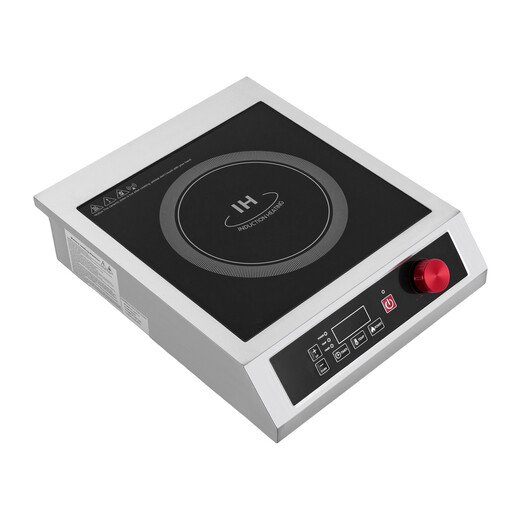
The S-Line 2100 is a single induction model. You can compare its pan size, load capacity and footprint with the needs of your particular stew-cooking setup.
The single models listed cover induction, HiLight radiant heating and solid hotplates, making them useful for comparing different heating technologies.
The PC-EKI 1062 is a single induction model with touch controls and a timer.
The EKP 3582 is a single solid hotplate for buyers who do not need induction.
The KP 1071 is a single induction model. The brand’s double hob is an example of how two cooking zones can take up more space.
The products below are single hobs for one pan. Induction models require a pan with a base suitable for induction. For the specific product listing, also check that the applicable CE marking is present and that user and safety instructions are available in German.
 No image available
A single cooking zone with continuously adjustable temperature control for one pan.
18 cm heating ring; 1.500 W. The cooking surface gets very hot during use and immediately afterwards.
 No image available
A single induction cooking zone for a stew, with several heat settings to adjust the temperature.
Nine heat settings, an 8-hour timer and touch controls. Requires cookware suitable for induction.
 No image available
A single induction cooking zone for one pan, with five heat settings and a rotary control to adjust the temperature.
Suitable magnetic cookware is required for induction cooking.
 No image available
A single worktop cooking zone for one pan; suitable cookware is required for induction.
Ten power and ten temperature settings, plus an EU plug. Check the power rating and intended use against the appliance instructions and the connection you plan to use.
 No image available
A single induction cooking zone for a stew; cookware suitable for induction is required.
Ten power levels, six pre-set cooking functions, touch controls and a safety lock.
Check that the base of your pan is magnetic and marked as suitable for induction, then compare its base size with the cooking zone. A pan that is not compatible will not work on an induction hob.
Follow the appliance instructions and take account of any other appliances running at the same time. The Institute for Loss Prevention and Loss Research of Public Insurers documented a kitchen fire caused by an overloaded extension lead, so do not plug several high-powered appliances into one without checking.
A hob with good temperature control is no substitute for good kitchen hygiene. The Federal Institute for Risk Assessment identifies raw fish as a possible source of pathogens. Keep raw ingredients separate from ready-to-eat foods to avoid cross-contamination. Fish and seafood can also cause problems, even in small amounts, if you have an allergy.
Check the appliance being offered for the applicable CE marking, product identification and German-language user instructions with the required warnings. The Federal Network Agency lists these points in connection with its market surveillance; the CE marking is not an independent quality seal.
Consumers generally have a statutory right to cancel distance purchases. Section 355 of the German Civil Code (BGB) specifies a 14-day period. The relevant additional rules and any exceptions must also be taken into account when determining when the period starts for goods.