Stir-frying vegetables in small batches
If you want to adjust the heat while stir-frying, look for suitable power settings and make sure the cooking zone matches the base of your pan.


For cooking vegetables in small batches, a portable induction hob is an obvious place to start, provided your pan has a flat, magnetic base that matches the cooking zone. If your cookware isn’t suitable for induction, a HiLight ceramic-glass or cast-iron hotplate could be a better fit. Consider the size of the cooking zone, residual heat, cleaning and the shared power supply.
If you want to adjust the heat while stir-frying, look for suitable power settings and make sure the cooking zone matches the base of your pan.
Before you buy, check that the pan has a flat base, is suitable for induction and fits the cooking zone of the appliance you’re considering. This will help you work out whether you can keep using your existing cookware.
Plan where you’ll position the hob and how you’ll connect it. Also consider supervision, cooling and cleaning after use.
The figures show consumers’ top priority when buying a portable hob for stir-frying vegetables in a shared kitchen.
| Priority | What to check | Who is this especially important for? |
|---|---|---|
| Control the heat | Match the power settings and cooking-zone diameter to the base of your pan. | When I’m stir-frying vegetables in batches, I want to be able to adjust the heat to suit my pan. Around 36% of consumers put heat control first when stir-frying. |
| Keep using my pan | For induction, check the material, that the base is flat and its diameter; the diameter across the top of the pan isn’t necessarily what matters. The Federal Office for Radiation Protection also recommends using suitable cookware in an appropriate size. | If I want to keep using our existing pan, I’ll first check that it’s suitable for induction and fits the cooking zone. For around 29% of consumers, compatibility with their existing pan comes first. |
| Shared use | Check the space where you’ll position the hob, connection requirements, residual-heat warnings and cleaning instructions. Check the rules for your kitchen, too. | When several people share a kitchen, I need a suitable spot and clear routines for cooling and cleaning. For around 21% of consumers, safe and straightforward shared use is the top priority. |
| Space and appliance practicality | Make sure the appliance’s dimensions and number of cooking zones suit your storage space and planned cooking routine. | If I need to put the hob away after use, the right size and a cooking zone that suits my routine matter most. Around 14% of consumers put space and appliance practicality first. |
A good fit if: your pan has a suitable, flat base and fits the cooking zone.
Bear in mind: Not all existing pans are suitable for induction, and induction models need an internal fan.
A good fit if: you’d like to keep using suitable cookware that doesn’t have an induction-ready base, and prefer a smooth surface.
Bear in mind: The cooking surface may remain hot after you switch it off. The residual-heat indicator applies to the Rommelsbacher CT 2200/E model.
A good fit if: you want a simple cooking zone with a rotary control and can allow for cooling time in your kitchen routine.
Bear in mind: The hotplate itself gets hot, so let it cool before cleaning or putting it away.
Induction requires suitable cookware. A high rated power on its own doesn’t tell you whether the heat will suit the base of your pan.
First, check your pan’s material and make sure its base is flat. Then check the cooking-zone diameter. After that, compare the appliances’ controls.
If your pan isn’t suitable for induction, you may need different cookware for this type of hob.
The Rommelsbacher CT 2200/E has a residual-heat indicator to warn you that the surface is still warm. For other models, follow the manufacturer’s guidance on temperature too.
Allow time for the hob to cool after cooking, and follow the cleaning instructions for the specific appliance.
Other high-powered appliances may be running at the same time in a shared kitchen. Rommelsbacher advises against using extension leads with its high-powered double hobs. This model-specific guidance doesn’t replace checking the connection requirements for your single hob.
Before use, check the appliance’s connection requirements, where it can be positioned and the kitchen rules. Don’t leave the hob unattended while stir-frying; the German Fire Service Association also advises against this.
The ProMenu 2100 is a portable single induction hob for suitable cookware.
The CT 2020/IN, CT 2200/E and AK 2099/E illustrate induction, HiLight ceramic glass and cast iron.
The EKP 3582 is an electric single hotplate with a cast-iron heating surface and rotary control.
The KP 1071 is an induction model, while the KP 1092 is a cast-iron hotplate.
The SIKP 2200 B1 is a portable induction hob featured in an induction-hob test.
This selection includes a SEVERIN cast-iron hotplate and portable single induction hobs. Induction requires suitable cookware. For every hob, check the recommended connection and where it can be positioned.
 No image available
A possible choice if you’re looking for a single cooking zone with variable temperature control.
Heating ring: 18 cm; 1,500 W; rotary control.
The heating surface gets hot during use and must cool completely before cleaning.
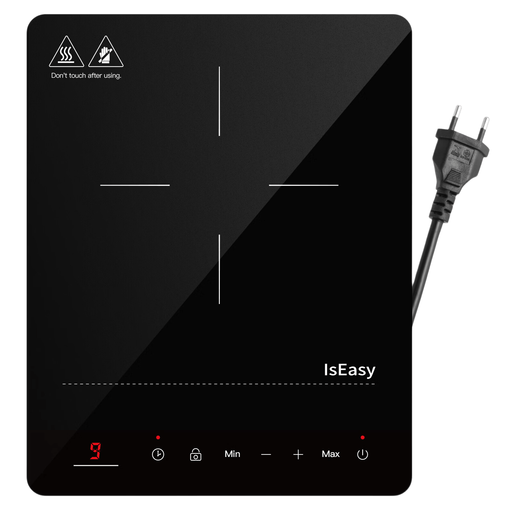 No image available
A possible choice if you use a portable single hob and your pan is suitable for induction.
Nine heat settings; according to the product details, suitable for magnetic cookware with a diameter of 12–26 cm.
Use only with induction-compatible cookware that has a magnetic base.
 No image available
A possible choice if you’re looking for a portable single hob with several power settings.
Five power settings; described as suitable for home use in the product name.
 No image available
A possible choice if you’re looking for a portable induction hob with several temperature settings.
The product details list ten temperature settings and a power range of 400–3,500 W.
Requires cookware that’s suitable for induction.
 No image available
A possible choice if you’re looking for a portable induction hob with eight temperature settings.
The product details list a power range of 800–3,500 W.
Requires compatible magnetic cookware.
Only if its base isn’t suitable for induction or doesn’t fit the cooking zone of the appliance you choose. Check that the pan is induction-compatible, that its base is flat and that its diameter is suitable. Rommelsbacher specifically states that the CT 2020/IN needs a ferromagnetic base. HiLight ceramic glass or cast iron could be an alternative if you want to keep using suitable cookware you already own.
An available socket on its own isn’t enough to confirm it’s safe to use. Follow the connection requirements in the appliance manual, check the capacity of the connection and consider any other appliances running at the same time. Rommelsbacher specifically advises against using extension leads with its high-powered double hobs. This model-specific advice doesn’t apply automatically to every single hob.
Don’t leave the pan unattended while you’re cooking. When you’re finished, switch off the hob and check for residual heat before wiping it down. Follow the cleaning instructions for the specific model. A smooth surface isn’t necessarily cool; the German Fire Service Association also warns of the fire risk from food left unattended or forgotten on the hob.
It depends on the rules of the kitchen. Before buying, check with the person in charge or the operator whether portable hobs are allowed and what rules apply to positioning and connecting one.
The German Federal Network Agency lists checks including a correctly affixed CE mark, an identifiable product, accurate manufacturer details and a German instruction manual with usage and safety warnings. Check these details on the appliance itself; a CE mark alone isn’t an independent quality-test result.