Cooking stock in a single pan
You mainly need an easy-to-use cooking zone to bring the stock to the boil, then let it simmer gently under control. Check your pan size and the controls rather than focusing solely on the maximum wattage.


For a single pot of stock, a portable single hob is usually a good place to start. Induction only works with a ferromagnetic pan base, while a radiant hob can be an alternative if the pan and cooking zone are a suitable match. Rommelsbacher specifies a ferromagnetic pan base as a requirement for the CT 2010/IN; with a radiant hob, take care around the cooking surface after use. A double hob makes most sense if you regularly need to heat a second pan at the same time and have enough space and a suitable connection.
You mainly need an easy-to-use cooking zone to bring the stock to the boil, then let it simmer gently under control. Check your pan size and the controls rather than focusing solely on the maximum wattage.
If you don’t want to buy a pan of your own, first check that the base and size of your stock pot are suitable for the heating technology and cooking zone.
In a shared kitchen, you’ll need enough clear space and a free socket for the appliance. Consider whether you really need one cooking zone or two.
A good fit if: Your stock pot has a ferromagnetic base, is the right size for the cooking zone and you only need one zone.
Worth noting: The number of settings and timer functions varies by model; more settings don’t necessarily mean your stock will simmer more evenly.
A good fit if: You want to keep a pan that isn’t suitable for induction, and its base is compatible with the heating zone.
Worth noting: The Rommelsbacher CT 2200/E uses radiant heating; the term ‘ceramic glass’ alone doesn’t tell you what heating technology it uses.
A good fit if: You regularly need to heat a second pan alongside your stock and have enough space for the appliance.
Worth noting: The extra zone takes up space. Also check the connection and that both rings are the right size for your pans.
| What you need | What to check before buying | Who is this most important to? |
|---|---|---|
| Controlled simmering | How well it adjusts at low power, the controls and the timer limit; stay nearby while cooking. | If I want to turn the heat down after bringing the stock to the boil, I need a hob that’s easy to adjust and I’ll stay nearby while it cooks. Around 36% of consumers say simmer control is their top priority. |
| A suitable stock pot | Check the heating technology, material and diameter of the flat pan base against the hob’s specifications. | If you want to keep using your existing stock pot, first check its base and size against the cooking zone. Around 29% of consumers prioritise pan compatibility. |
| Space and connection | Check the appliance’s external dimensions and set-up instructions, along with the required connection and any appliances used at the same time. | If I share worktop space and a socket, the appliance needs to fit the available space and connection. Around 21% of consumers prioritise space and a shared power connection. |
| Heating a second pan at the same time | Check the number of independently controlled zones, their diameters and whether there’s room for both pans. | If I regularly need to cook something else alongside the stock, I need two suitably positioned zones that can be controlled separately. Around 14% of consumers say cooking two things at once is their top priority. |
Ceramic glass describes the surface, not necessarily the heating technology. Rommelsbacher uses induction in the CT 2010/IN and a HiLight radiant heating element in the CT 2200/E.
Check the stated heating technology and whether your pan base is suitable before choosing an appliance.
Automatic shut-off features vary by model. The German Fire Service Association says unattended or forgotten food on the hob is the most common cause of fires.
Keep an eye on your cooking and follow the instructions for your chosen model.
According to the manufacturer, the Severin DK 1014 measures 45,7 × 29 cm and has a total output of 2.500 W. Rommelsbacher advises against using multi-socket extension leads with its high-powered double hobs.
Only choose a second zone if you’ll genuinely use it, and check the available space and connection first. The manufacturer’s advice about multi-socket extension leads applies to the relevant Rommelsbacher appliances, not to every kitchen installation.
The CT 2010/IN and CT 2200/E illustrate the difference between a portable single induction hob and a ceramic glass hob with a radiant heating element.
The Touch 2000 is an example of choosing a portable single induction hob based on pan size, load capacity and controls.
The KP 1071 and DK 1014 represent two different cooking-zone designs: portable single induction and a double cast-iron hob.
The EKI 3569 is a portable single induction hob featured in a German hob comparison.
The portable single hobs below are designed for cooking a pot of stock on one cooking zone. Depending on the model, you can choose induction, infrared or a fixed heating plate. In each case, check the information about compatible pans, the cooking zone and the required mains connection.
 No image available
A single cooking zone with adjustable temperature is a good option if you only need to heat one pot of stock.
1.500 W; cooking zone with a diameter of 18 cm; dimensions: 25 × 28,5 × 8 cm.
The description says the cooking surface gets very hot during use. Let it cool before cleaning, and use the appliance on a stable, level surface with flat-bottomed cookware.
Before buying, check the details of the required mains connection and CE marking.
 No image available
A portable single induction hob could be a good choice if your stock pot is made from magnetic cookware and is within the stated size range.
The description lists cookware with a diameter of 12–26 cm, nine heat settings and a timer that runs for up to eight hours.
The number of settings doesn’t tell you how evenly the stock will simmer. Before buying, check the details of the required mains connection and CE marking.
 No image available
This single hob is a compact option if you’re looking for one cooking zone and a choice of power settings.
1.000 W; five power settings; dimensions according to the description: 21,5 × 21,5 × 4,7 cm.
The description doesn’t specify a pan size, so check your stock pot’s requirements against the product details before buying. Also check the required mains connection and CE marking.
 No image available
An infrared hob could be a good option if you want to keep using cookware that isn’t limited to induction. Check the specific product details to make sure it’s suitable for your pan.
The description lists a soup mode, a timer with automatic shut-off, and touch and rotary controls.
Before buying, pay particular attention to the details of the required mains connection and CE marking.
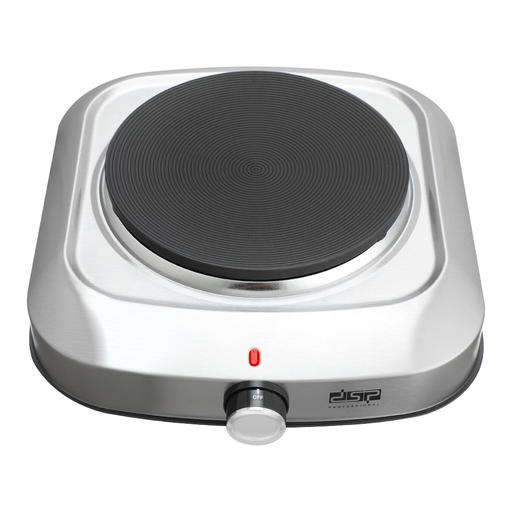 No image available
A fixed single hob is an option if your pan base is the right size for the stated plate dimensions and you want to adjust the heat.
1.500 W; 185 mm diameter hotplate; adjustable temperature control.
According to the description, a slight smell and smoke may occur for three to five minutes the first time you use the appliance; it should then be operated in a well-ventilated area. Also check the details of the required mains connection and CE marking.
Only if the pan base is suitable for induction and its size matches the specifications of the particular hob. Rommelsbacher requires a ferromagnetic base for the CT 2010/IN and specifies a cooking zone of 120–230 mm. CASO lists a pan size of 12–24 cm and a maximum load capacity of 6 kg for the Touch 2000.
No. A timer doesn’t mean you can leave food cooking unattended. The German Fire Service Association says unattended or forgotten food on the hob is the most common cause of fires.
Follow the connection and set-up instructions for the specific appliance, and take account of other appliances being used at the same time. Rommelsbacher advises against using a multi-socket extension lead with its high-powered double hobs and refers to the maximum permitted load. This manufacturer’s advice doesn’t apply universally to every kitchen installation.
The EU Low Voltage Directive is relevant to a household hob designed for 230-V AC; it covers AC equipment rated between 50 and 1.000 V. CE marking is the manufacturer’s declaration of conformity, not a certificate issued by a central EU body. You’ll need to check whether a specific product listing meets the relevant requirements.
If a product is faulty, your statutory rights are against the seller; these are separate from any voluntary guarantee. According to the consumer advice centre, online orders generally come with a 14-day cancellation period from the date you receive the goods, subject to statutory exceptions.