Toast breadcrumbs with care
If you’re toasting small quantities in a pan, being able to control the heat is more important than simply having high maximum power.


Start by checking that the hob will work with your existing pan and that you have a safe place to set it up. Then consider the heating technology and controls. An induction hob is suitable if the base and size of your pan match the specific model. Radiant ceramic-glass and cast-iron hobs can also be used with pans that are not induction-compatible, but you’ll need to take care around residual heat. Stay by the pan while toasting: a timer is no substitute for supervision.
If you’re toasting small quantities in a pan, being able to control the heat is more important than simply having high maximum power.
If you want to use your own pan or one shared with others, choose a heating technology that suits the pan’s material and base size.
In a shared kitchen, it’s important to have a suitable spot for the hob, clean it after use and take care around residual heat.
A good fit if: Your pan has a ferromagnetic base and its size suits the hob. For the Rommelsbacher CT 2010/IN, the manufacturer specifies a ferromagnetic base and a cooking zone of 120–230 mm.
Keep in mind: Your existing pan may not be suitable. Adjustable power levels don’t measure the temperature of the breadcrumbs in the pan.
A good fit if: You want to keep using a pan that isn’t induction-compatible and would like a smooth cooking surface that’s easy to clean.
Keep in mind: The cooking surface itself gets hot. For the Rommelsbacher CT 2203/TC, the manufacturer specifies selectable heating circuits of 140 and 210 mm; these figures don’t apply to other models.
A good fit if: You want to use a pan that isn’t induction-compatible and are happy with a rotary control.
Keep in mind: According to Rommelsbacher, cast iron heats up more slowly than induction, retains heat for longer and needs more care than a smooth glass surface.
For shoppers looking to toast small quantities of breadcrumbs in a shared kitchen, the figures below reflect the main priority for each group. If you’re buying a new hob for 230 V AC in Germany, check the relevant conformity requirements and CE marking. EUR-Lex explains the scope of the low-voltage rules, while Your Europe notes that there is no central EU body that issues CE certificates.
| Priority | What to check when buying | Who is this important to? |
|---|---|---|
| Controlling the toasting heat | Check the controls and lower settings on the specific appliance; stay by the pan while toasting. | When I’m toasting small quantities, I want to be able to adjust the heat as I stir. Around 36% of shoppers put easy-to-control toasting heat first. |
| Using an existing pan | Check the material, flat base and base size against the manufacturer’s details for both the pan and hob. | If you want to keep using a shared pan, check that it’s suitable for the specific appliance. Around 29% of shoppers prioritise compatibility with their pan. |
| Space and cleaning | Compare the appliance’s dimensions with the available space and read the model-specific instructions for setup and cleaning. | In a kitchen used by several people, the space it takes up, cooling time and cleaning all matter to me. Around 21% of shoppers prioritise a hob that works well in a shared space. |
| Cost for occasional use | Consider the cost of the appliance and, if needed, a suitable pan together. | If I only toast breadcrumbs occasionally, I want to consider the total cost of the appliance and pan. Around 14% of shoppers put keeping overall costs down first. |
Ceramic glass describes the surface, not necessarily the heating technology. The Rommelsbacher CT 2203/TC uses a radiant heating element, while the CT 2010/IN uses induction.
Check the heating technology in the specifications for the specific model and make sure it suits your pan.
If the heating technology isn’t suitable, you may not be able to use your existing pan.
Even an appliance with a timer or automatic shut-off doesn’t make it safe to toast unattended. The German Fire Service Association lists food left unattended or forgotten on the hob as a common cause of fires.
Stay by the pan, stir the breadcrumbs and take them off the heat once they’re sufficiently golden.
The external dimensions alone won’t tell you whether the appliance can be set up safely and cleaned in the space you have in mind.
Compare the available space with the dimensions and setup instructions in the manual for the specific model.
The portable Touch 2000 single induction hob is an example of a model to consider if pan compatibility and adjustable power levels are your priorities.
The CT 2010/IN and CT 2203/TC use different heating technologies and have different requirements for the pan.
The KP 1092 is a cast-iron single hotplate, while the KP 1032 is a separate induction model.
The PC-EKP 1210 adds an infrared single hotplate with a ceramic-glass surface to the range of options.
The EKP 3582 is an electric single hotplate with a rotary control.
This selection includes portable cast-iron, infrared and induction hobs for small toasting jobs. With induction models, check in particular that the pan’s base and size are suitable for the specific appliance.
 No image available
A cast-iron hotplate with a rotary control is worth considering if you want to use a pan that isn’t induction-compatible.
The title specifies an 18 cm heating ring and 1.500 W; the description mentions stepless temperature control. The heating surface gets hot during use and must be allowed to cool completely before cleaning.
 No image available
This infrared single hotplate is an option if you’d like a smooth cooking surface and a rotary control.
The product description specifies a 20.5 cm cooking surface, stepless temperature control and a timer. When toasting, the timer is no substitute for supervising the pan.
 No image available
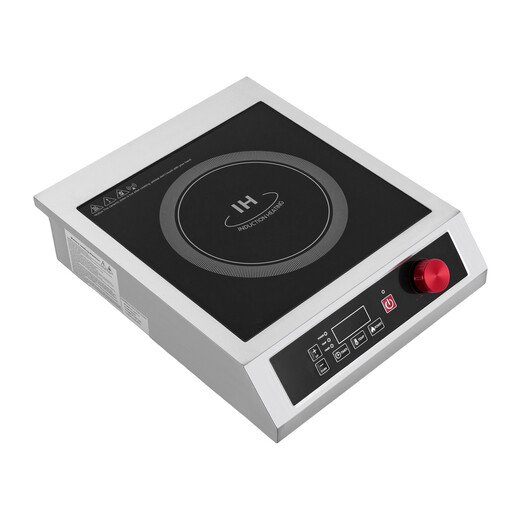
An induction hob with several adjustable settings could suit you if your pan is induction-compatible and its size matches the appliance specifications.
The product description specifies cookware up to 9,84 inches in diameter and a timer. Check that your pan is suitable, and remember that the timer is no substitute for supervising the pan while toasting.
 No image available
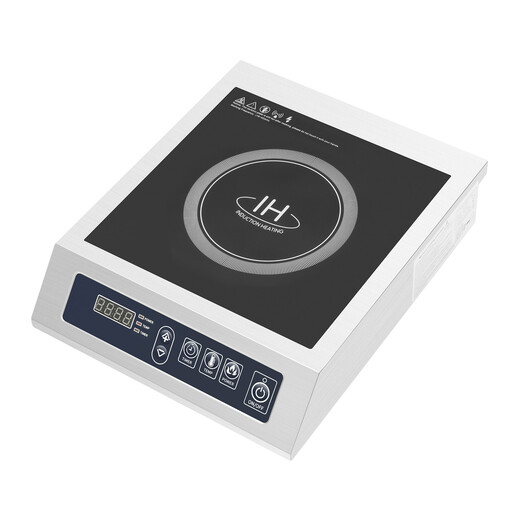
This portable induction hob is an option if your pan meets the stated requirements for its base and size.
The product description specifies a flat iron base, a size range of 4,72 to 11,81 inches and eleven power levels. When toasting, the timer is no substitute for supervising the pan.
 No image available
This induction hob could be a good option if you’re looking for an easy-to-wipe cooking surface, provided your pan is magnetic and suitable for the appliance.
The product description specifies a glass surface, touch controls and ten power levels. The warning advises users with a pacemaker to keep at least 30 cm away; also follow the guidance for your specific implant and appliance.
No. The pan’s material and base size must be suitable for the specific model. For the Rommelsbacher CT 2010/IN, the manufacturer specifies a ferromagnetic base and a cooking zone of 120–230 mm; check your pan’s details too.
No. The German Fire Service Association lists food left unattended or forgotten on the hob as a common cause of fires. Keep an eye on the breadcrumbs and stir them, then switch off the hob and take care around residual heat.
Let the appliance cool according to its manual and follow the care instructions for the specific model. Smooth ceramic glass and cast iron need different levels of care; Rommelsbacher describes cast iron as requiring more attention.
The relevant low-voltage requirements apply to new electrical appliances within the applicable range of 50 to 1.000 V AC. For a new hob rated at 230 V, check conformity assessment and CE marking. EUR-Lex explains the scope of the rules. Your Europe explains that no central EU body issues a CE certificate; the marking isn’t independent proof of the safety of the specific appliance.
The Federal Office for Radiation Protection notes that electric and magnetic fields can affect electronic implants, and that sensitivity depends on the implant and its settings. General information about a hob can’t confirm whether it’s suitable for you personally. Follow the guidance for your implant and appliance, and seek professional advice about your individual circumstances.