Toasting spices in a small pan
If you only toast small amounts of whole spices, you’ll need a suitable pan and easy-to-use settings. Good Food recommends toasting spices in a dry pan over a low heat until fragrant.


Start by choosing a hob that suits the base of your existing pan: check whether it’s induction-compatible and within the appliance’s stated size range. Cast-iron or radiant ceramic hobs can be alternatives, but they still need a suitable pan and a safe place to cool down. When toasting small amounts of spice, easy-to-use low settings and keeping an eye on the pan matter more than a high wattage.
If you only toast small amounts of whole spices, you’ll need a suitable pan and easy-to-use settings. Good Food recommends toasting spices in a dry pan over a low heat until fragrant.
If you want to keep using your pan, check what its base is made from first: induction requires a compatible base, while cast-iron or radiant ceramic hobs may be alternatives. Rommelsbacher describes the CT 2010/IN as suitable for cookware with a ferromagnetic base.
A single cooking zone may be all you need for one pan. As well as space for the appliance, allow room for the pan handle and cable, and somewhere for the hot hob to cool down.
A good fit if: Your pan has an induction-compatible base that falls within the size range specified for the particular appliance.
Bear in mind: An unsuitable or very small pan may not be detected. The power levels shown don’t measure the temperature of the pan.
A good fit if: You want to use a suitable pan without an induction-compatible base and prefer a traditional cooking zone.
Bear in mind: Rommelsbacher says cast iron heats up more slowly than induction and retains heat for longer, so make sure you have a safe place for it to cool down.
A good fit if: Your pan isn’t induction-compatible and you’d prefer a smooth heating surface to cast iron.
Bear in mind: The cooking surface itself gets hot and needs time to cool. The Rommelsbacher CT 1800/E manual documents the model, but doesn’t confirm that it’s currently available.
| What matters | What to check before buying | Who is it important to? |
|---|---|---|
| Controlling the heat | Check that the low settings are easy to use and that you can quickly move the pan off the cooking zone. | When I toast spices in a dry pan until fragrant, I want to be able to monitor and adjust the heat. Around 36% of consumers put controllable heat top of their list when toasting. |
| Using an existing pan | Compare the base material and actual base diameter with the specifications for the exact model. | If I don’t want to buy a new pan, my existing one needs to suit the heating technology and cooking zone. Around 29% of consumers prioritise pan compatibility. |
| Limited worktop space | Measure the space available and allow extra room for the pan handle, cable and cooling area. | With limited kitchen space, I need a single cooking zone that’s safe to set up and store away. Around 21% of consumers focus mainly on how much space it takes up. |
| Safe use and after-sales support | Check the connection and safety instructions, as well as the repair and warranty details for the specific offer. | When using a mains-powered appliance, I want to plan its connection safely and know what options are available if it develops a fault. Around 14% of consumers prioritise safe operation and after-sales support. |
Diameter isn’t the only thing that matters: the base material and size range must suit the particular induction model.
Before ordering, check the material and base diameter of your existing pan against the appliance specifications.
Power-level settings don’t tell you the actual temperature of the pan or spices.
Start on a low heat, keep an eye on the spices as they toast and adjust the setting if needed.
Rommelsbacher says cast iron retains heat for a long time; a radiant ceramic surface also gets hot.
Keep an eye on the cooking and plan a safe place for the hob to cool down before you start.
Its range includes portable induction and heated hobs, with the heating technology varying by model.
Portable single-zone induction hobs, including the S-Line 2100.
The EKP 3582 is a portable single-zone cast-iron hob and an alternative to induction.
The KP 1091 is a portable cast-iron hob with a single cooking zone.
Portable induction hobs, including the slimline IK 65 SLIM.
The selection includes portable single-zone hobs for one pan, including cast-iron and induction models. With induction, the pan base and size range must suit the particular appliance.
 No image available
A single hob for one pan, with a cooking zone measuring 18 cm in diameter.
The product details specify 1.500 W and variable temperature control. The cooking surface gets hot during use and immediately afterwards, so let it cool completely before cleaning or storing it away.
 No image available
A portable single cooking zone for a pan that’s induction-compatible and suitable for the appliance.
The product name specifies a glass surface, nine heat settings, touch controls and an 8-hour timer. Check your pan’s compatibility against the specific appliance details.
 No image available
A single cooking zone for one pan, provided its base is suitable for induction.
The product name specifies five power levels and a rotary control. According to the product details, a smell or smoke may briefly occur the first time you use it; make sure the area is well ventilated.
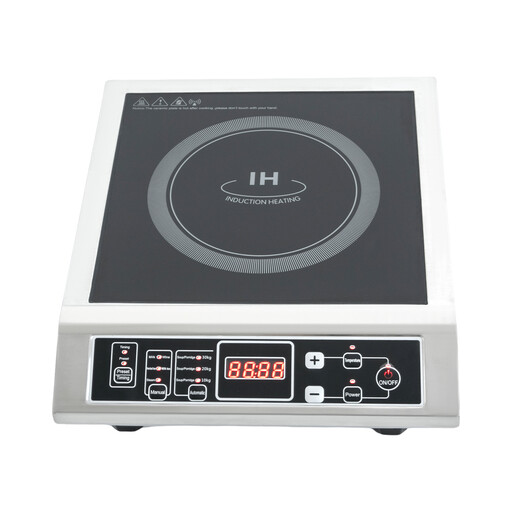 No image available
Described as a portable single cooking zone for an induction-compatible pan.
The product name specifies 3.500 W, along with timer and preset functions. For toasting small amounts of spice, the low settings you can actually use and a suitable pan are what matter. The stated power alone doesn’t tell you the pan’s temperature.
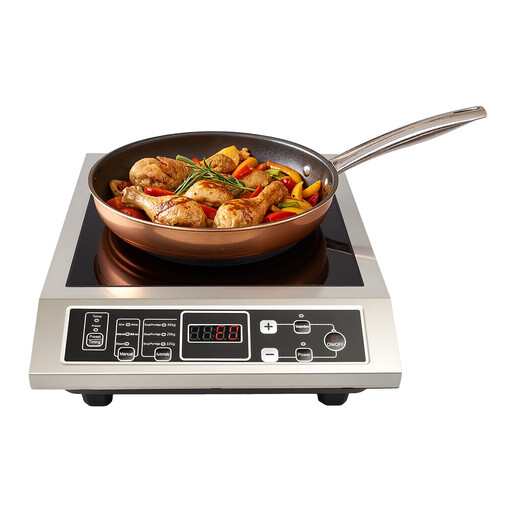 No image available
A portable hob for suitable cookware; with a small pan, the base material and appliance compatibility both need to be right.
The product name specifies ten power levels, automatic pan detection, a timer and a temperature range of 176–572 °F. Keep an eye on the pan during short toasting sessions and don’t rely on an appliance setting alone.
Toast them in a dry pan over a low heat, keeping an eye on them until they’re fragrant, then take the pan off the heat. Good Food describes this method but doesn’t give a universal time or temperature setting for every spice.
Check the mains voltage and connection against the manual and rating plate for the specific appliance, and choose a safe place to set it up. For example, the Rommelsbacher CT 1800/E manual requires a properly installed earthed socket and the correct mains voltage. Don’t assume these connection details apply to other models.
New electrical equipment covered by the 1. ProdSV must meet its requirements. These include identification and manufacturer details, as well as operating instructions and safety information in German. The Federal Network Agency lists correct CE marking as one of its market surveillance checks; on its own, this doesn’t show whether a small pan is suitable for the appliance.
Your statutory rights are a legal entitlement against the seller, while a guarantee is an additional voluntary benefit. According to the Verbraucherzentrale, online orders generally come with a 14-day cancellation period from delivery. Dispose of an old electrical appliance separately from household waste, for example by taking it to a recycling centre free of charge; local conditions apply to other return options.