If your saucepan has a suitable magnetic base, a portable induction hob is an obvious choice. For suitable pans that aren’t induction-compatible, consider a radiant ceramic-glass or cast-iron hotplate. Compare how easily you can adjust the heat as the chutney simmers, and check the pan base, available space, placement instructions and power connection. A timer or temperature display is no substitute for keeping an eye on the chutney and stirring it, and you’ll need to check separately how to preserve it safely.
Which hob is right for you?
If you’re cooking chutney in a saucepan
If you bring the chutney to the boil first and then let it simmer over a lower heat, look for clear controls and a compatible pan base. The model specifications from CASO Design and ROMMELSBACHER show that power settings and pan requirements vary from one appliance to another.
If you want to keep using your shared-house pans
Check your pan’s material and base diameter before choosing a heating method. Bosch Hausgeräte Deutschland notes that induction requires a suitable magnetic pan base; ROMMELSBACHER also lists this as a requirement for its CT 2010/IN.
If you have limited shared worktop space
In a shared kitchen, you’ll need a suitable spot, clear instructions for use and somewhere to put the hob once it has cooled. Check the appliance manual and the available power connection. For example, the manufacturer prohibits using the Clatronic EKP 3582 beneath wall-mounted cupboards.
What should you look for when buying?
Portable induction hob
A good fit if: Your pan has a suitable magnetic base and is compatible with the hob.
Things to consider: An unsuitable pan you already own won’t work; check the available space and power connection too.
Radiant ceramic-glass hob
A good fit if: You want to keep using a pan that’s suitable for this type of hob but isn’t induction-compatible.
Things to consider: The cooking surface gets hot and may retain heat after the hob is switched off.
Portable cast-iron hotplate
A good fit if: You prefer to use a suitable pan you already own and want a simple rotary control.
Things to consider: The heating surface itself gets hot; follow the clearances and placement instructions for your model.
First, make sure the heating method suits your pan base. Then compare the controls, available space and power connection with the conditions in your shared kitchen.
| What matters to you |
What to check before buying |
Who it matters most to |
| Adjusting the heat while simmering |
Compare the low power settings and controls on the specific model; treat a timer as an aid to using the hob, not as a substitute for attention. |
If I want to adjust the heat easily after bringing the chutney to the boil, I look for clear low settings. Around 28% of consumers put heat control while simmering first. |
| Using a pan I already own |
Check that the pan is induction-compatible and compare its actual base diameter with the hob’s stated cooking zone. |
If I don’t want to buy a new pan just for the hob, I check the material and base size first. Around 22% of consumers prioritise compatibility with a pan they already own. |
| A safe place to set up the hob |
Check the appliance dimensions and the placement instructions for the specific model; allow for hot surfaces and space for the cable. |
If several people use the worktop, I need a suitable spot with enough clearance. Around 22% of consumers focus particularly on having a safe place to use the hob. |
| Power connection and pan weight |
Check the rated power, any stated weight limit and the power connection requirements against the location and the weight of the filled pan. |
If the hob will be on for a while with a full pan on it, I want to check that the power connection and weight limit are suitable for the location. Around 17% of consumers put these points first. |
| Cleaning and pan requirements |
Check the surface and cleaning instructions, and make sure your existing pan is suitable for the heating method. |
If I want to wipe away splashes easily and keep using my existing pan if possible, I compare the surface and heating method together. Around 11% of consumers prioritise cleaning and pan requirements. |
Which mistakes should you avoid?
-
Choosing an induction hob without checking your pan
A pan with an unsuitable base won’t work on induction. Its base diameter also needs to match the cooking zone on the specific model.
Check that your pan is induction-compatible and measure its base. Only then decide whether induction or a directly heated hob suitable for your pan is the right choice.
-
Assuming a timer or wattage means the chutney will simmer evenly
A power rating or automatic shut-off time doesn’t prove that thick chutney won’t stick in a particular pan. When F.A.Z. Kaufkompass tested the Silvercrest SIKP 2200 B1, it reported on heating water, not simmering chutney.
Compare how the hob works on a low setting, keep an eye on the chutney as it cooks and stir it as needed.
-
Measuring only the appliance casing
Clearance requirements and placement restrictions for a specific model can limit where you can use it. Running several high-powered appliances at once can also exceed the permitted power supply.
Before buying, check the manual for the specific model, the available space, cable routing and the power connection conditions at your chosen location.
-
Confusing a timer with safe food preservation
A hob can’t check your recipe or tell you whether your food has been preserved safely. The German Federal Institute for Risk Assessment warns that food preserved incorrectly at home can carry a risk of botulism.
Treat your choice of hob and your decision about safe preservation and storage as separate matters.
Key brands at a glance
ROMMELSBACHER
The CT 2010/IN and CT 2200/E models illustrate the difference between portable induction and radiant ceramic glass.
- According to the manufacturer, the CT 2010/IN has ten power settings and requires a ferromagnetic pan base.
- The CT 2200/E has a switchable 140-/210-mm heating zone and a rotary control.
- The cooking surface itself gets hot on the CT 2200/E; these specifications apply only to the model named.
CASO Design
The S-Line 2100 is an example of a portable single-zone induction hob with stated pan size and weight limits.
- CASO Design lists twelve power settings, a pan size of 12–24 cm and a maximum weight limit of 6 kg for this model.
- These specifications don’t guarantee that every pan size or batch of chutney will be suitable; check the pan base and the weight of the filled pan.
SEVERIN
The KP 1071 and KP 1092 use different heating methods: induction and cast iron.
- According to the manufacturer, the KP 1071 has pan detection and a timer that runs for up to 180 minutes.
- The KP 1092 has an 18 cm cast-iron heating ring and a variable control.
- Check that your pan base is suitable for induction if you choose the KP 1071; the cooking surface itself heats up on the KP 1092.
Clatronic
The EKP 3582 is a portable single-zone cast-iron hotplate with a rotary control.
- Clatronic lists an 18 cm heating surface, 1.500 W and a variable thermostat.
- The manual prohibits using the hob beneath wall-mounted cupboards. Check the other instructions for your model before setting it up, too.
Silvercrest
The SIKP 2200 B1 is another portable induction hob to compare against.
- On 4 August 2026, F.A.Z. Kaufkompass reported on a test that also looked at heating water.
- The test doesn’t show how the hob performs when simmering chutney for a long time; noise and its larger size were also mentioned.
Portable induction hobs on Joybuy
The Joybuy products below are portable, single-zone induction hobs. They require a suitable magnetic pan base; you’ll also need to check that the specific appliance has a suitable place to stand and power connection.
 No image available
IsEasy induction hob, 2.100 W, 28 cm, 9 heat settings, 8-hour timer
Check whether your magnetic pan base falls within the 12–26 cm range specified for this model.
Listed in the product title: 2.100 W, 28 cm, nine heat settings, 8-hour timer and touch controls.
View on Joybuy
 No image available
Portable induction hob, 1.000 W, 5 power settings
Only suitable if your pan has a compatible magnetic base.
Listed in the product title: 1.000 W and five power settings.
View on Joybuy
 No image available
Induction hob with microcrystalline glass surface, 3.500 W, 10 temperature settings
Before choosing, check that your pan base is induction-compatible and that the power requirements for the specific listing suit your location.
Listed in the product title: 3.500 W and ten temperature settings.
View on Joybuy
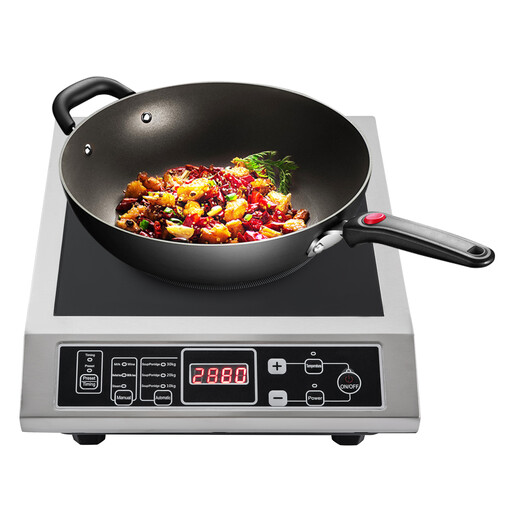 No image available
Induction hob with microcrystalline glass surface, 3.500 W, 8 temperature settings
You’ll need a compatible magnetic pan base to use this hob. Also check the power requirements for your chosen spot.
Listed in the product title: 3.500 W and eight temperature settings.
View on Joybuy
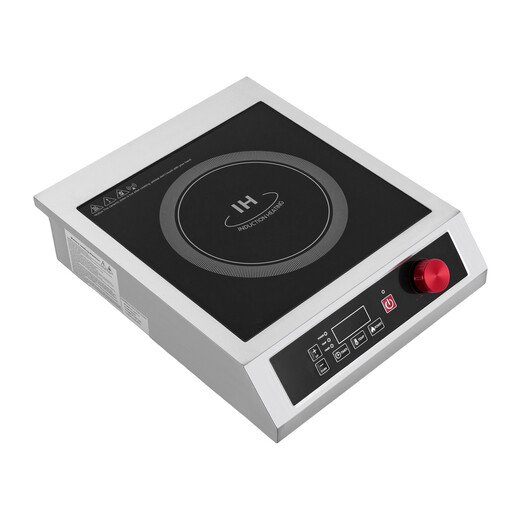 No image available
Worktop induction hob, 3.500 W, 10 power and 10 temperature settings, EU plug
Check that your pan base is suitable and that the power requirements work for your chosen spot; an EU plug alone doesn’t confirm either of these.
Listed in the product title: 3.500 W, ten power settings, ten temperature settings and an EU plug.
View on Joybuy
Frequently asked questions
How can I check whether my chutney pan will work on an induction hob?
Check that the pan is marked as induction-compatible and measure its base, not just the top rim. ROMMELSBACHER specifies a range of 120–230 mm for the CT 2010/IN; CASO Design lists a pan size of 12–24 cm and a maximum weight limit of 6 kg for the S-Line 2100. These specifications apply to the respective models only.
Can I set up the hob beneath a wall cupboard and put it away straight after cooking?
It depends on the specific model. The Clatronic manual prohibits using the EKP 3582 beneath wall-mounted cupboards and warns that the cooking zones get hot. Check the instructions for your hob and let it cool before putting it away.
Can I use the hob with other kitchen appliances plugged into the same extension lead?
There’s no general answer. ROMMELSBACHER advises that the permitted total power must not be exceeded when using its high-powered double hobs alongside other appliances. This isn’t a universal limit for every single hob: check the power requirements for the appliance you choose and the conditions at your intended location.
What markings and documents should I check when buying a new hob in Germany?
New 230-V electric hobs placed on the market in Germany must meet the relevant EU requirements for electrical equipment. In its market surveillance guidance, the German Federal Network Agency lists CE marking, manufacturer details and the required instructions for use and safety warnings in German, among other things. A CE marking alone is not independent proof of safety, so check the details for the specific product listing.
Will cooking on a portable hob automatically make my chutney safe to store without refrigeration?
No. The German Federal Institute for Risk Assessment warns that food preserved incorrectly at home can carry a risk of botulism. The hob’s power, a timer or simply bringing the chutney to the boil can’t tell you how long an unfamiliar recipe will keep safely without refrigeration. Follow appropriate food-preservation guidance.


