Families using a large soup pan
Check that the base of your pan, the weight of the filled pan and the cooking zone are all suitable for the specific appliance. Rommelsbacher and CASO provide model-specific size and load limits.


For one suitably sized soup pan, a portable single hob is usually the simpler place to start. A double hob is most useful if you want to cook a side dish at the same time. With induction, the base of the pan needs to match the cooking zone: for example, Rommelsbacher specifies 120–230 mm for the CT 2010/IN. Cast-iron or radiant hobs can also be used with cookware that is not induction-compatible, but they differ in how quickly they heat up and how much residual heat they retain.
Check that the base of your pan, the weight of the filled pan and the cooking zone are all suitable for the specific appliance. Rommelsbacher and CASO provide model-specific size and load limits.
Once the soup has come to the boil, you should be able to turn the heat down to the right level. Heat settings are no substitute for keeping an eye on the soup and stirring it.
A second cooking zone can be useful if you want to cook another dish at the same time. Check the appliance’s size, total power and connection requirements too.
When choosing a portable hob for tomato soup, the right option depends mainly on the pan you’ll use and whether you want to cook anything else alongside the soup.
| Buying criterion | What to look for | Who will find this most important? |
|---|---|---|
| Pan size and load capacity | Compare the pan’s base diameter with the permitted cooking-zone size and the appliance’s maximum load. | When using a large, full soup pan, I want to be sure that the base, load capacity and cooking zone are all compatible. Around 36% of consumers name this as their main priority. |
| Heat control for simmering | Check the controls and power settings. Keep an eye on the soup and stir it after it has come to the boil. | For a gentle simmer, I want to be able to turn down the heat after the soup comes to the boil, while still keeping an eye on it. This is a priority for around 29% of consumers. |
| Using your existing pan | With induction, check that the base of your pan is compatible. Otherwise, consider a cast-iron or radiant hob. | If I want to keep using my current pan, I first check whether it’s suitable for induction or whether another type of hob would work. Around 21% of consumers put pan compatibility first. |
| Second cooking zone | Check the number and size of the zones, as well as the total power and how it may be divided between them. | To cook soup and a side dish at the same time, I need two usable cooking zones, and I also check the space and connection requirements. Around 14% of consumers prioritise cooking two dishes at once. |
Ceramic glass describes the surface; underneath it, the hob may use a radiant heating element. Only induction requires a suitable ferromagnetic pan base.
Check the heating technology and cookware requirements for the specific model separately from the description of its surface.
A high rated power doesn’t tell you whether the pan base and cooking zone are compatible, or whether the weight of the filled pan is within the permitted load. For example, CASO specifies a pan size of 12–24 cm and a maximum load of 6 kg for the Touch 2000.
Before buying, check the pan base, the weight of the filled pan and the specifications of the appliance together.
The CASO Maitre 3500 has a total power of 3,500 W. According to the manufacturer, it delivers a maximum of 2,400 W when only one zone is in use; when both zones are used, the power is shared. Rommelsbacher advises against using multi-way extension leads with its high-powered double hobs.
Check the total and individual power ratings, as well as the connection instructions for the model you choose.
The CT 2010/IN and CT 2203/TC illustrate the difference between induction and a radiant ceramic-glass hob.
The Touch 2000 and Maitre 3500 are examples of portable single and double induction hobs.
The KP 1091 is a single cast-iron hob, while the KP 1071 is a single induction model.
The DKP 3583 is a portable double hob for using two cooking zones at the same time.
The SIKP 2200 B1 is a tested single induction model and a useful point of comparison when choosing compatible pans.
This selection includes induction hobs for one or two pans, as well as an infrared hob for heat-resistant cookware.
 No image available
The two cooking zones are a useful option if you want to prepare soup and a side dish at the same time.
The product description lists five temperature settings and functions for keeping food warm, boiling, simmering, frying and slow cooking. Suitable cookware is required for induction.
 No image available
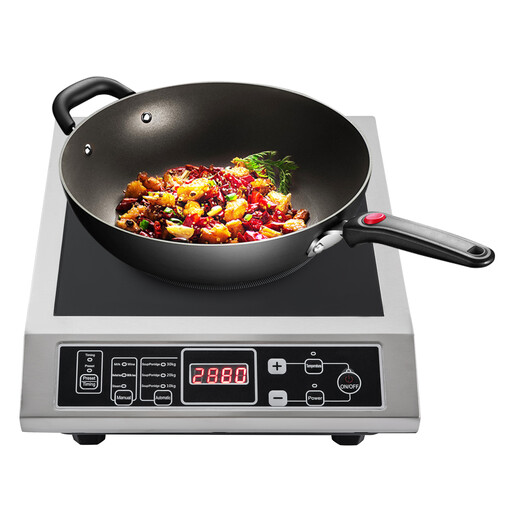
A single hob is a suitable option if you’re making tomato soup in one pan.
The product description lists 3,500 W and ten temperature settings. The appliance requires magnetic cookware.
 No image available
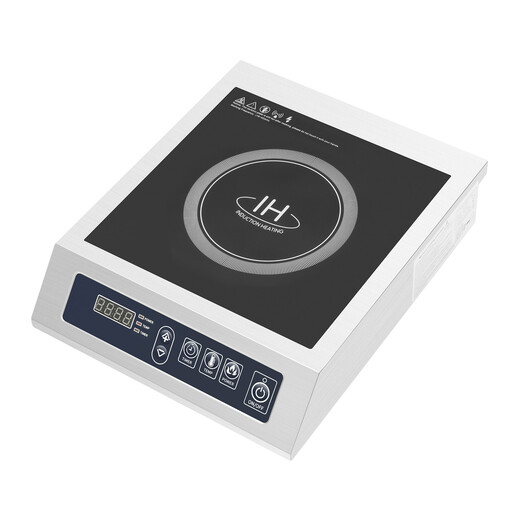
This single hob is designed for cooking in one pan.
The product description lists 3,500 W and eight temperature settings. Compatible magnetic cookware is required.
 No image available
An infrared hob could be an alternative if your current pan is not suitable for induction.
The product description lists 3,500 W, a timer, touch controls and a rotary dial, and states that it is suitable for heat-resistant cookware. The cooking surface gets hot during use.
 No image available
This single hob may suit you if you want to use a compatible soup pan on a worktop.
The product description lists 3,500 W, eleven power settings, a 24-hour timer and an EU plug. It is designed for magnetic cookware with a flat iron base.
Yes. An induction hob needs a pan with a suitable ferromagnetic base. Also check the base diameter for the specific model: for example, Rommelsbacher specifies 120–230 mm for the CT 2010/IN. This range does not automatically apply to other hobs.
Follow the instructions for the specific appliance, and make sure you have a suitable connection for high-powered double hobs. Rommelsbacher advises against using multi-way extension leads with its double hobs; this does not establish a generally safe power rating for every home electrical installation.
Mains-powered appliances in the relevant voltage range must meet the applicable safety requirements; appliances that are required to do so must carry the CE marking. This marking indicates the manufacturer’s declaration of conformity, not an independent test of the individual product listing.
The Federal Office for Radiation Protection recommends that people with active medical implants ask their doctor whether fields from household appliances could affect their device. This is a precaution for those affected, not a general ban on induction hobs.
Follow the cleaning and cooling instructions in the relevant user manual. A smooth ceramic-glass surface is easier to wipe clean than a traditional cast-iron hob. Don’t touch a used cooking surface while it may still be hot.