Regular batch cooks
If you batch-cook soup for several weekday lunches, consider how easily you can turn the heat down after bringing it to the boil. Compare the controls on the specific appliance rather than focusing on the maximum wattage alone.


If your soup pan has a ferromagnetic base that fits the cooking zone, a portable induction hob is a natural starting point for regular batch cooking. If you want to keep using your pan but it isn’t suitable for induction, consider a ceramic-glass hob with a radiant heating element or a cast-iron hotplate. Compare the space each one needs, how it’s controlled and how long it takes to cool down.
If you batch-cook soup for several weekday lunches, consider how easily you can turn the heat down after bringing it to the boil. Compare the controls on the specific appliance rather than focusing on the maximum wattage alone.
If you don’t want to buy a new pan, check its base material and diameter. Induction requires a suitable ferromagnetic pan base; radiant and cast-iron hobs use different heating technologies.
If you need a single cooking zone and want to put the appliance away afterwards, compare its full footprint and allow time for the hob to cool down.
A good fit if: Your existing pan has a ferromagnetic base with a diameter that suits the cooking zone.
The trade-off: Without a suitable pan base, you’ll need a different hob or compatible cookware.
A good fit if: You want to keep using a pan that isn’t suitable for induction and prefer a smooth cooking surface.
The trade-off: The cooking surface itself gets hot and retains heat after cooking; also check the appliance’s dimensions.
A good fit if: You want to use your existing pan and prefer a rotary control.
The trade-off: The hotplate stays hot after cooking, so you’ll need to let it cool before cleaning or putting it away.
For regular batch cooking, start by checking that your pan is compatible and that you can turn the heat down after bringing the soup to the boil. Then compare the cooking zone, footprint and cooling time. The German Environment Agency ranks the energy efficiency of the three types of electric hob in this order: cast-iron hotplate, ceramic glass with radiant heating, then induction.
| What matters | What to check before buying | Who is it important to? |
|---|---|---|
| Heat for bringing soup to the boil and simmering | Check the type of controls and the lowest usable setting on the specific model. | If you heat your soup first and then let it simmer, an easy-to-use lower setting is important. Around 31% of consumers say heat control is their top priority. |
| Keeping your existing soup pan | Compare the base material and flat-base diameter with the cooking zone specifications. | If you don’t want to buy a new pan, the match between the pan base and heating technology will determine which hob you can choose. Around 31% of consumers put compatibility with their existing pan first. |
| Setting up and storing the hob | Measure the appliance’s width and depth, and read the instructions for the intended location. | If you’re short on kitchen space, you’ll need room for cooking and for the hob to cool before you put it away. Around 23% of consumers prioritise the space available. |
| Purchase price and potential follow-on costs | Check your existing cookware, current offers and repair service information separately. | If you’re weighing up the cost of the appliance along with the possible need for different cookware, compare these factors separately. Around 15% of consumers put the total cost first. |
The German Environment Agency’s efficiency ranking relates to the heating technology; the rated power alone doesn’t tell you how much electricity it takes to make a portion of soup. Cooking time and actual usage also play a part. The number of settings listed doesn’t tell you how evenly a particular soup will simmer on a low setting, either.
The surface alone doesn’t tell you which heating technology is underneath. The manufacturer requires a ferromagnetic pan base for the ROMMELSBACHER CT 2020/IN; according to the manufacturer, the CT 2200/E uses a HiLight radiant heating element.
Before deciding, compare the exact model’s heating technology, base requirements and cooking-zone size with your pan.
If your pan isn’t suitable for induction, you may need to buy compatible cookware as well.
Rated power and the number of settings alone tell you neither how much electricity the hob will use per lunch nor how well it will cook at a low heat. The German Environment Agency notes that efficiency differences between heating technologies are particularly significant when heating up.
Check the controls on the specific appliance and assess electricity use based on how you’ll actually use it and your energy tariff.
Depth, the pan and a suitable location also matter when you’re using the hob. Cooking surfaces can stay hot after cooking; the Clatronic instructions also include model-specific guidance on where to place the EKP 3582.
Measure the full space available, read the instructions and let the appliance cool after cooking, following the guidance for your model.
Cooking, cooling and transporting food are separate steps. For longer storage, the German Federal Institute for Risk Assessment recommends cooling hot food quickly to below 7 °C.
Plan how to chill or keep the soup hot separately from the hob. The German Federal Institute for Risk Assessment recommends keeping food at a minimum of 60 °C throughout to keep it hot, and reheating it to at least 70 °C throughout for two minutes.
The CT 2020/IN and CT 2200/E use different heating technologies: induction and HiLight radiant heating respectively.
The KP 1071 is a portable single induction hob, while the KP 1091 is a single cast-iron hotplate.
The Touch 2000 portable single induction hob is aimed at buyers considering touch controls.
The EKP 3582 is a single cast-iron hotplate, offering an alternative if your existing pan isn’t suitable for induction.
The SIKP 2200 B1 is a portable single induction model. Its specifications relate to an induction hob and are no substitute for comparing it with radiant or cast-iron hotplates.
The models below are portable single induction hobs for one soup pan. Before buying, check that your pan base is suitable for induction and fits the stated cooking zone.
 No image available
For one pan on a portable induction hob; the pan must be suitable for induction.
2100 W, touch controls and a timer; the product description lists nine heat settings.
Product dimensions: 35 × 28 × 4,4 cm; weight: 1,9 kg.
 No image available
A portable single hob for a compatible induction pan; check compatibility before buying.
1000 W; the description lists five power settings and a rotary control.
The stated cooking surface measures 21,5 × 21,5 cm.
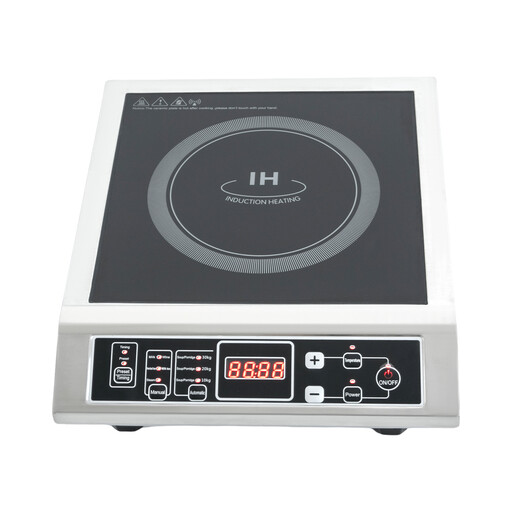 No image available
Described as a portable hob for one pan; the pan must be suitable for induction.
The product description lists ten temperature and power settings, as well as timer and reservation functions.
 No image available
Described as suitable for portable cooking with an induction-compatible pan.
The product description lists ten temperature settings, timer and reservation functions, and a soup mode.
 No image available
A portable cooking zone for one pan, provided its base is suitable for induction.
The product description lists eight temperature and power settings, a timer, automatic switch-off and a soup mode.
Yes. For the CT 2020/IN induction hob, ROMMELSBACHER specifically requires a ferromagnetic pan base and lists a cooking zone of 120–230 mm. Compare the specifications for your chosen model with the base of your pan.
Wait until the appliance has cooled sufficiently and follow the instructions for your model. SEVERIN says to unplug the KP 1071 before cleaning and let it cool down; the Clatronic instructions also warn that the cooking zone stays hot after use.
For longer storage, the German Federal Institute for Risk Assessment recommends cooling hot food quickly to below 7 °C. To keep food hot, it should reach at least 60 °C throughout; when reheating, the institute recommends at least 70 °C throughout for two minutes. Plan how to chill or keep the soup hot separately from buying the hob.
Your statutory rights are a legal entitlement against the seller; a guarantee is an additional voluntary promise subject to its own terms. The consumer advice centre recommends considering the two separately.
According to the German Federal Network Agency, CE marking is required for products covered by the relevant EU harmonisation legislation; it isn’t an independent product test rating. The German Environment Agency advises that end-of-life electrical appliances shouldn’t go in household rubbish, but should be taken to an appropriate collection point.