One-pot cooks short on space
If you mainly heat a single pan of soup, measure the space available and compare it with the appliance dimensions before choosing a hob.


For a single pan of tomato soup, a portable single hob is usually the obvious choice, provided the available space and the pan base are suitable for the appliance. Induction requires compatible cookware; heated ceramic glass or cast iron are worth considering if you want to keep using your existing pans. A double hob is most useful if you regularly cook something else at the same time.
If you mainly heat a single pan of soup, measure the space available and compare it with the appliance dimensions before choosing a hob.
If you want to keep using your pans, first check whether the base is suitable for induction. The cookware requirements are different for heated ceramic glass or cast-iron hobs.
If you often prepare something else alongside your soup, a double hob could come in handy. Weigh up the extra space it takes up against the connection requirements for the specific appliance.
| What matters | What to check | Who is this important to? |
|---|---|---|
| Available space and cooking zones | Compare the appliance’s width and depth with the space available; only opt for a second zone if you regularly cook two things at once. | If I’m heating just one pan of soup in a small kitchen, I want to take up as little worktop space as possible. Around 33% of consumers put a compact footprint first. |
| Control when simmering | Check the controls, power settings and, where applicable, the timer or automatic shut-off on the specific model. | If I want to simmer the soup gently after bringing it to the boil, I look for controls I can adjust while it’s cooking. Around 27% of consumers prioritise adjustable simmering. |
| A suitable soup pan | For induction, check the pan’s material and base size, and compare them with the stated cooking zone. | If I want to keep using my existing pan without having to replace it unexpectedly, it needs to be suitable for the type of heating. Around 27% of consumers see pan compatibility as a key consideration. |
| Cooking two things at once | Do you really need two zones, and are the appliance dimensions and connection and safety guidance suitable for where you’ll use it? | If I often heat something else alongside the soup, a second zone could make things easier. Around 13% of consumers prioritise cooking two things at once. |
Model dimensions can help you compare an appliance with your own worktop, but they are not universal minimum or maximum measurements. For example, Severin lists the DK 1031 double hob as measuring 59 × 35.5 cm; its instructions also advise against using another electrical appliance on the same circuit at the same time.
The surface alone doesn’t tell you how an appliance heats: Rommelsbacher describes the CT 2010/IN as an induction hob with a ceramic-glass surface, while the CT 2200/E uses HiLight radiant heating.
Check the stated heating type, then make sure your pan is compatible. With induction, the pan base must be suitable.
You may need different cookware if your pan isn’t compatible.
The rated power alone doesn’t tell you how well the heat can be adjusted while simmering, or how long a particular soup will take to cook. According to Verbraucherzentrale, hobs do not have their own EU energy label.
Compare the controls, suitable pan size and measurements taken under the same conditions. Don’t use wattage alone to estimate cooking times or energy savings.
A second cooking zone is only useful if you regularly cook two things at once. The Severin DK 1031, for example, takes up 59 × 35.5 cm of space, more than a single hob; this model also has its own connection guidance.
Choose two zones only if you genuinely need to cook in parallel, and check the dimensions and instructions for the specific appliance before buying.
The models mentioned include portable induction, HiLight ceramic-glass and cast-iron hobs.
The ProMenu 2100 is a portable single induction hob for compatible cookware.
The KP 1071 and DK 1031 models mentioned are portable single and double induction hobs respectively.
The EKP 3582 is a single cast-iron hob for cookware that doesn’t need to be compatible with induction.
The SIKP 2200 B1 was covered in a test of portable induction hobs.
This selection includes portable single hobs for one pan, including induction models and heated single hobs. The right type of heating also depends on whether your existing pan is induction-compatible.
 No image available
The continuously adjustable temperature control is useful if you want to change the heat while cooking.
The description lists 1500 W, an 18 cm-diameter heating ring and appliance dimensions of 25 × 28.5 × 8 cm. Use only on a stable, heat-resistant surface and with a flat, stable pan base; the cooking surface gets hot during use.
 No image available
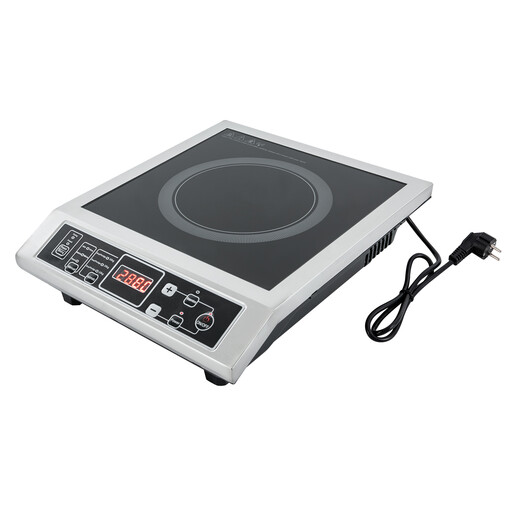
This appliance could suit a single pan of soup, provided the pan base is suitable for induction.
The product title lists a glass surface and 2100 W; the description lists nine heat settings, a timer and compatible magnetic cookware measuring 12–26 cm in diameter. Check that your pan’s base falls within the stated size range.
 No image available
This single induction hob could be a good option if you have a compatible pan and want to make use of the adjustable heat settings.
The title lists 3500 W. The description states that it has eight power and temperature settings and a timer of up to three hours; cookware made from iron or stainless steel is listed as suitable.
 No image available
A heated single hob could be an option if you don’t want induction and your pan is suitable for the stated type of heating.
The description lists a 185 mm-diameter cooking plate and an adjustable temperature control, including for simmering. It notes that the appliance may give off an odour and a little smoke the first time it is used, and recommends running it for 3–5 minutes in a well-ventilated area.
 No image available
The description lists a soup programme and a dial for adjusting the heat setting.
Don’t move the appliance while it’s in use, and keep the air vents clear. The surface may get hot during use.
Check that the pan base is suitable for induction, then compare its size with the cooking zone on the specific appliance. For the CT 2010/IN, Rommelsbacher specifies a ferromagnetic base and a cooking zone measuring 120–230 mm. The Federal Office for Radiation Protection recommends using suitable cookware of the right size and positioning it correctly.
Follow the instructions for the specific model and place the appliance on a suitable, stable surface. For the DK 1031, Severin advises against using another electrical appliance on the same circuit at the same time to avoid overloading the mains supply. Before cleaning this model, unplug it and allow it to cool down; don’t assume these model-specific instructions apply to other hobs.
No. Your statutory rights are set out in law and apply to the seller if a product is faulty; a manufacturer’s guarantee is an additional voluntary offer. Verbraucherzentrale lists transport, labour and material costs as costs to be covered by the seller when a remedy is provided under statutory rights. Also check the guarantee terms for the specific offer.
Check the markings, manufacturer information and safety instructions relevant to the specific product. The Federal Network Agency lists correct CE marking and the required warnings in the operating instructions among the aspects it monitors. CE marking is not an independent quality assessment or test result.
It isn’t possible to give a blanket assurance that it is suitable. The Federal Office for Radiation Protection notes that the susceptibility of electronic implants to interference depends on the device and its settings, and that your treating doctor must assess the risk in your individual case. Verbraucherzentrale gives a stricter warning for people with pacemakers. Until you’ve had advice specific to you, a non-induction hob is the more cautious choice.