What to look for when buying
Portable single induction hob
A good fit if: Your pan has an induction-compatible base and its diameter falls within the range specified for the model you choose.
Things to consider: You’ll need compatible cookware, and the number of power settings doesn’t prove that the hob will maintain a steady simmer.
Conventional single electric hob
A good fit if: You want to keep using a pan that isn’t induction-compatible and only need one cooking zone.
Things to consider: The surface of the Severin KP 1091 cast-iron hob gets hot; make sure the pan and hob are a suitable size for each other.
Portable double hob
A good fit if: You regularly want to use a second pan on your portable hob at the same time.
Things to consider: A second cooking zone takes up extra space. For double induction hobs, check the total power output and whether both zones can be used at the same time.
For a single portion, it’s worth checking your pan and available space first, then choosing a hob with controls that suit simmering.
The figures below relate to consumers choosing a portable hob to make one portion of vegetable stock. Each person is represented by their main buying priority.
| Buying priority |
What to check |
Who it matters most to |
| Pan compatibility |
Compare the base material and diameter with the range specified for the particular induction model. |
If I want to keep using my small pan, its base needs to be compatible with the hob. Around 31% of consumers put pan compatibility first. |
| Simmer control |
Check the lower power settings, controls and, where applicable, the model’s timer. |
If I want to simmer the stock after bringing it to the boil, I need controls I can use with ease. Around 25% of consumers prioritise simmer control. |
| Space and storage |
Check the appliance’s width and depth against the space available and the setup instructions. |
If I have limited worktop space, I need room for the hob and pan, and a place to put them away afterwards. Around 25% of consumers look at available space first. |
| Energy for one portion |
Match the pan size to the cooking zone and heat only the amount of water you need. |
If I’m making only a small amount of stock, I want to avoid heating more than necessary. Around 19% of consumers prioritise energy use per portion. |
The German Environment Agency describes induction’s efficiency advantage as being most noticeable when heating up; the difference becomes smaller when food is kept warm for longer. So you can’t work out a fixed electricity consumption per portion from the rated power alone. The Verbraucherzentrale also recommends cooking with a lid on and adding only as much water to the pan as you need.
Joybuy product options
The following Joybuy options include portable single hobs, with induction models and one hob with an 18 cm heating ring. Before choosing, check that the pan and available space are suitable for the model.
 No image available
Severin KP 1092 hob, 1.500 W
A single hob with stepless temperature control and an 18 cm heating ring.
The product description gives dimensions of 25 × 28,5 × 8 cm and states that a flat, stable pan base is required. The heating surface gets very hot during use.
Joybuy
 No image available
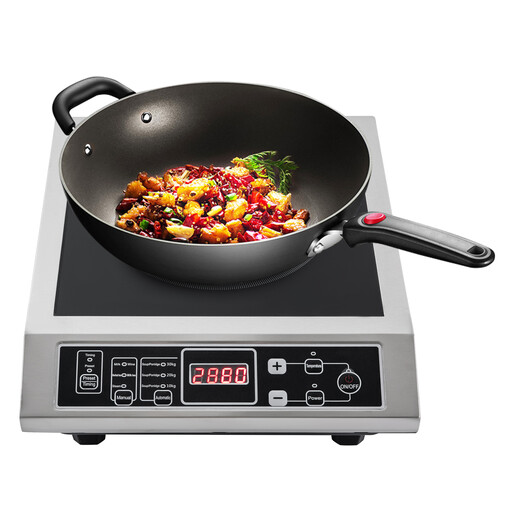
Induction hob with IGBT technology, 3.500 W
For a single cooking zone, provided your cookware is compatible with the specified induction model.
The product description lists eight power settings, eight temperature settings, a 30 cm glass surface and a timer of up to three hours. It states that the appliance is suitable only for iron or stainless-steel cookware.
Joybuy
 No image available
IsEasy portable induction hob, 2.100 W
A portable single induction hob if your pan has a magnetic base within the specified diameter range.
The product description lists cookware with a diameter of 12–26 cm, nine heat settings and a timer of up to eight hours. Dimensions: 35 × 28 × 4,4 cm; weight: 1,9 kg.
Joybuy
 No image available
Portable induction hob, 1.000 W
A compact single cooking zone with adjustable settings, if your cookware is suitable for induction.
The product description lists five heat settings, a rotary dial and dimensions of 21,5 × 21,5 × 4,7 cm. It advises against leaving the appliance unattended while in use.
Joybuy
 No image available
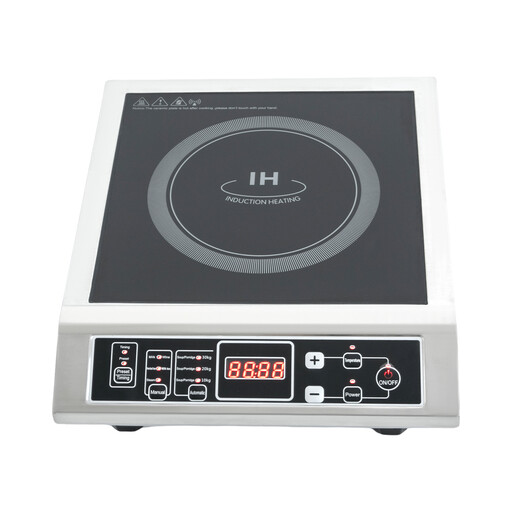
Portable induction hob with IGBT heating, 3.500 W
For a single cooking zone if you’re looking for an induction hob with timer and preset functions.
The product description lists ten temperature and power settings, as well as timer and preset functions. It states that the hob is suitable only for iron or stainless-steel cookware.
Joybuy
Frequently asked questions
Will my small pan work on a portable induction hob?
It depends on the pan base and the diameter range specified for the particular hob. A magnet that sticks to the base is a useful first check. For example, CASO specifies 12–24 cm for the S-Line 2100, while ROMMELSBACHER specifies 12–20 cm for the CTA 1800/IN.
Can I leave the hob simmering unattended because it has a timer?
No. A timer doesn’t tell you the actual temperature of the stock or how much liquid is left in the pan. Set up and use your chosen model according to its instructions, and keep an eye on the contents of the pan.
Which is the better choice: induction or a conventional electric hob?
Induction is an option if your pan has a suitable base and fits the hob’s size range. If you want to keep using a pan that isn’t induction-compatible, consider a conventional hob and compare the heating surface with the pan base.
How should I store leftover vegetable stock?
The German Federal Institute for Risk Assessment recommends storing leftovers in the fridge and eating them within two to three days.
Can I work out the electricity used per portion from the wattage?
No. Rated power alone isn’t enough, as the running time and actual power consumption also matter. The German Environment Agency describes induction’s efficiency advantage as being most noticeable when heating up; the difference becomes smaller when food is kept warm for longer.


