Which hob is right for you?

Batch-cooking stew

If you’re cooking a pot of stew to see you through several weekday meals, you’ll want to be able to adjust the heat after bringing it to the boil. For dried beans, the Federal Institute for Risk Assessment recommends soaking them before cooking. It’s also worth planning how you’ll cool the portions quickly once they’re ready.

Keeping your existing saucepan

If you’d like to keep using your current stew pot, check that its base is suitable for the heating technology you’ve chosen and meets the appliance’s requirements. For example, CASO specifies a diameter range of 12–24 cm for suitable induction cookware with its ProMenu 2100.

Cooking in a large pot

If you’re making several portions for lunch at once, the cooking zone and the base of your pot need to be a good match. Also check the weight limit for the specific appliance: for example, CASO specifies a maximum load of 6 kg for the ProMenu 2100.

What should you look for when buying?

Portable induction hob

A good fit if: Your pot has an induction-compatible base that meets the appliance’s requirements.

Things to weigh up: Induction requires compatible cookware. According to the German Environment Agency, its efficiency advantage over other types of hob is greatest when heating up and becomes smaller when food is kept warm for longer.

Portable HiLight ceramic-glass hob

A good fit if: You’d like to keep using a pot that isn’t induction-compatible and prefer a smooth cooking surface.

Things to weigh up: The cooking surface itself heats up and can retain residual heat. Heating-zone sizes of 140 and 210 mm apply specifically to the ROMMELSBACHER CT 2200/E.

Portable cast-iron hotplate

A good fit if: You want to use a pot that isn’t induction-compatible and its size and weight are within the appliance’s specifications.

Things to weigh up: ROMMELSBACHER describes cast iron as slower to heat up and good at retaining heat. Its surface needs more care than a smooth glass one.

What matters What to check before buying Who is it important to?
Bringing to the boil and continuing to cook Controls and heat settings on the specific model; prepare dried beans properly and cook them thoroughly. If I want to bring the stew to the boil and then continue cooking it at the right heat, I look for clear, easy-to-use controls. Around 31% of consumers prioritise being able to adjust the heat as they move between cooking stages.
Using an existing pot Check that it’s suitable for induction and compare its base diameter with the appliance’s specifications. If I want to keep using my current pot, its heating requirements need to match the hob. Around 25% of consumers focus on compatibility with their existing pot.
Cooking several portions Compare the base diameter and, where relevant, the weight of the full pot with the model’s instructions. If I’m making several portions for lunch in one go, I want to know whether the cooking zone and weight limit are suitable for my full pot. Around 25% of consumers prioritise pot size and load capacity.
Space and power supply Check the appliance’s dimensions, the space it needs and the load on the power supply; follow the instructions. If my worktop space is limited, I need room for the hob, pot and controls, as well as a suitable power connection. Around 19% of consumers place the most importance on worktop space and the power supply.

Common selection mistakes

  • Choosing an induction hob without checking your pot

    Induction requires suitable cookware, and the specific model may also have requirements for the diameter of the pot’s base.

    Before buying, check that your pot is induction-compatible and that its base diameter meets the appliance’s specifications. If it doesn’t, compare HiLight ceramic-glass and cast-iron options too.

  • Choosing a pot based on wattage alone

    The cooking zone and maximum load are separate specifications for each appliance. A high rated power doesn’t confirm that you can use a heavy, full pot on it.

    Check the base diameter and weight of your full pot against the instructions for the specific model.

  • Assuming induction, HiLight and cast iron work the same way

    These heating technologies differ in their cookware requirements, heat-up time, residual heat and cleaning. According to the German Environment Agency, the efficiency difference becomes smaller when food is kept warm for longer.

    Compare how well each option suits your pot and your cooking routine, from bringing the stew to the boil to continuing to cook it, rather than comparing rated power alone.

  • Leaving cooked portions unrefrigerated for too long

    The hob won’t cool your finished stew for you.

    The Federal Institute for Risk Assessment recommends cooling hot food quickly to below 7 °C for longer storage, and keeping perishable food chilled when you’re out and about.

Relevant brands at a glance

CASO Design

The ProMenu 2100 is a specific model to consider when comparing portable induction hobs, with details on cookware compatibility and load capacity.

  • CASO specifies 12 power levels, compatibility with induction cookware measuring 12–24 cm in diameter, and a maximum load of 6 kg. These specifications apply to the ProMenu 2100.
  • This model requires induction-compatible cookware. Check that your pot meets the appliance’s requirements.

ROMMELSBACHER

The CT 2200/E and THS 2022/E provide specific points of comparison for HiLight ceramic-glass and cast-iron hobs.

  • For the CT 2200/E, ROMMELSBACHER specifies a switchable heating zone with a diameter of 140 or 210 mm. For the THS 2022/E, it specifies a cast-iron zone measuring 220 mm in diameter.
  • The manufacturer describes cast iron as slower to heat up and good at retaining heat. Details of the heating zone apply only to the model named.

SEVERIN

The KP 1071 and KP 1091 offer examples of different heating technologies in single hobs.

  • SEVERIN lists the KP 1071 as a 2,000 W induction hob with a timer, and the KP 1091 as a 1,500 W cast-iron hob.
  • The induction hob requires suitable cookware. Check that your pot is compatible before choosing it.

Clatronic

The EKP 3582 is a specific example to consider when comparing traditional electric single hobs.

  • Clatronic specifies a heating plate of approximately 180 mm, 1,500 W and a continuously adjustable thermostat for the EKP 3582.
  • These specifications don’t confirm a particular cooking performance for bean stew or that the hob is suitable for pots of every weight.

Joybuy products

Joybuy product options for bringing food to the boil and adjusting the heat as you continue cooking; several models are induction hobs.

SEVERIN KP 1092 single hob, 1,500 W

SEVERIN KP 1092 single hob, 1,500 W

A single hob with continuously adjustable temperature control could be a good fit if you want to adjust the heat between bringing your stew to the boil and continuing to cook it.

Heating ring: 18 cm diameter. Power: 1,500 W.

View at Joybuy
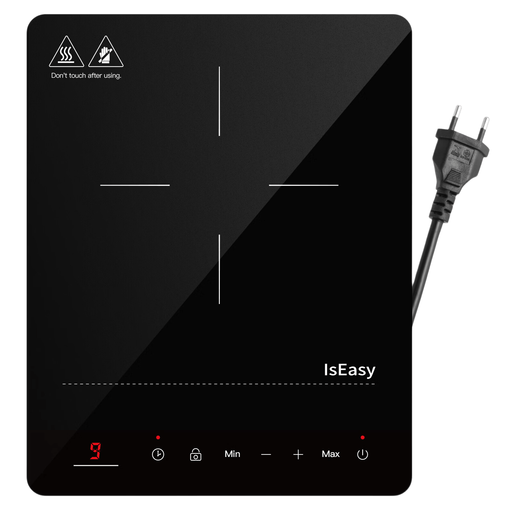
IsEasy single induction hob, 2,100 W

IsEasy single induction hob, 2,100 W

A portable induction hob is worth considering if your pot is induction-compatible and you’d like to choose from several heat settings.

28 cm cooking surface, 9 heat settings and an 8-hour timer. The product details also list a Max/Min function and a child lock.

View at Joybuy
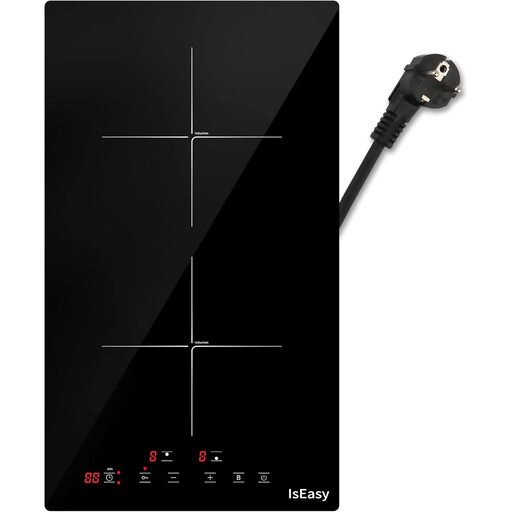
IsEasy Domino two-zone induction hob, 3,400 W

IsEasy Domino two-zone induction hob, 3,400 W

The two zones could come in handy if you’d like to cook something else alongside your stew.

Total power: 3,400 W; 9 heat settings, booster function, timer and child lock. Described as suitable for both built-in and freestanding use; the product details specify 220–240 V.

View at Joybuy

IsEasy portable induction hob, 2,100 W

IsEasy portable induction hob, 2,100 W

This portable induction hob could be right for you if your existing pot is magnetic and suitable for the specified diameter range.

28 cm cooking surface, 9 heat settings and an 8-hour timer. According to the product details, it’s suitable for magnetic cookware measuring 12–26 cm in diameter.

View at Joybuy

Portable induction hob with five power settings, 1,000 W

Portable induction hob with five power settings, 1,000 W

A portable single hob could be a good fit if five power settings suit the way you cook, from bringing your stew to the boil to continuing to cook it.

Power: 1,000 W; five power settings. The product name describes it as suitable for home use, camping and motorhomes. Induction-compatible cookware is required.

View at Joybuy

Frequently asked questions

Can I cook dried white beans gently from the start?

No. The Federal Institute for Risk Assessment recommends soaking dried pulses for at least five hours, pouring away the soaking water and then cooking the beans in fresh water. Gentle cooking methods aren’t suitable for most pulses. Choosing a particular hob doesn’t replace these preparation steps.

How should I store pre-cooked portions for lunch?

The Federal Institute for Risk Assessment recommends cooling hot food quickly to below 7 °C for longer storage, and keeping perishable food chilled when you’re out and about. Plan how you’ll keep the food cool separately from your choice of hob.

Can I plug the hob into an extension lead with other appliances?

Only if you don’t exceed the maximum load for the power connection. The Institute for Loss Prevention and Loss Research documented a fire caused by an overloaded extension lead with several kitchen appliances plugged in. Check the specifications for the hob, power connection and appliances used at the same time, as well as the model’s instructions.

What should I check when buying a new 230-V hob for the German market?

The 1. ProdSV applies to new electrical equipment in this voltage range. After a successful conformity assessment, the manufacturer must issue an EU Declaration of Conformity and affix the CE marking. Check the documentation for the specific appliance; a general product description doesn’t confirm that an individual listing is compliant.

Who is responsible if the appliance develops a fault: the seller or the manufacturer?

Your statutory consumer rights generally apply against the seller; a guarantee is a separate, voluntary offer. The consumer advice centre recommends keeping the two separate and checking any additional repair offers for the specific model.