Chutney makers with limited kitchen space
If you want to make a pan of chutney alongside your usual hob or cooking area, check the space available, the level of control and whether your pan is compatible before you buy.


If you have an induction-compatible pan, an adjustable portable induction hob is a suitable single cooking zone. The German Environment Agency describes induction as the most energy-efficient of the electric cooking technologies it compared, but it does require suitable cookware. If your current pan is not compatible, consider a radiant or cast-iron hotplate. Two induction zones are useful if you regularly prepare a second dish at the same time. A hob setting does not tell you the temperature of the chutney or how long it will keep: the German Federal Institute for Risk Assessment (BfR) recommends keeping food at a minimum of 60 °C throughout when serving hot, and cooling it quickly to below 7 °C for longer storage.
If you want to make a pan of chutney alongside your usual hob or cooking area, check the space available, the level of control and whether your pan is compatible before you buy.
If everyone does not eat at the same time, you will need to plan how to keep the food hot or cool it for later. A hotplate does not replace checking the temperature of the food itself.
If you want to prepare another dish while the chutney cooks, consider a double hotplate and check that you have enough space and that the power supply meets the requirements.
| What you need | What to check when buying | Who is this important to? |
|---|---|---|
| Controlled simmering | Compare the power settings, pan size and controls on the specific model. | If I want to simmer chutney after bringing it to the boil, at a setting that suits my pan and the amount I am making, clear power controls and compatible pan dimensions are important. Around 29% of consumers prioritise controlled simmering. |
| Serving at different times | Plan keeping food hot and storing it for longer separately; a hob setting does not measure the temperature of the food. The BfR recommends a minimum of 60 °C throughout when keeping food hot, and cooling it quickly to below 7 °C for longer storage. | If people are eating at different times, I need a safe plan for keeping food until it is served or chilling it for later. Around 23% of consumers prioritise serving meals at different times. |
| Using your existing pan | For induction, check that the base of the pan is magnetic and that its diameter matches the appliance specifications; otherwise, consider a radiant or cast-iron hotplate. | If you want to keep using your existing chutney pan, first check that it is suitable for the heating technology you choose. Around 18% of consumers say pan compatibility is their main concern. |
| Cooking more than one dish at a time | Check the number of cooking zones, appliance dimensions and power specifications; follow the instructions for positioning and connecting it. | If I want to cook a second dish alongside the chutney, I need two suitable cooking zones and enough space. Around 18% of consumers put cooking multiple dishes at once first. |
| Choosing a straightforward appliance | Consider the cookware you already have and the features you actually need; check the service information for the specific model if necessary. | If you want to avoid buying extra accessories or features where possible, check your current pan and how you plan to use the appliance before you buy. Around 12% of consumers prioritise keeping extra equipment to a minimum. |
The hotplate setting or display does not tell you the temperature of the chutney throughout the pan. When keeping food hot, the temperature needs to be right throughout.
Plan keeping food hot and storing it later as two separate processes. When keeping it hot, go by the actual temperature of the food, not just the hotplate setting.
An induction hob needs compatible cookware, and the stated pan diameter must also suit the specific model.
Check the pan base and diameter against the appliance specifications. If your pan is not compatible, compare radiant and cast-iron hotplates.
A double hotplate takes up more space. It is only useful if you regularly need to use two pans at the same time.
Decide which cooking steps you want to do simultaneously, then check the model’s dimensions, power specifications and positioning instructions.
The ProMenu 2100 portable single induction hob is an option if your current pan is suitable for induction.
The CT 2010/IN and CT 1800/E differ in their heating technology and controls, so either could be worth considering depending on your pan.
The appliances listed include a single cast-iron hotplate, a single induction hob and a double induction hob.
The slim IK 65 SLIM single induction hob may be a good option if clearance at the installation site is a consideration.
The appliances below include portable single-zone induction and infrared hobs, as well as a double induction hob for cooking two dishes at once.
 No image available
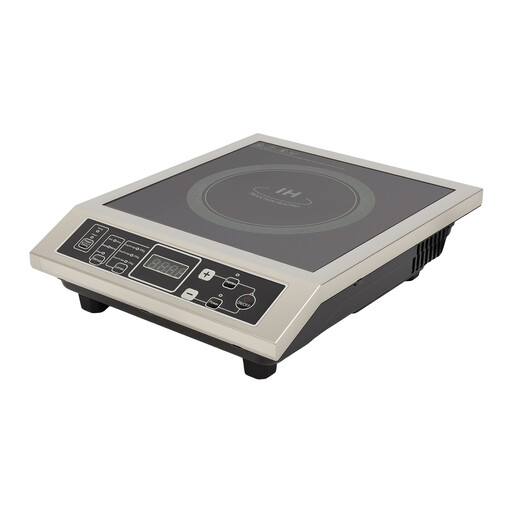
For cooking with one pan on a portable single-zone induction hob; the pan must have a magnetic base and be induction-compatible.
Nine heat settings and an 8-hour timer. The product description lists cookware measuring 12–26 cm in diameter.
 No image available
For households that want to make chutney and another dish at the same time; both pans must be induction-compatible.
Two independently controlled cooking zones and five temperature settings. Stated appliance dimensions: 48 × 23.5 × 7.5 cm.
 No image available
A portable single cooking zone for one pan; check that your cookware is induction-compatible before buying.
One cooking zone with five power levels and a rotary control. Stated appliance dimensions: 21.5 × 21.5 × 4.7 cm.
 No image available
For one pan on a portable induction hob; use suitable cookware and follow the positioning instructions.
The product description lists ten power levels and a timer; the product name specifies an EU plug.
 No image available
An alternative if you want to use heat-resistant cookware made from different materials; check the requirements for the pan you plan to use.
Manual power control and a timer; the product description lists both touch and rotary controls.
No, that alone does not tell you the temperature of the chutney. The BfR recommends keeping food at a minimum of 60 °C throughout when serving it hot; for longer storage, it recommends cooling it quickly to below 7 °C.
No, using a hotplate alone does not prove that a suitable preserving method has been used or that the contents will keep in a sealed jar. The BfR notes that Clostridium botulinum spores are heat-resistant; recipes and methods need to be assessed separately if you plan to store preserves.
Follow the instructions for your specific model regarding where to place it and how to clean it. CASO refers to surface temperatures and the instruction manual for the ProMenu 2100; the Rommelsbacher CT 1800/E is listed as having a residual heat indicator.
Germany’s Federal Network Agency lists CE marking and identifiable manufacturer details among the points checked as part of market surveillance. The Verbraucherzentrale distinguishes between statutory consumer rights and a voluntary guarantee. For online purchases, consumers generally have a 14-day right to cancel, subject to the relevant conditions and exceptions.