Simmer gently
When reducing gravy, the key is to turn down the heat once it has come to the boil, and stir as needed.


If your existing gravy pan is induction-compatible and its base fits the cooking zone, a portable single induction hob with suitable settings is an obvious choice. If your pan isn’t suitable for induction, consider a conventional electric hotplate instead. Either way, once the gravy has come to the boil, you’ll want to keep the heat under control as it simmers. Also measure the space available, allowing for the clearances specified in the appliance instructions.
When reducing gravy, the key is to turn down the heat once it has come to the boil, and stir as needed.
You need a single cooking zone that will fit on your available worktop, with the required clearances and enough space for ventilation.
If you’d like to keep your gravy pan, check that its base and diameter are compatible with the hotplate before choosing a heating technology.
Start by checking your pan to decide between induction and a conventional electric hotplate. For gravy, you’ll then want to consider how easily you can adjust the heat while it simmers; for your available space, check the set-up instructions for the specific model.
A good fit if: Your pan is induction-compatible and its base fits the cooking zone.
Bear in mind: The cookware, appliance and ventilation clearances all need to suit the pan and the space available.
A good fit if: You want to keep using a pan that doesn’t have an induction-compatible base.
Bear in mind: The hotplate itself gets hot, so make sure you have a suitable surface and allow time for it to cool down.
| What matters | What to check before buying | Who is this important to? |
|---|---|---|
| Controlled simmering | Compare how the specific model operates at low power settings and how easily you can adjust them. | If I want to reduce gravy gently after bringing it to the boil, adjusting the heat matters more to me than maximum power; around 40% of consumers put controlled simmering first. |
| Space and clearance | Compare the appliance dimensions with the usable space, and allow for the ventilation and wall clearances specified in the instructions. | If I have very little worktop space, the hotplate needs to fit safely with the required clearances; around 30% of consumers prioritise having enough space for it. |
| Using an existing pan | For induction, check the material and diameter of the pan base against the cooking zone specifications. | If I want to keep my gravy pan, I’ll first check whether it’s suitable for the heating technology I choose; around 20% of consumers prioritise pan compatibility. |
| Operation and service | Read the instructions on ventilation and set-up; if you have questions about servicing, check the terms of the specific offer. | If clear, safe operation or accessible customer service matters most to me, I’ll check the instructions and service terms first; around 10% of consumers put this first. |
Maximum power doesn’t tell you how easily you can control the heat for a small amount of gravy once it has come to the boil.
Compare how the appliance handles low settings, and keep an eye on the gravy as it reduces.
Ventilation and required clearances can reduce the space available for setting it up.
Measure the free space and check the set-up instructions for the exact model you’re considering.
An induction hob needs compatible cookware, and the diameter of the pan base must also suit the cooking zone.
Check your pan first. If it isn’t suitable for induction and you want to keep using it, compare conventional single electric hotplates.
The SIKP 2200 B1 is a portable single induction hob.
The CT 2010/IN is a single induction hob; the CTA 1800/IN is another option, with a power limit function.
The S-Line 2100 is a portable single induction hob for compatible pans.
The KP 1071 is a portable induction hob with a single cooking zone.
The brand offers the EKI 3569 induction hob and the EKP 3788 E conventional single electric hotplate.
This selection includes portable induction hobs and a conventional single electric hotplate, so you can choose based on your existing gravy pan, how easily you can adjust the heat and the space available.
 No image available
This conventional hotplate is worth considering if you want to keep using a pan without an induction-compatible base. You can adjust the temperature continuously as the gravy simmers.
1.500 W; 18 cm hotplate. The hotplate gets very hot during use, so place it on a stable, heat-resistant surface.
 No image available
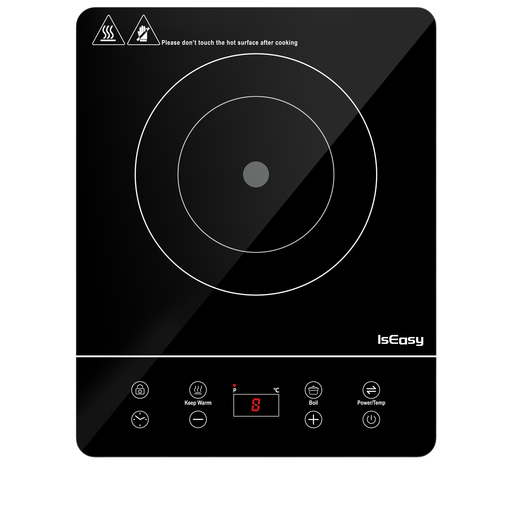
A portable induction hob with several settings could be a good choice if your pan is induction-compatible and you want to adjust the heat once the gravy has come to the boil.
One cooking zone; 2.100 W; nine power levels and nine temperature settings. Suitable cookware is required for induction.
 No image available
This single induction cooking zone is an option if you’re looking for a portable hob with adjustable power levels and have a compatible pan.
1.000 W; five power levels. Suitable cookware is required for induction.
 No image available
This portable induction hob is only an option if your cookware is induction-compatible and you’ve checked how much space it will need in its intended location.
3.500 W and ten temperature settings, according to the product name. Suitable cookware is required for induction.
 No image available
A portable induction hob is worth considering if your gravy pan is compatible and the listed settings suit the way you like to cook.
2.000 W; ten power levels, six functions and a safety lock, according to the product name. The product information advises people with a pacemaker to keep at least 30 cm away during use; this is no substitute for individual medical advice.
Bring the gravy to the boil according to your recipe, then turn down the heat and keep an eye on its consistency. A tomato gravy recipe recommends simmering uncovered and stirring occasionally; how long this takes will depend on how you make your gravy.
No. You also need to follow the set-up instructions for your chosen model and keep the ventilation clear. For example, the SEVERIN KP 1071 instructions specify around 10 cm of clearance from walls; this doesn’t automatically apply to other hotplates.
Only if the pan is induction-compatible and its base fits the cooking zone. Before buying, check the base material and diameter. If the pan isn’t compatible and you want to keep using it, you could consider a conventional single electric hotplate instead.
No. General appliance information can’t provide an individual assessment. Ask your healthcare professional and check the guidance for your implant. If induction isn’t an option for you, you could consider a conventional single electric hotplate instead.
Unplug the appliance before cleaning and let it cool down. The SEVERIN KP 1071 instructions recommend using a damp cloth and warn against immersing the appliance in liquid; always follow the instructions for your specific model.