
Lieferung heute & morgen

Qualitätsgarantie

Willkommens-Angebote freischalten: KOSTENLOSE Lieferung | Bis zu 80 % RABATT | Kostenlose 30-Tage-JoyPlus-Testphase
App herunterladen
A portable ice maker can make drinks, cocktails and parties more flexible than ice cubes from the freezer. Instead of waiting several hours for ice trays to freeze, many compact appliances produce their first batch within just a few minutes. However, ice makers vary considerably when it comes to water tanks, noise levels, ice shape, storage baskets and cleaning.
Anyone who focuses only on claims such as “fast” or “high daily output” may overlook important details. Three common buying misconceptions particularly often result in choosing an appliance that is not well suited to everyday use.
A figure such as 12 or 15 kg of ice in 24 hours describes a theoretical production quantity under specific conditions. It does not mean that this amount will be available all at once. The amount of ice produced per cycle, cycle duration and the size of the collection basket are also important.
For a private household, a compact ice maker that produces its first batch after around 6 to 10 minutes is usually sufficient. For larger gatherings, however, a bigger water tank and ice basket are more practical, as they mean you will not need to keep refilling or transferring ice.
A countertop ice maker uses a compressor and therefore produces operating noise. A specific figure in dB is more informative than vague advertising claims. Levels of around 40 to 50 dB may be more suitable for kitchens, offices or motorhomes than an appliance with no verifiable noise rating.
The perceived noise level also depends on factors such as the surface, distance and room. The appliance should be placed on a stable, level surface, and the ventilation openings must remain unobstructed.
An ice maker with a self-cleaning function makes maintenance easier, but it does not automatically remove every residue. Once the cleaning programme has finished, the water tank and ice basket should be wiped out and dried completely in accordance with the manufacturer’s instructions.
Use clean drinking water only. Drinks, flavoured water and liquids containing sugar must not be poured into the water tank. Unplug the appliance before carrying out any maintenance. The housing, cable and plug must not be immersed in water.
The tank capacity determines how long the mini ice maker can operate without being refilled. Models with capacities of around 0.9 to 1.5 litres are suitable for occasional use and smaller households. Larger tanks can be useful for families, offices and parties, but they also require more space.
The ice basket is equally important. In many appliances, the ice produced does not remain frozen indefinitely. Thanks to the insulation, the ice gradually melts and, depending on the design, the water flows back into the tank. A freezer is required for longer-term storage.
Many appliances produce bullet ice cubes, which are hollow, rounded pieces of ice. This shape is easy to remove from the basket and is suitable for soft drinks, coffee and mixed drinks. Two selectable sizes allow you to adapt the ice to the glass, drink and desired cooling speed.
Check whether the machine actually offers two ice sizes or merely changes the production time. Some models have three size settings. The size of the finished ice cube can also be affected by the room temperature and water temperature.
An ice maker for the kitchen needs space around it so that heat can escape. Before buying, compare its width, depth and height with the available space. For camping, motorhomes and outdoor activities, the weight, carrying handle and a suitable power supply are also important.
A portable appliance is not automatically suitable for outdoor use in damp conditions. Keep it in a dry, level environment and follow the safety instructions provided by the relevant manufacturer.

Why this product suits this profile: This compact appliance is ideal for households that want to make ice for drinks quickly, without needing extensive equipment.
The specifications provide precise dimensions, a noise level below 50 dB and a 1.5-litre water tank, rather than making only vague promises about convenience.
Two ice cube sizes, 9 bullet ice cubes per cycle and a 30-minute self-cleaning programme.
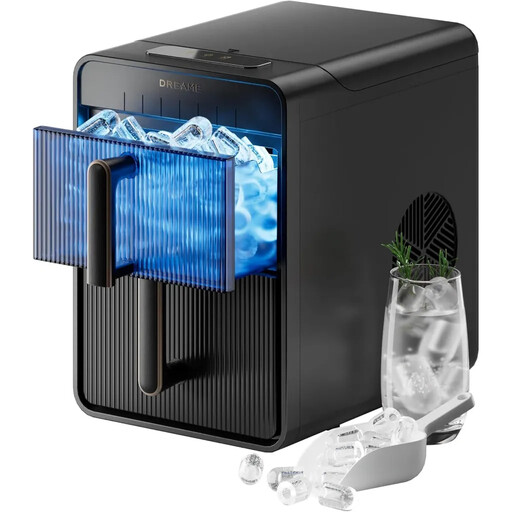
Why this product suits this profile: Touch controls, an LED display and a larger water tank appeal to users who prioritise convenience and clear status information.
The product data distinguishes between the first batch, cycle duration, tank capacity and daily output. This makes it easier to assess your requirements realistically.
2.0-litre water tank, 1 kg ice basket capacity and two bullet ice sizes.
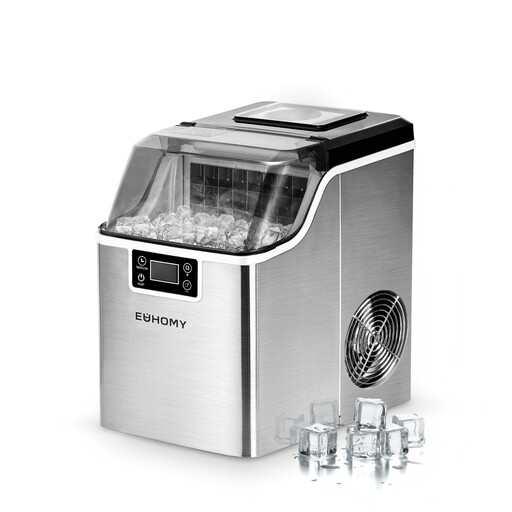
Why this product suits this profile: Families, offices, bars, motorhomes and frequent hosts may appreciate a larger tank with manual filling or optional bottle filling.
The description points to a variable production time of around 13 to 25 minutes and connected ice cubes. This avoids creating false expectations about shape and speed.
3.2-litre water tank, up to 24 ice cubes per cycle and a timer function with a delay of up to 8 hours.
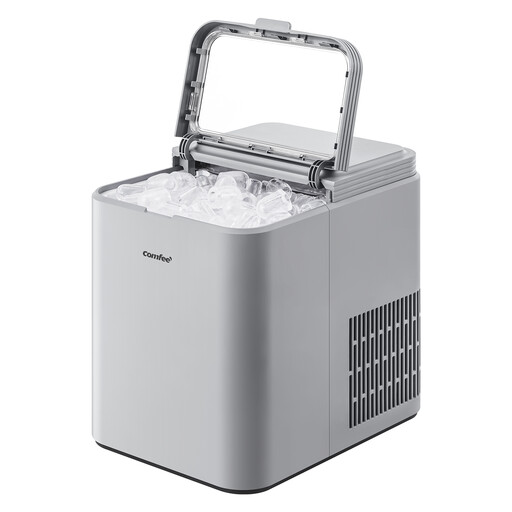
Why this product suits this profile: Its compact dimensions make it suitable for smaller worktops, while two ice cube sizes cover different drink applications.
The product data specifies a 1.3-litre tank, a removable 0.4 kg ice basket and a self-cleaning function.
The first ice cubes are produced after around 6 minutes according to the product information, with a daily output of up to 12 kg and an ice scoop included.
We have put together a complete, regularly updated list of products that fully meet these strict selection criteria and the safety regulations applicable in the EU.
The running costs of a portable ice maker depend mainly on electricity consumption, operating time, room temperature and the price of water. A higher daily output does not automatically mean greater efficiency. If you only need ice occasionally, a small tank with short production cycles may be better suited to your usage habits.
For a longer service life, the following routine is recommended:
Electrical appliances containing refrigerant must not be disposed of with household waste at the end of their service life. Follow your local collection and recycling options for waste electrical and electronic equipment.
Many compact appliances produce their first batch after around 6 to 10 minutes. The actual time can be affected by the room temperature, water temperature, selected ice cube size and condition of the appliance. Daily output should therefore be considered separately from the time required to produce the first batch.
It is not possible to give a reliable general lifespan. This depends on frequency of use, cleaning, ventilation and compliance with the operating instructions. Regularly emptying, drying and descaling the appliance as recommended by the manufacturer can help prevent deposits and operating problems.
For households that regularly need chilled drinks, cocktails or ice for guests, an ice maker for home use can be more practical than ice cube trays. Before buying, however, check whether the footprint, noise level, tank capacity and storage capacity suit your everyday needs. A smaller model may be sufficient for occasional use, while portability and daily output are more important for camping and parties.