
Lieferung heute & morgen

Qualitätsgarantie

Willkommens-Angebote freischalten: KOSTENLOSE Lieferung | Bis zu 80 % RABATT | Kostenlose 30-Tage-JoyPlus-Testphase
App herunterladen
A portable ice maker can chill drinks in just a few minutes, making it a practical addition to the kitchen, office, motorhome or campsite. Unlike a freezer compartment, an electric ice maker continuously produces fresh ice cubes. However, advertised specifications are not always directly comparable. If you only look at “ice in six minutes” or “12 kg per day”, you may overlook important details.
The specification “12 kg per 24 hours” describes a theoretical daily output under certain conditions. It does not mean that the machine can store 12 kg at once. Many compact appliances have an ice basket that holds only around 0.4 to 1 kg. For a party, the ice cubes therefore need to be removed regularly and stored elsewhere if necessary.
A machine may produce its first bullet ice cubes after six to eight minutes. The actual time depends on factors including water temperature, room temperature, ice cube size and ventilation. Larger ice cubes usually take longer to make than smaller ones. The specifications “9 cubes in 6 minutes” and “12 kg per day” should therefore be viewed as different performance figures.
An ice maker with a self-cleaning function can run an automatic cleaning cycle. This makes maintenance easier, but it does not replace emptying and wiping the water tank, ice basket and accessible internal surfaces. Use only clean drinking water and follow the manufacturer’s instructions. Cleaning products or other liquids must not be put into the water tank unless this is expressly permitted.
For occasional needs, a first batch after around six to nine minutes is often sufficient. Families, hosts and offices should also pay attention to the stated daily output. An ice maker with an output of 12 kg per day is generally suitable for preparing drinks regularly, although actual performance depends on operating conditions.
Also check:
A bullet ice maker generally produces hollow, rounded pieces of ice. This shape is typical of compact countertop appliances. Small ice cubes can be suitable for soft drinks or smaller glasses, while larger versions take up more space in the drink.
An ice maker with two ice cube sizes offers more choice than a model with just one setting. Some models also provide three sizes. Check whether the selection can actually be made via the control panel and whether the production time for each size is specified.
A compact ice maker requires a stable, level surface and sufficient clearance from walls. Ventilation openings on the side or rear must not be covered. For small kitchens, dimensions of around 25 to 36 cm in width and approximately 30 to 35 cm in depth are often relevant.
A larger water tank reduces the need for refilling, but it often increases the appliance’s weight. A carry handle is particularly practical for camping or use in a motorhome. When considering the noise level, treat the manufacturer’s decibel rating as a guide; product descriptions for several compact models quote figures below 45 to 50 dB, although these may vary depending on the operating phase.
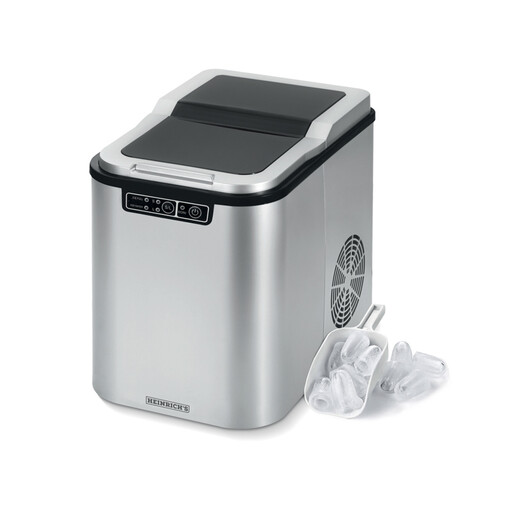
Why this product suits this profile: This compact model is suitable for users looking for a straightforward home ice maker with two ice cube sizes and simple controls.
The description specifies automatic shut-off when the ice basket is full or the water tank is empty, as well as a self-cleaning function. This means you do not need to check the water level and ice supply manually all the time.
Two sizes, LED display, ice portions in approximately ten minutes and a stated daily output of around 10 to 15 kg.
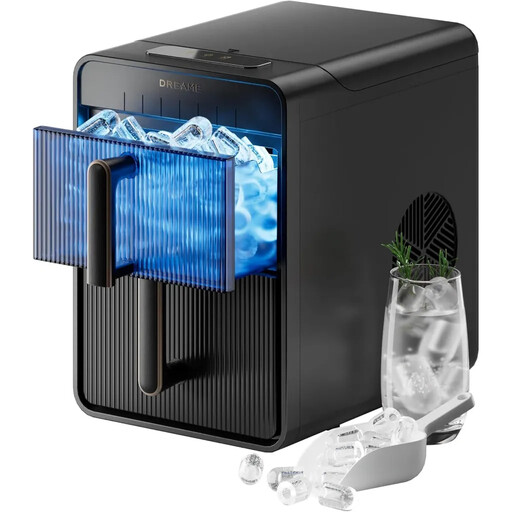
Why this product suits this profile: Suitable for households and hosts who value touch controls, sensors and a comparatively large water tank.
The specifications distinguish between ice production, tank capacity and ice basket capacity. In addition, the ice-full and water-refill sensors stop operation automatically.
2.0-litre water tank according to the specification, two bullet ice sizes, touch display and a 30-minute self-cleaning programme.
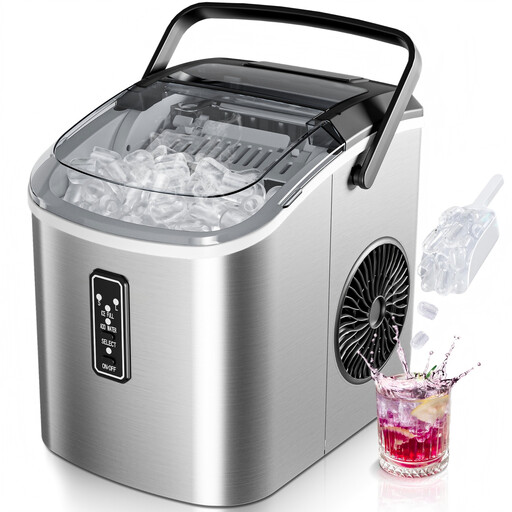
Why this product suits this profile: The carry handle and 6.3 kg weight make this appliance appealing for camping, motorhomes, parties and changing locations.
The product specifications mention unobstructed ventilation openings, drinking water as a requirement and an automatic cleaning mode. This helps to avoid common operating and maintenance mistakes.
Two bullet ice sizes, up to around 12 kg daily output, self-cleaning and a stated noise level below 45 dB.
Before first use, the portable ice maker should be placed on a level, stable surface. After transport, allow the appliance to stand for a while before plugging it in if necessary, and use a properly earthed socket. For camping and motorhome use, check that the available power supply is suitable for the appliance’s power consumption.
Also bear in mind:
An ice maker for parties is particularly useful if several drinks need to be chilled regularly. For occasional use, however, a conventional ice cube tray in the freezer may be sufficient. Running costs depend primarily on electricity consumption, water, length of use and the cooling capacity required. It is not possible to give a general cost estimate without specific consumption data for the model in question.
We have put together a complete, regularly updated list of products that fully meet these strict selection criteria and the safety regulations applicable in the EU.
The service life depends on build quality, frequency of use, water quality, ventilation and maintenance. Emptying, drying and cleaning the appliance regularly can reduce the build-up of deposits. Without information from the manufacturer and details of how the appliance is used, it is not possible to give a reliable estimate of its exact service life.
First, start the designated self-cleaning programme. Then wipe the water tank, ice basket and accessible surfaces with a soft cloth. Drain any remaining water through the designated drain opening and dry the appliance. The operating instructions take precedence, particularly when choosing approved cleaning products.
That depends on your needs. For households, offices, cocktail and coffee enthusiasts, or regular hosts, rapid ice production can be more convenient than storing ice in the freezer. If you only need a few ice cubes occasionally, compare the purchase price, electricity consumption, space required and cleaning effort with those of a simple ice cube tray.