Cooks with limited worktop space
If you need an additional cooking zone, check that the appliance will fit on your worktop and can be put away after use. Compare the appliance dimensions and follow the set-up instructions in the relevant manual.


An additional portable single hob makes sense if you genuinely need another cooking zone, and the appliance, the space where you plan to use it and your induction-compatible pan are all suitable. When toasting breadcrumbs, easy-to-adjust heat settings and regular stirring matter more than high maximum power. If you have an existing cooking zone free, you can toast the breadcrumbs in a pan there and avoid buying another appliance.
If you need an additional cooking zone, check that the appliance will fit on your worktop and can be put away after use. Compare the appliance dimensions and follow the set-up instructions in the relevant manual.
For small quantities in a pan, choosing a suitable pan, having easy-to-adjust heat settings and stirring regularly are key. First, consider whether an existing cooking zone will be enough for occasional use.
If you want to cook alongside your existing hob, check whether one cooking zone will be enough or whether you really need two. Remember to factor in the space available for the appliance.
A good fit if: You already have a suitable cooking zone and pan, and only toast breadcrumbs occasionally.
The trade-off: You won’t need another appliance on your worktop, but the cooking zone will need to be free from other cooking.
A good fit if: You need an additional cooking zone and the appliance, set-up location and pan are all suitable.
The trade-off: A single hob takes up less space than a double hob, but you’ll still need room for the pan and to operate the appliance.
A good fit if: You regularly want to use two pans or pots at once and have enough worktop space.
The trade-off: According to the manufacturer, the SEVERIN DK 1031 has a footprint of 59 × 35,5 cm, so it takes up a fair amount of space.
When space is limited, the key things to consider are the appliance’s size, how easily you can adjust the heat while toasting, whether your pan is compatible and whether you really need an additional cooking zone.
| What matters | What to look for | Who should consider this? |
|---|---|---|
| Space required | Compare the appliance’s width and depth with the space available, and check the set-up instructions in the manual. SEVERIN lists the KP 1071 as measuring 28,1 × 35 cm, while CASO Design lists the Touch 2000 as 29 × 36 cm. | If I want to fit an additional cooking zone on a crowded worktop and put it away afterwards, every centimetre counts. Around 36% of consumers say space is their main concern. |
| Heat control | Check whether it’s easy to select a lower power setting and adjust it while stirring. Keep an eye on the breadcrumbs as they toast; a timer is no substitute. | When toasting small quantities, I want to control the heat and keep an eye on the breadcrumbs. Around 29% of consumers say controlled toasting is their main concern. |
| Pan compatibility | Check that your pan is induction-compatible and compare its base diameter with the specifications for the specific model. CASO Design lists 12 to 24 cm for the Touch 2000; ROMMELSBACHER specifies a 120 to 230 mm cooking zone and a ferromagnetic pan base for the CT 2010/IN. | If I want to keep using my small existing pan, its base needs to be compatible with the hob. Around 21% of consumers say their existing pan is their first consideration. |
| Additional uses | Consider whether one cooking zone will be enough for how you plan to use the appliance, or whether you’ll need two at once. The manufacturer lists the SEVERIN DK 1031 as measuring 59 × 35,5 cm. | If I regularly want to prepare other dishes alongside using my existing hob, the number of cooking zones matters. Around 14% of consumers say having a versatile extra cooking zone is their main concern. |
The appliance dimensions alone won’t tell you whether your chosen location meets the requirements in the specific instruction manual.
Measure the space available and check the set-up instructions for the model before you buy.
If the location isn’t suitable, you may need to find somewhere else to put it or choose a different appliance.
Induction hobs require suitable cookware, and the specified size range varies between models.
Before buying, compare the base and relevant diameter of your pan with the hob manufacturer’s specifications.
If your existing pan isn’t compatible, you may need to buy a suitable one as well.
Breadcrumbs are toasted in a pan while stirring. A high rated power or a timer doesn’t guarantee that they’ll brown evenly.
Make sure you can select a suitable low setting, and keep an eye on the breadcrumbs as they toast.
The CT 2010/IN is a portable single hob, and you can compare the pan size and appliance dimensions before you buy.
The Touch 2000 is a portable single hob for induction-compatible pans within the specified size range.
The KP 1071 is a single hob, while the wider DK 1031 is an alternative with two cooking zones.
The MD 17595 is a single hob with automatic programmes.
The Kult X Mono is a single hob for anyone who also wants to consider direct-selection programmes and larger pans.
This selection features portable single induction hobs for use as an additional cooking zone. Compare the listed appliance dimensions and settings with the space you have and the pan you want to use.
 No image available
Nine heat settings give you a range of options on this portable single hob.
The description specifies cookware with a magnetic base measuring 12 to 26 cm, and appliance dimensions of 35 × 28 × 4,4 cm. The product title also mentions touch controls and an 8-hour timer.
 No image available
This compact single hob is worth considering if you want to compare dimensions and simple controls.
The product description lists five settings, a rotary control and appliance dimensions of 21,5 × 21,5 × 4,7 cm.
 No image available
This portable hob offers several temperature settings, so you can choose the one that suits you.
The description lists ten temperature settings and an approximate footprint of 42 × 35 cm.
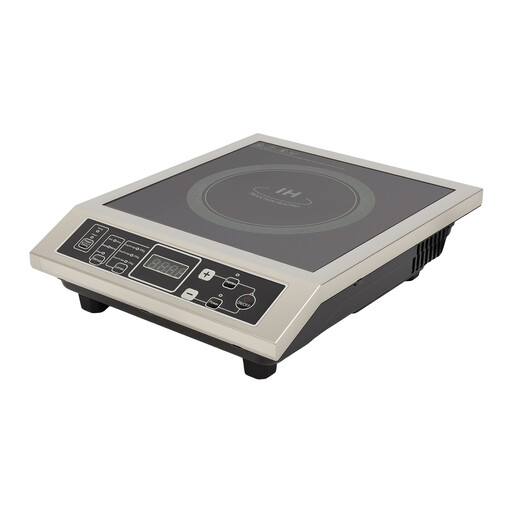 No image available
The product description presents this as a portable tabletop hob with ten power settings.
The title also mentions a timer and reservation function, as well as an EU plug.
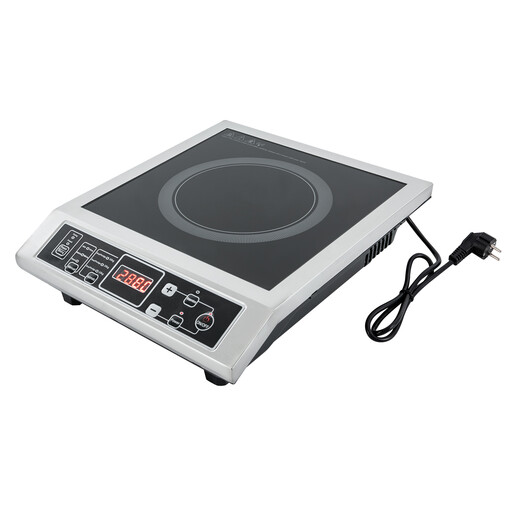 No image available
This model is described as a countertop induction hob and offers eight power and temperature settings.
The product title also mentions a timer, a reservation function and an EU plug.
No. The methods described involve toasting breadcrumbs in a pan, not directly on the hob. Use a pan that’s suitable for your hob, and stir the breadcrumbs as they toast.
It depends on whether the pan’s base and diameter meet the specifications for the particular model. CASO Design lists a cookware diameter of 12 to 24 cm for the Touch 2000; ROMMELSBACHER specifies a 120 to 230 mm cooking zone for the CT 2010/IN and requires a ferromagnetic pan base.
Compare the appliance dimensions with the space available, and also check the set-up instructions in the manual for the specific model. Before using it, read the safety and cleaning instructions too.
If you already have a suitable pan and a free cooking zone, and only toast breadcrumbs occasionally, your existing hob may be enough. An additional single hob makes sense if you genuinely need another cooking zone and have space for the appliance and pan, as well as the clearance required for safe set-up.
The requirements of the EU Low Voltage Directive apply to appliances within its scope, including mains-powered appliances with a rated voltage of 50 to 1.000 V AC. These requirements cover making the appliances available on the market, including the mandatory CE marking. The European Commission describes CE marking as the manufacturer’s declaration that the product complies with the applicable EU rules, not as an independent quality mark for an individual appliance.