Pudding makers
When making pudding or a thickened sauce, you need to turn the heat down after bringing it to the boil and keep stirring. NDR and RUF Lebensmittelwerk describe this method in their recipes and cooking tips.


If you usually make pudding in one pan, a portable single hob is a sensible place to start. Look for easy-to-use lower heat settings, an induction-compatible pan and a suitable spot to put it. A double hob may be worth considering if you regularly need to use two pans at once. Whichever you choose, stirring, a suitable power connection and following the safety instructions are important.
When making pudding or a thickened sauce, you need to turn the heat down after bringing it to the boil and keep stirring. NDR and RUF Lebensmittelwerk describe this method in their recipes and cooking tips.
When worktops and sockets are shared, the appliance’s dimensions, cable length and other appliances running at the same time all matter. The Institute for Loss Prevention and Loss Research documented a fire caused by an overloaded extension lead in a shared-flat kitchen.
If you want to keep using a pan you already own, check that its base is suitable for induction and compatible with the hob’s detection area. TÜV SÜD states that induction requires ferromagnetic cookware.
A good fit if: You want to heat one pan and put the appliance away afterwards. Check the controls, pan size, appliance dimensions and cable length for the model you’re considering.
The trade-off: You can only heat one pan at a time, and the pan must be suitable for induction.
A good fit if: You regularly need two pans at once and have enough space as well as a suitable power connection.
The trade-off: Two zones take up more space. The Steba IK 200 is one specific example, with two independently controlled zones and a stated total output of 3100 W; this does not apply to all double hobs.
| Buying priority | What to check | Who will find this especially important |
|---|---|---|
| Heat control when thickening | Controls and lower power settings; a temperature setting does not measure the temperature of the food. | If I want to turn the heat down while thickening and keep stirring, easy-to-use controls are important. Around 36% of consumers say heat control when thickening is their main priority. |
| Shared power connection | Check the rated output against the intended connection and other appliances running at the same time; follow the appliance instructions. | If several people use kitchen appliances at the same time, I want to consider the connection and total load. Around 29% of consumers prioritise safe use in a shared kitchen. |
| Using a pan you already own | Check that the pan base is induction-compatible and compare its diameter with the hob’s zone specifications. | If I want to keep using my existing pan, its base must be induction-compatible and suitable for the hob. Around 21% of consumers put compatibility with their existing pan first. |
| Space and cleaning | Check the appliance dimensions and placement instructions. Switch it off before cleaning and follow the guidance on residual heat. | If I need to put the hob away after use, I want to know whether it will fit in the available space and be easy to clean. Around 14% of consumers prioritise space requirements and cleaning. |
A high wattage doesn’t tell you how easily you can control the heat when thickening a milk mixture.
Compare the controls and lower settings. Turn the heat down once the mixture has boiled, and keep stirring as it thickens.
Several powerful appliances running at once can overload a connection. The Institute for Loss Prevention and Loss Research documented a fire caused by an overload in a shared-flat kitchen.
Check the load on the connection and the appliance instructions. If in doubt, ask a qualified professional to assess the connection.
For induction, the pan base must be suitable and compatible with the detection area of the specific hob.
Before buying, compare the hob’s specifications with your pan’s induction compatibility and base diameter.
The Silvercrest SIKP 2200 B1 is one example of a portable single hob.
The CT 2020/IN is a portable single hob whose zone specifications let you check whether it suits your pan.
The S-Line 2100 is a portable single hob with several settings to choose from.
The KP 1071 is a single-hob model with controls and timer functions described by the manufacturer.
The IK 200 is one example of a portable double hob for when you need two cooking zones.
The following products are portable single induction hobs for use with one pan. Power settings and output figures are appliance specifications, not proof of a particular result when making pudding.
 No image available
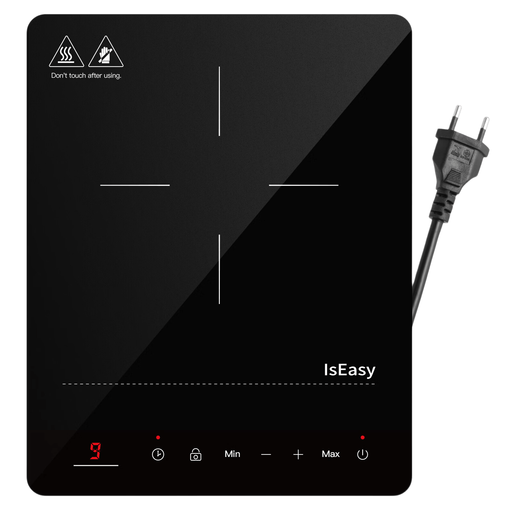
Described as a portable single hob with several heat settings, suitable for cooking in one pan.
2100 W; 28 cm hob; 9 heat settings; keep-warm setting from 120 W; dimensions: 35 × 28 × 4,4 cm; weight: 1,9 kg.
 No image available
Described as a portable hob with one cooking plate; according to the product description, you can adjust the heat settings using a rotary control.
1000 W; 5 power settings; dimensions: 21,5 × 21,5 × 4,7 cm.
 No image available
This portable hob offers several power and temperature settings; these specifications do not guarantee a particular temperature in the pudding.
3500 W; 10 power settings and 10 temperature settings; according to the product description, the power settings start at 400 W.
 No image available
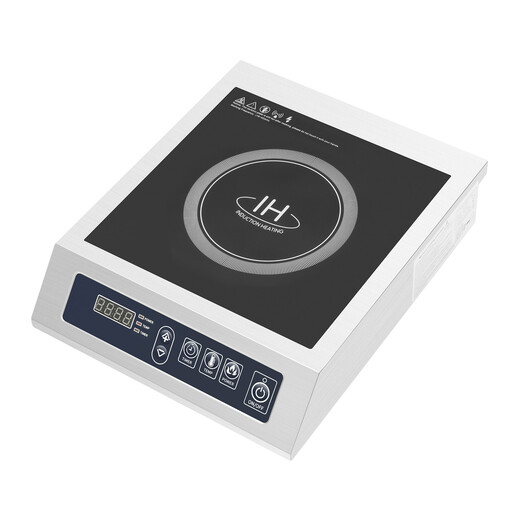
Described as a countertop hob. Before setting it up, check the instructions and make sure the heat settings suit the way you plan to use it.
3500 W; 11 power settings from 400 W; 24-hour timer; EU plug; temperature range according to the product description: 140–572 °F.
 No image available
According to the product description, this portable hob offers several heat settings to adjust the temperature.
2000 W; 10 heat settings; touch controls; safety lock; the glass surface is described as easy to wipe clean.
No. When thickening pudding, you need to turn the heat down after bringing it to the boil and keep stirring. So compare how easy the lower settings are to use, too. A wattage or temperature figure alone doesn’t tell you what will happen in the pan.
Only if the base is suitable for induction and its size is compatible with the detection area of the specific appliance. Before buying, check the specifications for the pan base and the permitted diameter.
Choose a stable surface and follow the instructions, check the power connection and consider any other appliances running at the same time. The Institute for Loss Prevention and Loss Research documented a fire caused by an overloaded extension lead in a shared-flat kitchen. Keep an eye on the pudding and stir it as it thickens; a timer is no substitute for this.
If a product is faulty, you have statutory rights against the seller; these are separate from any voluntary manufacturer’s guarantee. When you buy remotely from a business seller, you generally have a 14-day right to cancel from the date of delivery, as Your Europe explains.
A new electric hob that falls within the scope of the relevant EU regulations must carry the CE marking. This indicates that the product conforms to the applicable requirements; it is not an independent quality mark. When looking at a specific listing, also check the product identity and manufacturer details. The European Commission and Your Europe explain what the marking means.