Households where people eat at different times
If you don’t all eat at the same time, it’s important to handle the soup safely and know the difference between keeping it hot and reheating it later.


For a single pot of soup, a portable single hob is all you need, provided its cookware size range and load capacity are suitable for your pot. A double hob is mainly useful if you need to heat a second pot at the same time. If people will be eating at different times, what matters isn’t the keep-warm setting, but whether the soup reaches and stays at at least 60 °C throughout. If you can’t ensure this, cool the soup quickly and reheat it thoroughly later if you plan to store it for longer.
If you don’t all eat at the same time, it’s important to handle the soup safely and know the difference between keeping it hot and reheating it later.
If you want to keep using your existing pot, check its base and size against the specific hob. If it’s heavy when full, make sure you also check the load capacity.
A portable hob can give you extra cooking space. A second zone is most useful if you genuinely need to use two pots at the same time.
A good fit if: You use one soup pot at a time and have limited worktop space.
Things to consider: There’s only one cooking zone, and the pot size and load capacity depend on the model.
A good fit if: You regularly need to heat a second pot at the same time as the soup.
Things to consider: The appliance takes up more worktop space. Its total power rating doesn’t automatically tell you how much power each zone gets.
A good fit if: You can’t keep the soup hot continuously or plan to store it for longer.
Things to consider: Cool the soup quickly and reheat it before eating, rather than leaving it on a switched-off hob.
The German Federal Institute for Risk Assessment (BfR) recommends keeping hot food at a minimum of 60 °C throughout. A reading on the hob doesn’t prove that the soup has reached this temperature throughout the pot.
| What matters | What to check when buying | Who should consider this? |
|---|---|---|
| Serving food safely at different times | Check the keep-warm programme, timer and switch-off behaviour; monitor the temperature of the soup itself. | If people in your household don’t all eat at the same time, keeping the soup safely hot or following a reliable process for reheating it later is a priority. Around 28% of consumers rank this as their main concern. |
| Compatibility with your existing pot | Check that the base is magnetic, compare the permitted pot diameter and, if your pot is heavy, check the stated load capacity. | If you want to keep using your soup pot, check its base and dimensions against the hob. Pot compatibility is the main concern for around 22% of consumers. |
| From bringing the soup to the boil to simmering | Check the controls, low power settings and timer on the specific model. | When making soup, you need to be able to reduce the heat after bringing it to the boil, without mistaking the hob’s settings for the temperature inside the pot. Around 22% of consumers prioritise simmer control. |
| Worktop space and power socket | Compare the appliance’s dimensions and cable length with the intended location. | If your extra hob needs to fit on a small worktop, its dimensions and distance from the power socket are key. Around 17% of consumers say available space is their main concern. |
| One or two cooking zones | Choose two zones only if you regularly cook with two pots at once; check the space required and how the power is distributed. | If you want to heat a second pot while making soup, two zones are likely to be more useful than if you only use one soup pot. Around 11% of consumers prioritise cooking with two pots at once. |
A temperature setting or keep-warm programme doesn’t show that the food has reached the required temperature throughout the pot.
If you want to keep the soup hot, check the food itself and follow the BfR recommendation to keep it at a minimum of 60 °C throughout.
A pot with an unsuitable base won’t work as needed. The permitted pot sizes and load capacity also vary between models.
Check the base and the manufacturer’s stated size range. If your pot is heavy when full, also check the load capacity of the specific appliance.
If your existing pot isn’t compatible, you may need to buy a suitable one as well.
A second zone lets you cook with two pots at once, but it doesn’t increase the capacity of a single pot.
First consider whether you regularly heat two pots at the same time. Then compare the appliance’s dimensions and power specifications.
Single hobs that make it easy to compare pot sizes and controls model by model.
Kult X Mono for one pot and Kult X Doppel for using two pots at the same time.
The CTS 2000/IN is a single hob with sensor-based control and a cooking zone size range specified by the manufacturer.
The DK 1031 is a double appliance designed for cooking on two zones at once.
An independent review of the SIKP 2200 B1 applies to this specific model only.
This selection includes portable single hobs for cooking one pot of soup, as well as a double hob for using two pots at the same time. Before you buy, check that your pot is suitable for induction and fits the stated cookware size range. If it’s heavy when full, also check the stated load capacity. Make sure the required product markings are present and that the responsible economic operator in the EU is listed.
 No image available
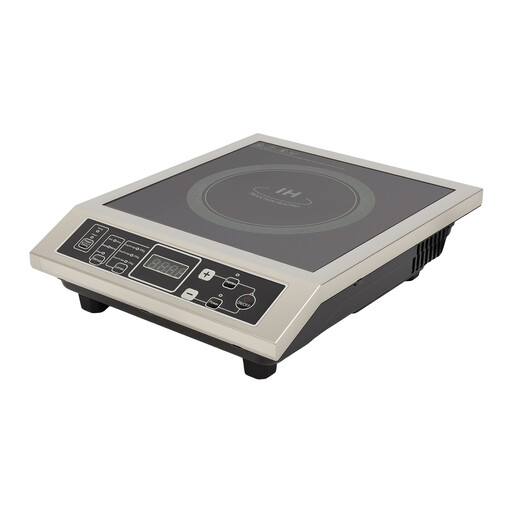
Listed as a portable single hob for making one pot of soup.
The product name lists 2100 W and 28 cm; the description specifies nine heat settings and a cookware size range of 12–26 cm.
Check that your pot’s base and diameter fit the stated range.
 No image available
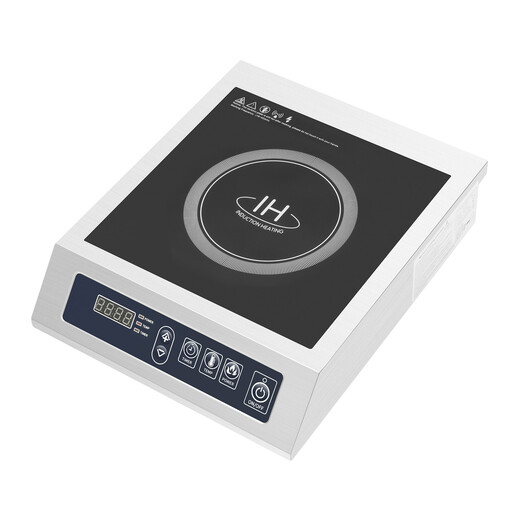
Described as a tabletop induction hob for cooking and simmering.
The product name and description list 3500 W, ten power levels, a timer and a reservation function. The product name also lists a load capacity of 50 kg.
Check your pot’s dimensions and intended location against the specifications for this appliance.
 No image available
Described as a tabletop induction hob with adjustable settings for cooking and simmering.
The product name lists 3500 W, eleven power levels and a 24-hour timer. The description gives a cookware size range of 4.72–11.81 inches.
Compare the stated range with the base of your pot before choosing this model.
 No image available
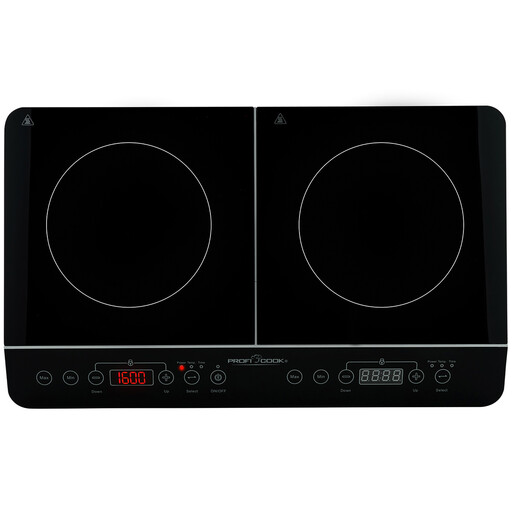
The double hob is designed to heat two cooking vessels at the same time.
The product specifications list ten temperature settings up to 240 °C, a timer of up to 180 minutes and automatic pan detection.
Consider whether you’ll regularly use the second zone and whether the appliance will fit in your cooking space.
 No image available
Described as a portable single induction hob for making one pot of soup.
The product specifications list ten heat settings and six preset functions, including a soup function. Touch controls, a safety lock and dry-boil protection are also listed.
Check that your pot is compatible and follow the appliance instructions when using it.
Not on its own. The BfR recommends keeping hot food at a minimum of 60 °C throughout. Check the soup’s temperature rather than relying on the hob setting. If you can’t be sure it will stay hot enough, the BfR recommends cooling it quickly to below 7 °C for longer storage, then reheating it to at least 70 °C throughout for two minutes.
Your pot needs a magnetic base suitable for induction, and its diameter must fit the size range for the specific appliance. If you have a large pot of soup, also check the stated load capacity.
A double hob is most useful if you regularly heat a second pot at the same time as making soup. If you only use one soup pot, the extra zone won’t give you more room in the pot and will take up more worktop space.
On 5 February 2025, the German Federal Network Agency stated that appliances with formal deficiencies, such as a missing mandatory CE marking or no details of the responsible economic operator in the EU, cannot be sold in Germany. A CE mark on its own isn’t an independent product test and doesn’t prove that an appliance is suitable for keeping soup hot.
For longer storage, the BfR recommends cooling hot food quickly to below 7 °C, rather than leaving it on a switched-off hob. Before eating, food should be heated to 70 °C throughout for at least two minutes.